
Why Robotic Mowers Handle Most Suburban Yards
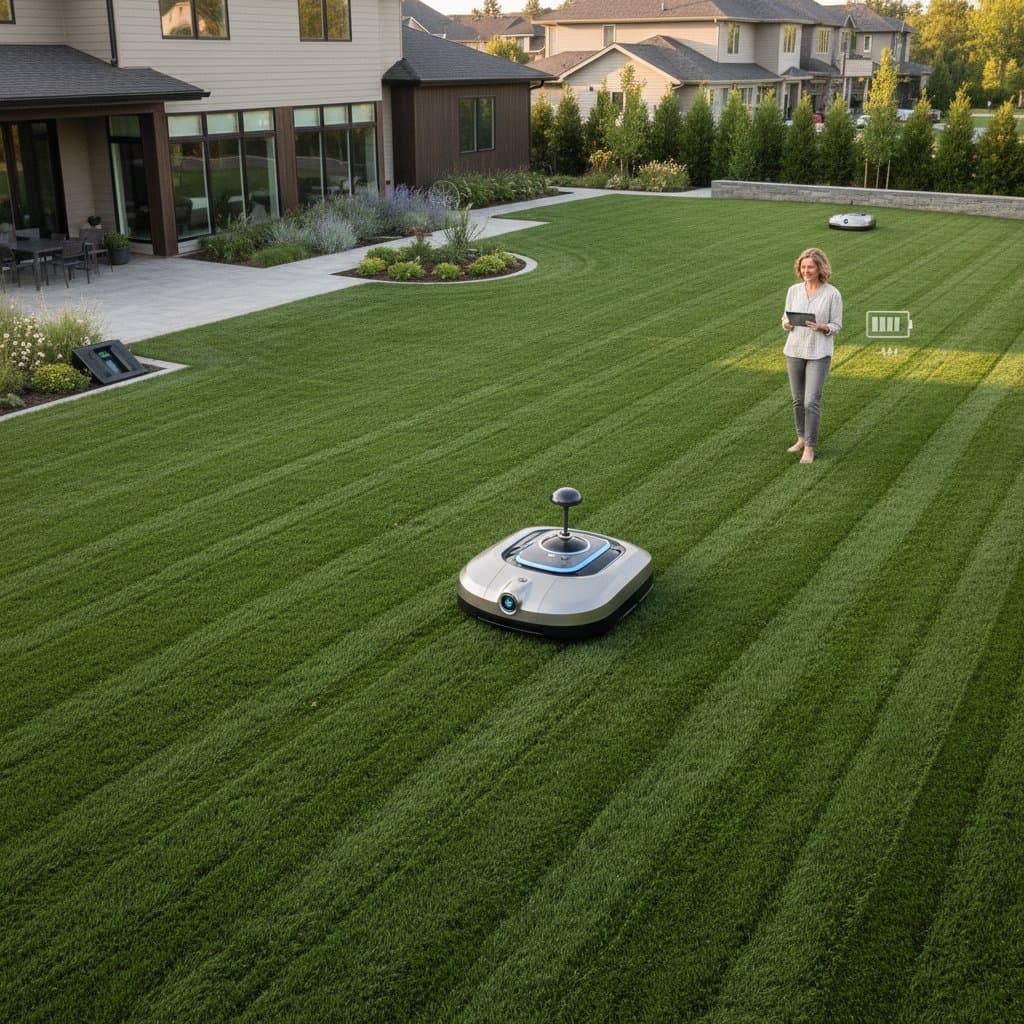
When Tom and Clara Nguyen purchased their suburban home the spacious front lawn formed part of the appeal. The repeated tasks of mowing edging and debris removal proved far less appealing. After several months of weekend labor they sought an automated solution that now manages nearly all routine lawn maintenance.
The Nguyens reflect a wider pattern in residential landscaping. Robotic mowers have progressed from experimental devices to standard equipment in many neighborhoods. These units deliver consistent results with minimal oversight.
Daily Operation of Robotic Units
A typical robotic mower remains low to the ground and operates with little sound. It removes small portions of grass at regular intervals rather than cutting large sections at once. Movement follows irregular paths that prevent visible stripes while maintaining uniform height.
Tom noted that initial doubts about slope coverage disappeared once the unit completed its mapping routine. Current models incorporate satellite positioning obstacle avoidance and moisture detection. They return to base stations without intervention and modify run times according to growth conditions.
Integration With Connected Home Systems
Many owners link robotic mowers to broader property management networks. Soil monitors irrigation timers and exterior lighting now operate through shared controls. The Nguyens connected their mower to a central voice assistant for schedule changes and status checks.
Clara observed that mobile access to performance data removed any sense of the device as a temporary gadget. The system now functions as one element within overall household operations. This approach suits households that prefer maintained grounds without allocating large blocks of time to manual work.
Site Preparation for Reliable Performance
Certain grass varieties tolerate frequent light trimming more effectively than others. The Nguyens selected hybrid Bermuda for its resilience and rapid regrowth. Border materials such as decomposed granite paired with low steel edging allow sensors to function without interference.
Irrigation components sit flush with the surface to avoid contact. Ground cover plantings near fixed structures permit the mower to operate within one inch of obstacles. These choices reduce the need for supplemental trimming and support continuous operation.
Resource Savings and Site Health
Battery powered operation lowers fuel expenses and eliminates exhaust output. Noise levels permit early or evening use without neighborhood disruption. Mulched clippings return nutrients to the soil and decrease fertilizer requirements when paired with efficient watering schedules.
Initial equipment costs exceed those of basic push mowers yet recurring savings in labor fuel and service accumulate over several seasons. Some units accept supplemental solar input to further limit grid consumption.
Adjustments in Professional Services
Landscape firms now emphasize calibration sensor cleaning and turf health assessments rather than repeated cutting visits. Jenna Morris of GreenForm Outdoor Solutions described the change as a move toward system oversight that maintains steady appearance with fewer site visits.
Design options expand when large equipment access is unnecessary. Properties can incorporate tighter planting layouts mixed turf and garden zones and reduced open lawn areas while still achieving uniform results.
Ongoing Equipment Refinements
Manufacturers continue to improve recognition of small objects charging speed and automatic schedule changes based on local forecasts. Current machines already complete the majority of regular cutting tasks with dependable accuracy. Homeowners gain additional hours for outdoor activities instead of equipment operation.