
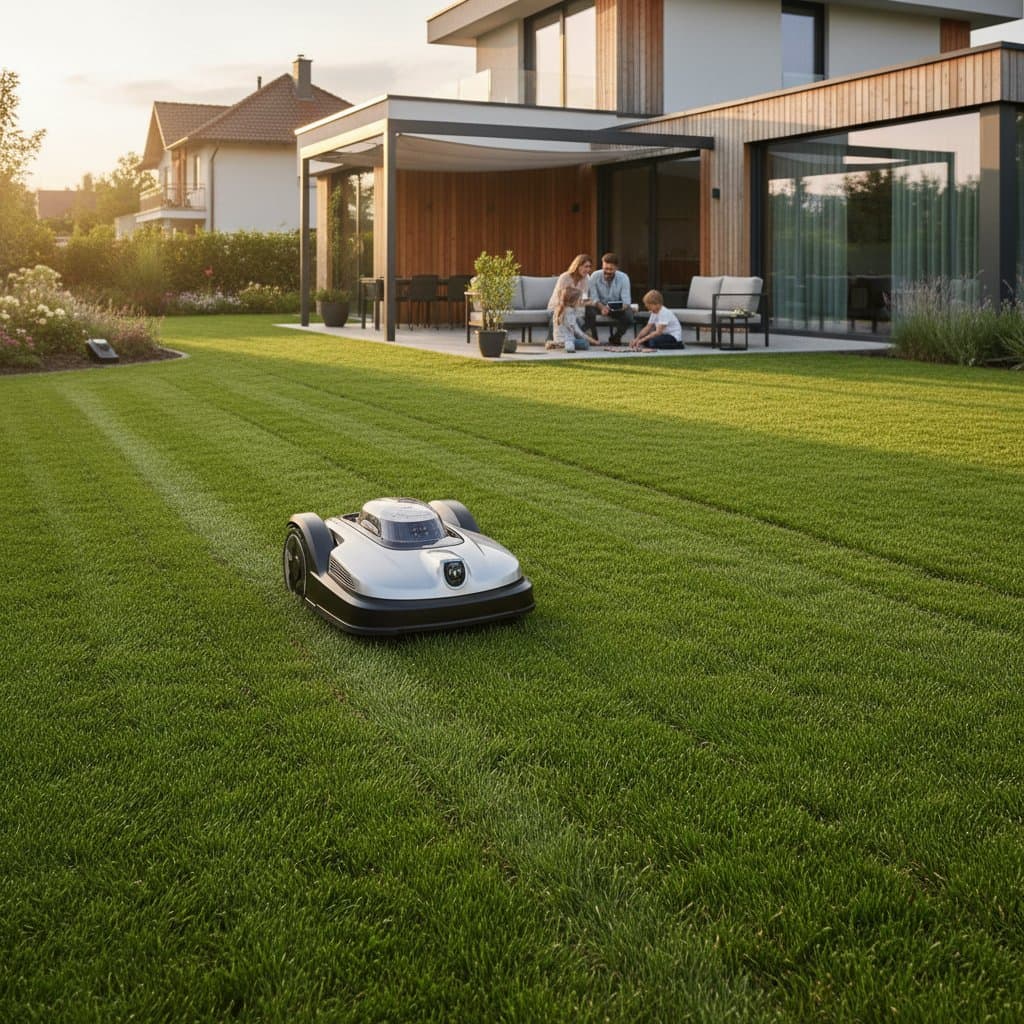
Why Robotic Mowers Save 90% Lawn Time by 2026
For many homeowners and grounds professionals, lawn care is both a point of pride and a recurring chore. The rise of robotic mowers is changing that rhythm. These compact, quiet machines keep grass consistently trimmed while freeing up hours that used to be spent pushing, emptying, and edging. The result is a neater lawn, less noise, and more time to enjoy outdoor living.
At a Glance
Location: Works across suburban, rural, and urban yards
Size: Ideal for small to medium properties, scalable for estates
Climate Zone: Performs best in temperate to mild regions
Project Goal: Reduce maintenance time, improve turf health, and create a more consistent finish
1. Continuous Cutting Means Less Work
Traditional mowing happens once a week. Robotic mowers trim every day or every few days, keeping grass at a steady height. Small clippings fall back into the soil, feeding it naturally. This eliminates bagging, hauling, and fertilizing cycles.
A landscape designer might say, “Regular micro-cuts reduce stress on the grass and create that dense, carpet-like look.” The consistent trimming pattern also prevents uneven patches that often appear after rain or heavy foot traffic.
Functional benefit: Saves hours of manual mowing and cleanup.
Design insight: Encourages a uniform texture that complements structured gardens or open lawns.
Example: A mid-size yard with gentle slopes can stay picture-ready without a single push of a mower.
2. Smart Mapping Maximizes Coverage
Modern robotic mowers use sensors and GPS to learn a yard’s shape. They adapt around flower beds, patios, and paths. Once programmed, they move in efficient routes that avoid repetition and missed spots.
“A well-mapped mower becomes part of the landscape’s rhythm,” said one lawn technician. “It learns where obstacles are and simply works around them.” This intelligence keeps every corner tidy without human input.
Functional benefit: Eliminates over-cutting and protects delicate planting zones.
Design insight: Works best when borders are clearly defined with edging stones or low plantings like liriope.
Example: A curved garden path bordered with lavender remains untouched while the mower trims right up to the edge.
3. Quiet Operation Extends Usable Hours
Gas mowers can dominate the soundscape of a weekend morning. Robotic mowers hum softly, allowing lawn care to happen anytime without disturbing neighbors or family. That flexibility means lawns stay neat even during busy weeks.
“A quiet mower changes how people use their yards,” said a garden consultant. “You can host a breakfast on the patio while it trims nearby without hearing more than a gentle whir.”
Functional benefit: Expands mowing hours beyond typical work schedules.
Design insight: Encourages a lifestyle that blends maintenance with leisure.
Example: A homeowner can run the mower overnight and wake to a freshly cut lawn ready for morning coffee outdoors.
4. Energy Efficiency and Low Emissions
Battery technology makes robotic mowers less resource-intensive than gas models. They recharge automatically, often using minimal electricity per cycle. This shift is especially appealing for eco-conscious landscapes.
An installer explained, “Each mower uses about the same energy as a household light bulb during a session. Over time, that’s a major environmental and cost advantage.”
Functional benefit: Reduces fuel costs and lowers a property’s carbon footprint.
Design insight: Works well with solar charging stations for a fully sustainable system.
Example: A small solar panel at the lawn’s edge keeps the mower powered all season long.
5. Consistent Care Improves Turf Health
Because robotic mowers cut frequently, they keep growth balanced and reduce thatch buildup. Regular clipping encourages deeper roots and thicker turf. The lawn stays greener and more resilient to drought or traffic.
“A consistent schedule is what keeps professional greens looking flawless,” said a turf specialist. “Robotic systems simply bring that same routine home.”
Functional benefit: Builds a healthier, more drought-tolerant lawn.
Design insight: Use native grass varieties that respond well to frequent trimming, such as fescue or ryegrass.
Example: A family lawn used for play stays lush even in dry months because roots grow steadily rather than in bursts.
6. Minimal Maintenance for Maximum Time Savings
Routine upkeep for robotic mowers is limited to cleaning blades and replacing them occasionally. Firmware updates and app controls handle adjustments. Once installed, the mower becomes a set-and-forget fixture.
“After setup, most owners interact with their mower less than a few minutes a week,” said a service technician. That minimal attention translates to nearly 90 percent less active lawn time compared to manual mowing.
Functional benefit: Frees homeowners for other outdoor projects or relaxation.
Design insight: Keep charging docks discreetly positioned near garden edges to maintain visual flow.
Living with Automated Lawn Care
Switching to robotic mowing is less about replacing tradition and more about refining it. The lawn stays groomed, the workload drops, and outdoor areas feel more inviting. With smart mapping, quiet performance, and consistent care, these machines redefine what low-maintenance living looks like.