
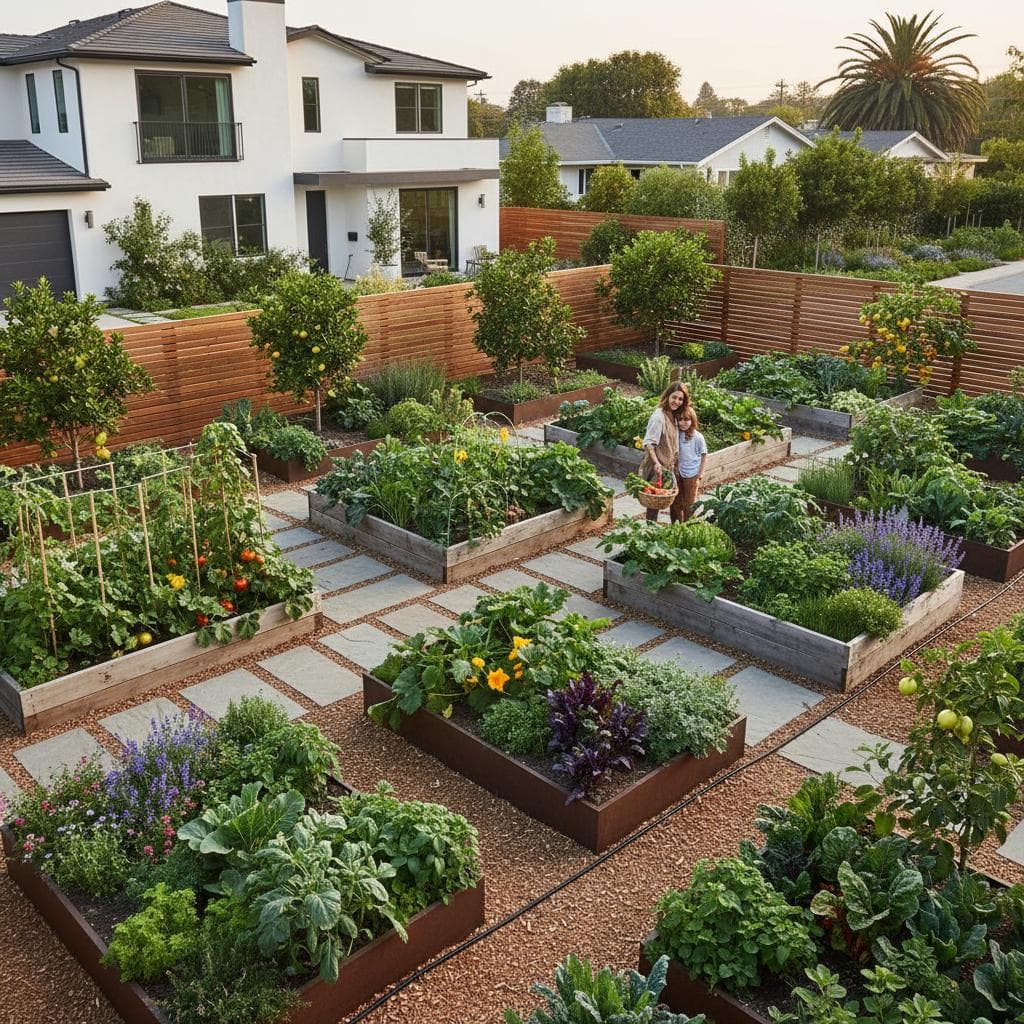
The Emergence of Edible Front Lawns in HOA Communities
California neighborhoods increasingly feature front yards that produce food while conserving resources. Homeowners replace water-intensive grass with vegetable patches, herb borders, and fruit-bearing plants. This shift, once a point of contention in HOA discussions, now reflects a commitment to sustainability and self-sufficiency.
Updated HOA policies play a central role in this trend. These guidelines permit landscapes that integrate productivity with visual harmony. The outcome fosters innovative designs that support ecology, reduce utility costs, and strengthen local bonds.
Reasons Edible Front Lawns Gain Popularity
Traditional lawns symbolized neatness and conformity in residential areas. However, persistent droughts and rising water costs have exposed their inefficiencies. Edible front yards provide a viable solution tailored to California's arid conditions and emphasis on local agriculture.
Sustainability Integrated with Design
Edible landscapes achieve elegance through strategic planning. Install raised beds for vegetables, edged with low hedges of lavender or boxwood. Position dwarf citrus trees for vertical interest and subtle scent. Incorporate perennials like nasturtiums for edible flowers that add vibrant hues and continuous blooms. Such elements ensure the yard remains visually compelling across seasons while minimizing resource use.
Enhanced Water Use and Climate Adaptation
Water scarcity drives the appeal of these gardens. Unlike lawns that demand frequent watering, edible plants benefit from efficient systems like drip irrigation connected to timers. Collect rainwater in barrels to supplement during dry spells. Apply three-inch layers of organic mulch to retain soil moisture and suppress weeds. These methods not only cut water bills by up to 50 percent but also create habitats for pollinators, boosting garden yields.
Promoting Wellness and Social Ties
Harvesting meals from your front yard offers tangible health benefits. Gather ripe tomatoes or crisp lettuce daily to incorporate into salads or stir-fries. Such practices encourage nutrient-rich diets and reduce reliance on store-bought produce. Neighbors frequently engage, exchanging recipes or surplus crops, which cultivates friendships and shared knowledge in the community.
Navigating Updated HOA Guidelines
HOA restrictions historically limited creative landscaping. Rules mandated grass coverage and prohibited visible food plants to preserve uniformity. Current reforms prioritize ecological advantages, allowing greater flexibility.
Key Regulatory Changes
Many HOAs now approve partial turf replacement with edibles, as long as the overall appearance stays cohesive. Submit proposals that outline neat bed shapes, mulched pathways, and balanced plant heights. Focus on drought-resistant options to align with conservation goals. Boards increasingly view these designs as value-adding features that modernize properties.
Steps to Comply with Guidelines
Examine your HOA's covenant documents for specific provisions on front-yard plantings. Prepare a submission packet with a site sketch, plant inventory including mature sizes, and a water management plan. Highlight benefits like reduced maintenance and increased biodiversity. Engage board members early through informal presentations to address concerns and secure approval.
Harmonizing Aesthetics and Utility
Successful designs treat the yard as an extension of home architecture. Frame vegetable beds with stone or brick edging for definition. Intersperse edibles with non-food plants like salvia for color pops. Install subtle lighting along paths to enhance evening views. This intentional approach ensures the landscape elevates rather than disrupts neighborhood standards.
Steps to Create Your Edible Front Lawn
With HOA approval secured, focus on a blueprint that maximizes output and appeal. Treat the project as an integrated system where every element supports the others.
Develop a Detailed Layout
Map your yard considering sunlight patterns and soil drainage. Allocate sunny southern exposures for heat-loving crops like peppers and basil. Use contour lines to identify slopes; build stepped terraces with retaining walls if needed to direct runoff. Include access paths wide enough for wheelbarrows to facilitate harvesting without compacting soil.
Select Appropriate Plant Varieties
Opt for a blend of quick-yield annuals and enduring perennials suited to your zone. In coastal areas, choose heat-tolerant tomatoes and zucchini; inland, prioritize shade-partial greens like spinach. Anchor with fruit options such as compact apple espaliers or blueberry shrubs. Mix textures and colors to create visual rhythm, and include companion plants like borage to naturally deter insects.
Build Layers for Depth and Ecology
Structure the garden in tiers for functionality and form. Establish a top layer with espaliered fruit trees against fences for shade and fruit. Mid-layers feature bushy edibles like currants or globe artichokes for mid-height interest. Ground level includes sprawling herbs and strawberries as living mulch. This stratification promotes soil health, attracts beneficial wildlife, and prevents monoculture vulnerabilities.
Streamline Ongoing Care
Incorporate automation from the start to ease routines. Install soaker hoses zoned by plant needs, controlled via soil moisture sensors. Choose self-mulching plants or add compost annually to enrich soil without tilling. Schedule bi-weekly pruning for bushy growth and seasonal replanting for bare spots. For low-effort options, emphasize perennials like established berry patches that yield reliably with minimal intervention.
Addressing Typical Hurdles
Thoughtful anticipation turns potential issues into manageable aspects of edible landscaping.
Setting Neighbor Expectations
Initial resistance may arise from unfamiliarity with productive yards. Demonstrate commitment through organized features like labeled beds and groomed edges. Share educational signage about water savings or organic methods to inform passersby. Over time, visible success and invitations to taste fresh produce build support.
Controlling Pests and Animals
Protect crops with lightweight row covers during vulnerable growth stages. Integrate trap crops such as radishes to lure aphids away from valuables. Foster biodiversity by adding birdhouses or bat boxes to manage insect populations naturally. Conduct weekly patrols to spot and hand-remove early infestations, preserving the garden's organic integrity.
Maintaining Year-Round Visuals
Ensure continuity by selecting multi-season performers. Plant evergreens like rosemary for winter structure alongside fall-blooming kale for color. Use succession planting to stagger harvests, keeping beds active. Conceal compost areas behind screens and rotate ornamentals to fill gaps, preserving a polished look through all seasons.
Sustaining and Evolving Your Edible Landscape
Your front yard garden develops character with each passing year. Adjust based on performance: relocate underperformers and expand successes. This ongoing refinement aligns the space with your lifestyle and local conditions.
Ultimately, an edible front lawn embodies proactive environmental care. It delivers daily nourishment, cuts expenses, and inspires others. Through consistent tending, you cultivate not just plants, but a legacy of resilience and beauty.