
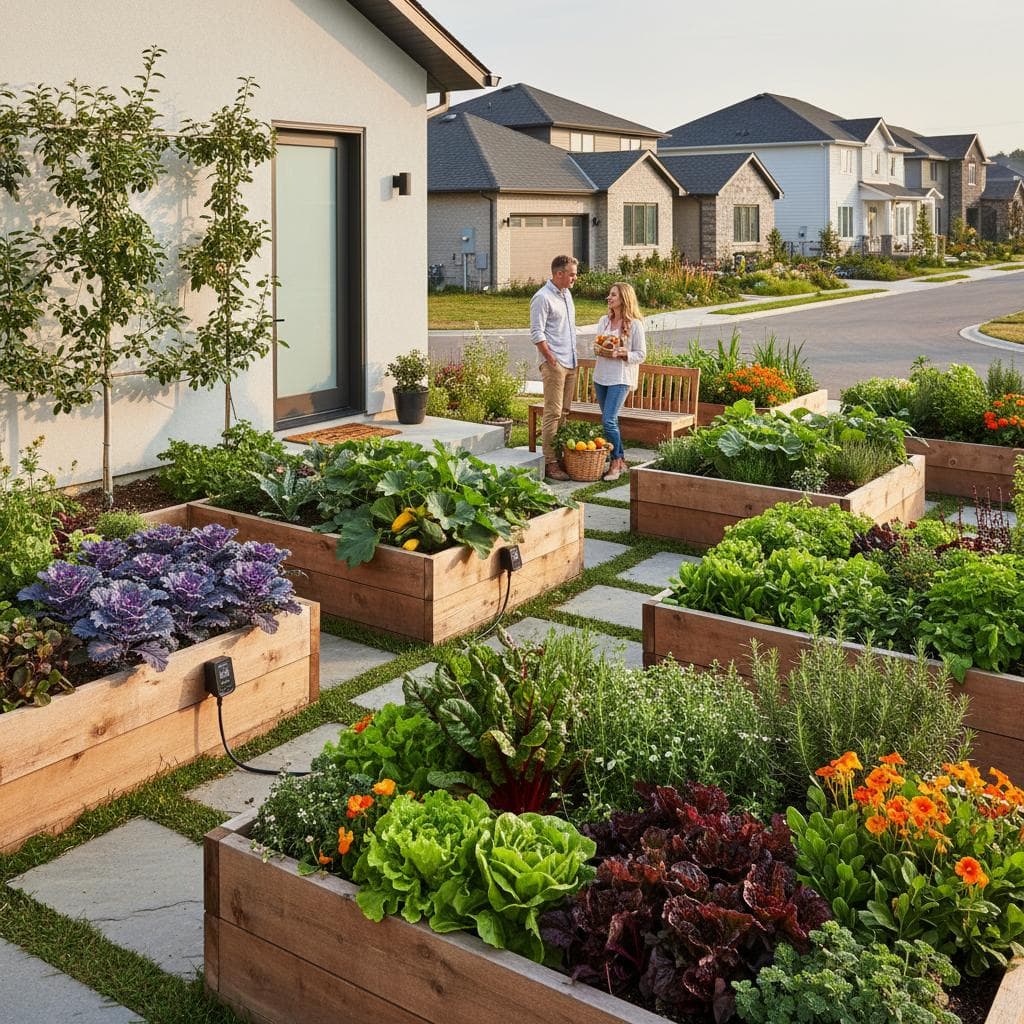
HOAs Embrace Edible Front Yards That Enhance Curb Appeal
Front yards evolve from simple ornamental displays into productive spaces that nourish both aesthetics and daily meals. Homeowner associations increasingly update their guidelines to permit these designs, recognizing their contributions to sustainability and visual harmony. Such gardens foster neighborhood interactions while demonstrating that elegant landscapes can yield fresh produce.
Key Overview
Setting: Suburban residential areas
Scale: Standard front yard dimensions
Adaptability: Suitable for diverse climate zones
Primary Objective: Integrate visual attractiveness with home food cultivation
1. Establish Structure for Elegance and Functionality
Effective edible yards rely on deliberate organization to maintain a refined appearance. Install raised beds with defined edges, along with pathways of gravel or pavers, to ensure accessibility during planting and harvesting. This framework prevents a disorganized look and aligns the garden with neighboring properties.
Design professionals emphasize adherence to core landscaping principles, including balance, scale, and precise boundaries. Construct low walls from natural stone or weathered steel to enclose greens and herbs effectively. Opt for curved layouts to complement contemporary homes or symmetrical arrangements for traditional styles; incorporate a modest entry terrace to enhance intentionality and ease upkeep.
Highlighted Feature: Stone-bordered beds direct attention to a porch accented by rosemary hedges and vibrant kale.
2. Integrate Ornamentals with Edible Plants
Blend vegetables, herbs, and flowers to create a unified front yard that prioritizes aesthetics alongside utility. Diverse textures and hues provide visual interest, while companion planting supports plant health; for instance, position marigolds near tomatoes to repel insects, and pair deep purple basil with silvery sage for striking contrast.
This method ensures the landscape remains ornamental at heart. Train apple trees in espalier form along fences, bordered by lavender that draws pollinators. Use colorful Swiss chard for foliage impact and strawberries as ground cover along walks to add subtle charm.
Landscape experts advise viewing edibles as extensions of decorative elements. When combined thoughtfully, they appear purposeful rather than utilitarian, yielding a verdant, inviting space that fits seamlessly into residential surroundings.
Highlighted Feature: Vivid chard foliage glows alongside rounded thyme clusters under sunlight.
3. Select Climate-Appropriate Plants
Tailor plant choices to regional weather patterns and site-specific conditions to minimize effort and maximize success. In temperate zones, prioritize citrus, peppers, and robust herbs like oregano that endure heat with minimal intervention. Temperate or cooler climates suit greens, tubers, and perennials such as parsley and chives.
Incorporate native species to bolster ecological benefits, pairing them with edibles to invite pollinators and improve soil vitality. This strategy cuts down on synthetic inputs and preserves the garden's form across seasons.
Horticulture specialists recommend assessing exposure: sun-drenched spots accommodate warmth-loving varieties, whereas shaded zones excel with cool-season lettuces. Resilient selections conserve resources and sustain tidy growth year-round.
Highlighted Feature: Peppers and basil flourish in a sunny alcove, adjacent to a shaded bed of crisp lettuces.
4. Implement Layered Lighting for Extended Enjoyment
Strategic illumination prolongs the garden's allure and usability after sunset. Install low-voltage fixtures along paths for safe navigation, and employ subtle uplights to accentuate trees or climbing vines. This setup enhances security while infusing evening warmth.
Designers note that varied lighting layers promote outdoor living without overwhelming brightness, transforming vegetable patches into elegant focal points at night. Choose fixtures emitting warm white light around 2700 Kelvin to complement plant tones naturally. Solar options suit borders, and draped strings under arbors encourage casual social moments.
Highlighted Feature: Gentle uplights project soft shadows over herb-filled raised beds.
5. Utilize Vertical Elements for Depth and Efficiency
Incorporate upward-growing features to expand usable area and introduce architectural interest. Erect trellises or obelisks for vining crops like beans, cucumbers, and peas, which also provide screening without opaque barriers. These additions elevate the design beyond ground level.
Paint metal supports to harmonize with house details, allowing seasonal shifts in greenery to add organic movement. For compact sites, affix wall pockets or suspend baskets for accessible herbs and berries.
Contractors highlight how vertical structures amplify perceived space, converting produce areas into refined accents. They integrate seamlessly with the home's lines.
Highlighted Feature: A timber trellis bears pole beans next to a seating nook ideal for dawn routines.
6. Optimize Watering with Smart Systems and Mulch
Efficient hydration maintains vigor without excess. Deploy drip lines to target roots precisely, minimizing evaporation and disease risk by keeping leaves dry. Layer organic materials like bark chips, straw, or hulls atop soil to lock in moisture and stabilize temperatures.
Integrate automated controllers responsive to forecasts, linked to sensors that pause during rainfall. This approach sustains productivity amid varying conditions with little manual oversight.
Maintenance professionals stress that reliable irrigation underpins thriving designs. Automation frees owners to focus on enjoyment rather than routine tasks.
Highlighted Feature: Subtle drip tubing under mulch nourishes thriving basil and pepper plantings.
7. Streamline Upkeep for Sustainable Pleasure
Design for simplicity to make garden care rewarding. Select enduring perennials, dwarf fruit varieties, and easy vegetables to curb frequent interventions. Elevated beds facilitate weeding, and durable paths of gravel or stone avert soil disturbance.
Cluster species by hydration and light requirements to optimize routines. Frequent picking promotes ongoing yields and neatness; discreet compost areas repurpose waste into nutrients.
Gardeners observe that smart planning weaves maintenance into everyday flow, avoiding overwhelming demands. The space remains vibrant with modest attention.
Highlighted Feature: Neat dwarf fruit trees flank a path, echoing adjacent evergreen forms.
8. Foster Community Through Shared Spaces
Edible yards spark dialogue and collaboration. Distribute surplus harvests or herbs to build rapport, gradually shifting local views toward productive beauty. Coordinated plantings across homes unify the block while advancing eco-friendly practices.
Planners point out that prominent food gardens redefine attractiveness, emphasizing utility's role in appeal. Uniform elements like shared palettes or surfaces ensure harmony amid varied selections.
Highlighted Feature: Residents converse beside a path edged with elevated veggie beds and blooming herbs.
Sustaining and Evolving Your Edible Landscape
Relaxed HOA policies empower owners to merge form and yield creatively. Thoughtful planning transforms front yards into assets that enrich homes and surroundings alike. Focus on cohesive elements, apt choices, and steady nurturing to craft enduring value.
Integration defines success: the garden endures seasonally, from summer fruits to hardy winter greens. It links routine to nature tangibly. As elements mature, perennials spread, trees canopy, and cycles refresh the vista, nurturing residents and ecosystem in tandem.