
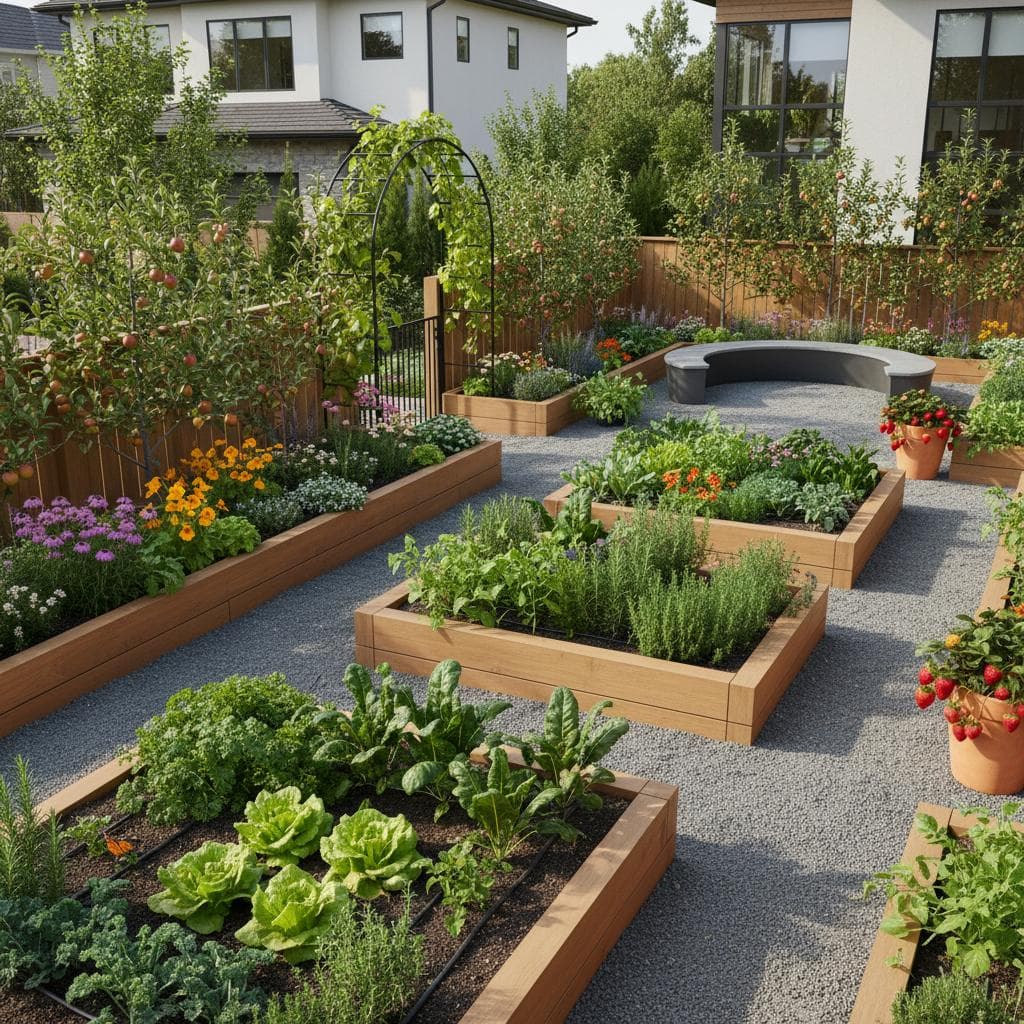
3. Build Layers of Height and Texture
Depth defines a thriving front-yard garden. Position taller specimens, such as corn stalks or Jerusalem artichoke plants, toward the rear, flanked by medium-height options like bell pepper bushes and edged with compact herbs in the foreground. This configuration adds dimension without obstructing views to the street.
Texture contributes significantly to the overall effect. The delicate fronds of carrot tops offset the expansive leaves of zucchini plants. Shiny surfaces on pepper leaves reflect sunlight, while the airy structure of dill introduces subtle motion. Select varieties that reach maturity at staggered intervals to ensure continuous coverage in the beds across multiple seasons.
Visual Suggestion: Towering sunflowers create a vibrant backdrop for a cluster of tomato vines and basil plants.
4. Ensure Year-Round Appeal
Unlike a lawn that remains uniform seasonally, an edible landscape evolves with the calendar. In spring, strawberry plants cascade over bed edges with their glossy fruits. By midsummer, tomato vines ascend supports, and fruit trees bear laden branches.
Incorporate perennial selections like rosemary shrubs, rhubarb patches, and blueberry bushes to provide enduring architecture. Address bare spots with annual crops such as leafy greens or edible blooms including nasturtium vines and calendula flowers. This assortment sustains both color and harvest potential throughout the growing period.
Horticulture specialists observe: “Seasonal diversity sustains interest. Something always ripens or flowers to draw attention.”
5. Simplify Irrigation and Care Routines
A visually appealing edible yard diminishes in allure if maintenance demands excessive effort. Implement subsurface drip irrigation systems covered by organic mulch to retain soil moisture and minimize water loss. Prioritize deep-rooted perennials, including globe artichokes or asparagus spears, to stabilize the layout and reduce the frequency of new plantings.
Enhance soil vitality through on-site composting, applying layers of chopped leaves or wheat straw atop beds. This practice maintains a polished appearance while enriching the ground. Cluster plants according to their hydration requirements to optimize watering schedules and promote uniform growth.
Visual Suggestion: Position a traditional clay olla among herb clusters for gradual, efficient water distribution.
6. Incorporate Welcoming Elements
An edible front yard that produces food retains its hospitable character. Add a compact seating area, a shallow birdbath, or a climbing trellis to promote relaxation and interaction. Construct a straightforward cedar pergola draped in vining pole beans to deliver partial shade and an architectural gateway.
Extend usability into nighttime hours with strategic illumination. Install low-voltage pathway fixtures at 2700 Kelvin to accentuate forms and direct foot traffic. The gentle warmth complements plant foliage and maintains a serene ambiance.
Designers affirm: “Individuals form stronger bonds with environments they can occupy, beyond mere observation.”
Sustain and Enjoy Your Edible Landscape
Implementing an edible front yard alters the essence and utility of residential spaces. It prompts regular engagement, whether snipping herbs for cooking or sharing surplus tomatoes with passersby. As the garden matures, it functions dually as a larder and aesthetic feature.
Established designs demand less irrigation than conventional lawns and nurture pollinators, microbial soil communities, and social ties. The front yard transitions from peripheral element to prominent attraction, demonstrating the harmony between aesthetics and utility.