
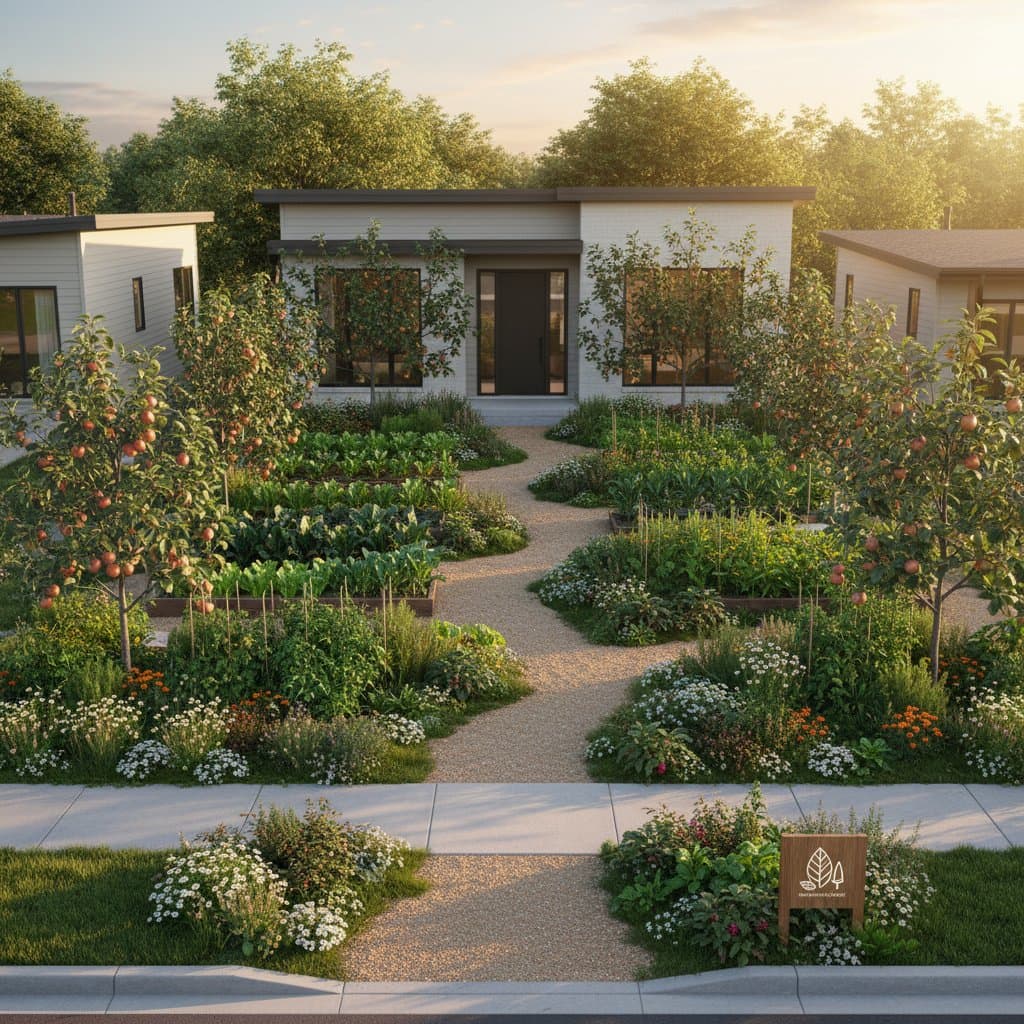
Zoning Reforms Enable Edible Front Yard Food Forests
Imagine stepping outside to harvest fresh blueberries or pluck mint leaves for your morning tea. Such scenes, once confined to backyards, now emerge in front yards thanks to evolving zoning policies. These changes across regions like California replace water-intensive lawns with layered ecosystems that produce food while supporting biodiversity.
Local governments revise ordinances to promote sustainable practices, allowing edible plants in visible areas. Homeowners gain freedom to integrate fruit trees and herbs into street-facing designs. Designers must balance productivity with visual appeal to align with community standards.
This article outlines policy implications for landscape planning, essential preparation steps, and strategies for developing a front yard food forest that thrives long-term.
The Impact of Zoning Reforms
Municipalities previously limited front yard gardening to maintain uniform aesthetics and avoid pest issues. Fines targeted vegetable plots that deviated from traditional lawns. Today, sustainability initiatives drive policy evolution, emphasizing benefits like reduced water use and enhanced food security.
Updated codes permit edibles within front setbacks and incentivize native, low-water plants through rebates. Cities provide resources such as turf replacement programs to ease transitions. These measures eliminate barriers for residents pursuing resilient landscapes.
Professionals adapt by incorporating food elements into designs compliant with rules on height, visibility, and irrigation. Early consultation with planning offices ensures projects avoid delays. Such collaboration streamlines approvals and fosters innovative outcomes.
Choosing Plants for Your Food Forest
Plant selection demands attention to local climate, soil conditions, and multifunctional roles. Prioritize species that yield edibles, attract pollinators, and improve soil health. Layer plants by height to maximize space and create self-sustaining systems.
Fruit Trees
Select trees that anchor the design and provide shade. Citrus varieties like lemons and oranges suit warm climates, offering glossy foliage and seasonal harvests. Figs establish quickly in sunny locations, producing sweet fruit with little intervention. Pomegranates add ornamental flowers and tolerate dry conditions effectively.
Shrubs and Perennials
Incorporate mid-level plants for continuous interest. Blueberries thrive in acidic soil, yielding berries after initial setup. Rosemary delivers aromatic leaves and draws bees with its blooms. Artichokes feature bold leaves and edible hearts, serving dual purposes in the landscape.
Vines and Climbers
Use vertical elements to cover structures and save ground space. Grapes climb trellises, generating shade and grapes for fresh eating or preserving. Passionfruit vines produce vibrant flowers and tangy fruits in frost-free areas. Annual climbers like beans fix nitrogen, benefiting subsequent plantings.
Groundcovers and Herbs
Fill lower layers with low-growing options that suppress weeds. Strawberries spread via runners, bearing fruit near pathways. Oregano and thyme withstand foot traffic and enhance flavors in cooking. Sweet alyssum, though not edible, invites beneficial insects to bolster ecosystem health.
Combine these categories to form guilds where plants support one another, reducing maintenance needs over time.
Navigating Regulations and Community Dynamics
Assess local rules before planting to ensure compliance. Check setback requirements, which dictate planting distances from streets or sidewalks. Height restrictions may cap trees at 15 feet to preserve views. Avoid invasives by consulting approved plant lists from extension services.
Homeowners associations often enforce additional standards on appearance and irrigation efficiency. Drip systems qualify for rebates in water-conscious areas. Document your design with sketches and plant specs to facilitate reviews.
Engage neighbors early to build support. Present visuals of mature food forests and highlight shared advantages like pollinator boosts. Offer samples from your harvest to demonstrate accessibility. Positive interactions position your project as a neighborhood asset.
Many cities fund conversions via grants for low-water landscapes. Workshops teach permaculture basics, equipping participants with skills for success.
Sustaining and Enjoying Your Food Forest
A mature front yard food forest evolves with the seasons, demanding seasonal care like pruning and mulching. Monitor for pests using natural methods, such as companion planting to deter issues. Harvest regularly to encourage production and share surpluses with the community.
Daily interactions deepen connections to nature. Families observe growth cycles firsthand, sparking interest in gardening. Visitors exchange tips, strengthening social bonds.
These landscapes not only supply fresh food but also model sustainable living. They contribute to urban resilience by conserving resources and promoting biodiversity. With careful stewardship, your front yard becomes a legacy of abundance for generations.