
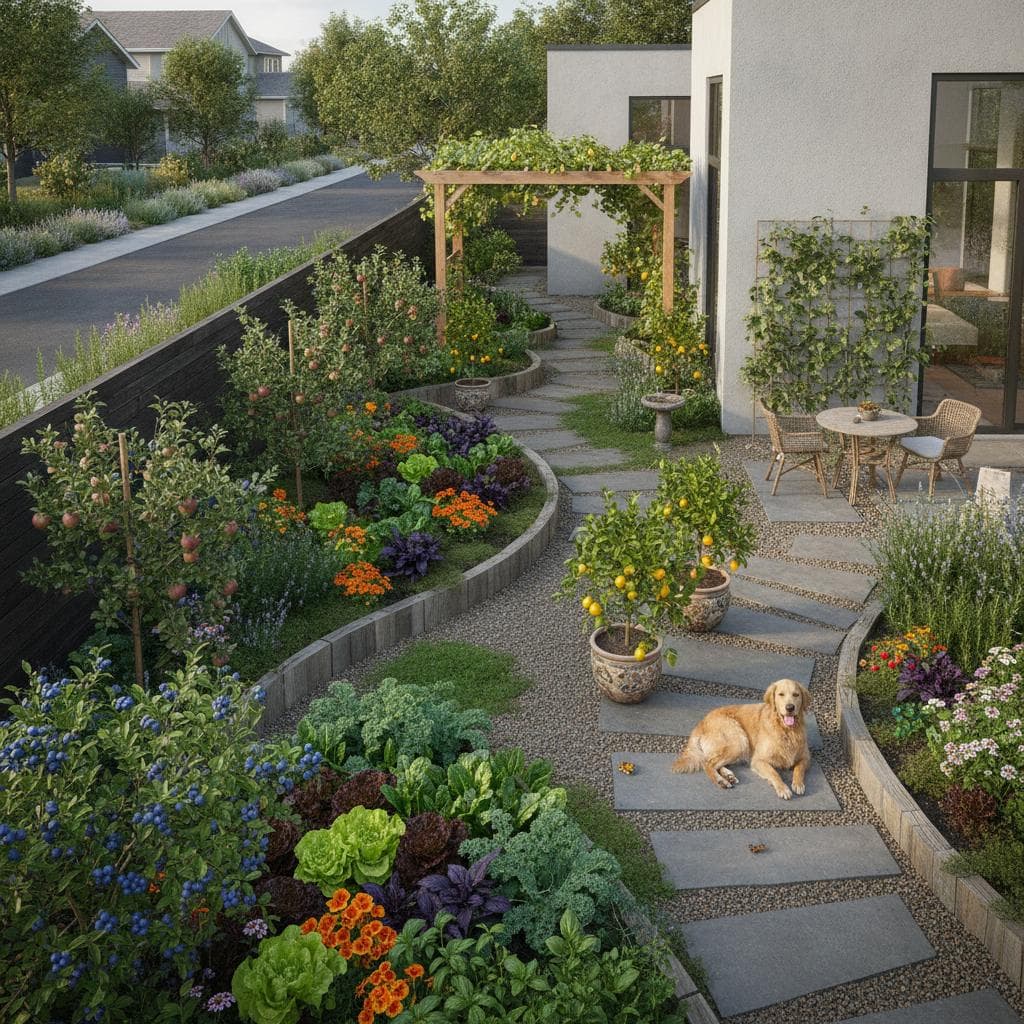
Edible Landscaping Turns Front Yards into Gardens
A front yard can do more than frame a house. With thoughtful design, it can become a productive and beautiful space that feeds both people and pollinators. Edible landscaping blends ornamental design with practical harvest, creating a front yard that looks inviting and provides fresh food right outside the door.
This approach appeals to homeowners who want to make better use of their land while keeping the neighborhood look cohesive. It proves that vegetables, herbs, and fruit trees can be just as decorative as traditional shrubs or turf.
At a Glance
- Location: Residential front yards
- Size: Flexible, from small urban lots to wide suburban lawns
- Climate Zone: Adaptable with region-appropriate plants
- Project Goal: Combine beauty and productivity in a cohesive front yard design
Create a Framework with Structure and Balance
Every successful edible landscape begins with clear structure. Paths, garden beds, and focal plants define the layout and make the space easy to navigate. Raised beds, low retaining walls, or curved gravel paths add formality and help organize mixed plantings.
Use small fruit trees like dwarf apple or fig as anchor points. They provide vertical interest and seasonal color while producing fruit. Underplant them with herbs such as thyme or oregano to fill gaps and soften edges. This layered approach keeps the yard looking full throughout the growing season.
Mix Ornamentals with Edibles
An edible landscape does not need to look like a vegetable patch. By combining traditional ornamentals with edible plants, the design remains lush and attractive year-round. Plant kale or chard for their colorful leaves next to marigolds or lavender.
The contrast of textures and hues gives visual rhythm. Blueberry bushes can replace boxwoods in a hedge, offering spring blossoms, summer fruit, and autumn color. The result is a cohesive design that celebrates both beauty and utility.
Use Layered Planting for Efficiency and Appeal
Layering plants makes the most of space and light. Tall trees or trellised vines form the upper layer, shrubs and perennial herbs fill the middle, and low-growing greens or strawberries cover the ground. This approach mimics natural ecosystems and reduces maintenance.
Consider pairing climbing beans on a trellis with currant bushes below and creeping thyme at the base. The combination creates depth and variety. Layering gives the eye movement and the gardener more yield per square foot.
Incorporate Seasonal Interest
Edible landscapes can stay lively all year with thoughtful plant selection. Choose plants that provide changing color, texture, and harvest through the seasons. Spring brings blossoms from fruit trees and the first greens.
Summer fills the space with tomatoes, peppers, and herbs. Autumn introduces golden leaves and late vegetables like squash. In winter, evergreen herbs such as rosemary or sage keep structure and fragrance. This rhythm keeps the yard engaging, even when harvests are over.
Design for Easy Harvest and Maintenance
A beautiful front yard should still be practical. Plan beds and paths for comfort and access. Keep frequently harvested plants near the front steps or walkway. Use mulched paths to reduce mud and compacted soil.
Install drip irrigation or soaker hoses beneath mulch to save water and time. Choose low-maintenance perennials like rhubarb, asparagus, or herbs that return each year. Good design makes maintenance part of the experience, not a chore.
Add Features That Invite Gathering
An edible front yard can be social as well as functional. Incorporate spaces for lingering, such as a small bench under a fruit tree or a cafe table near the garden gate. These moments of rest help connect people with the space.
They also make the yard feel welcoming to guests and neighbors. Use natural materials like cedar benches or stone pavers to keep the look cohesive with the planting palette.
Consider the Neighborhood Context
While edible landscaping can be creative, it should still respect local character and rules. Check any community guidelines before removing turf or adding large structures. Some neighborhoods encourage pollinator-friendly or drought-tolerant plantings, which pair well with edible species.
Selecting tidy edging, balanced proportions, and maintained pathways shows care and helps the design fit in. A well-kept edible yard can change minds about what a front garden should look like.
Embracing Productive Front Yards
An edible landscape is not just about food. It represents a new way to see the front yard as both useful and beautiful. The design grows with the household, offering color, texture, and harvest in equal measure.