
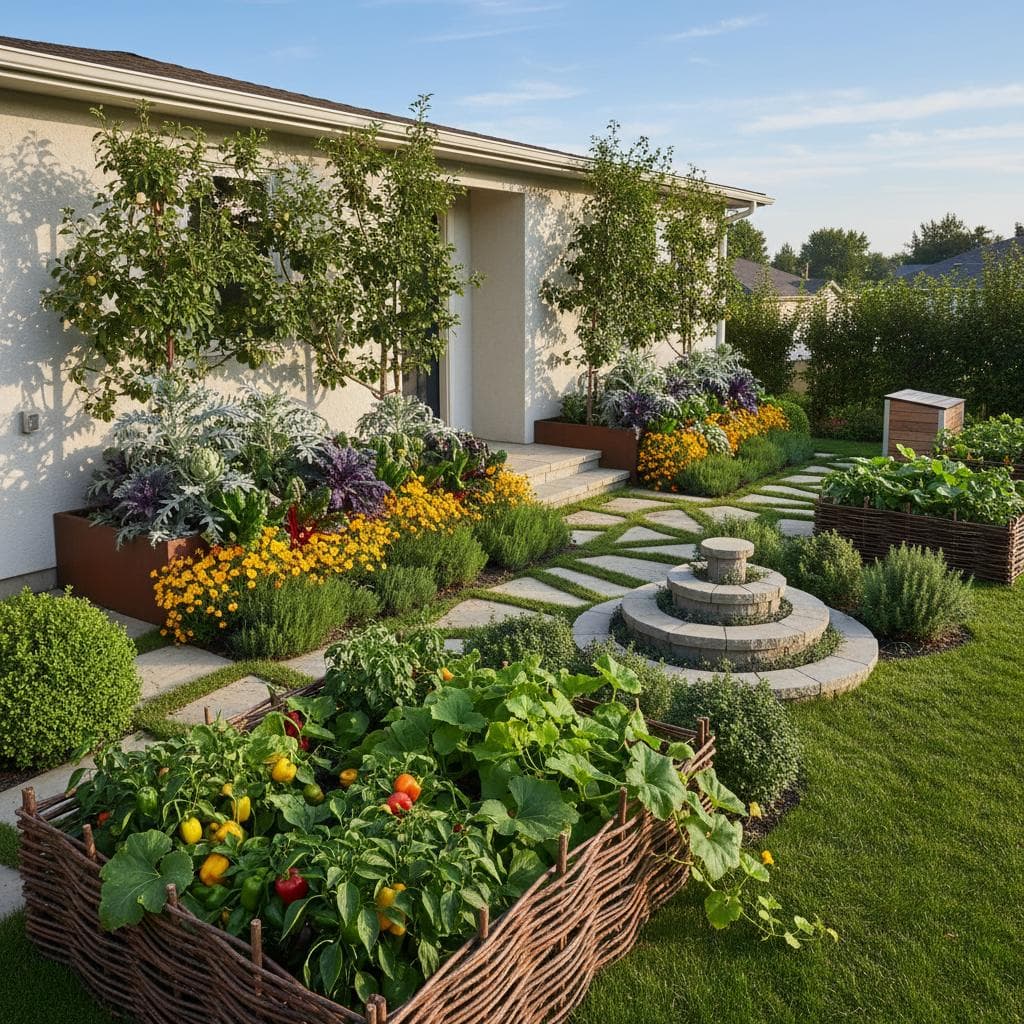
Edible Front Yards That Elevate Curb Appeal in 2025
Homeowners increasingly incorporate edible plants into front yard designs, moving beyond traditional ornamentals. Vegetables, herbs, and fruit shrubs offer both aesthetic appeal and fresh produce. These landscapes demonstrate that productivity and beauty coexist effectively in visible spaces.
Reasons to Integrate Edibles into Front Yards
Front yards represent prime opportunities for multifunctional landscaping. Edible gardens provide visual interest that shifts with seasons while supplying household needs. Proper planning addresses concerns about messiness, ensuring plants match the elegance of conventional features.
In regions with mild climates such as California, year-round growth proves feasible. Pair broad artichoke leaves with lavender spikes, or position frilly kale beside pansies for intentional contrast. Apply landscaping principles like scale, rhythm, and balance to achieve refined results.
Design Principles for Intentional Edible Landscapes
Structure distinguishes polished edible gardens from disorganized ones. Follow these principles to maintain visual order and support yields:
- Establish a framework. Position shrubs, small trees, or perennial herbs as foundational elements. Blueberry bushes, rosemary, and dwarf citrus contribute height and texture. Intersperse seasonal vegetables or edible flowers among them.
- Incorporate repetition. Use recurring colors and shapes for unity. Match eggplant's deep purple with purple basil, or align cabbage's rounded form with allium globes.
- Vary textures. Offset leafy greens with fine herbs for dynamic contrast. Swiss chard's waxy surfaces pair effectively with thyme's soft foliage.
- Define edges. Employ low edibles like strawberries or creeping thyme for neat borders that contain the layout.
- Schedule succession planting. Prepare replacements for maturing crops. This approach sustains fullness across the season.
Selecting Plants for Ornamental and Productive Qualities
Optimal choices balance showiness with ease of care. Certain plants excel in front yard settings due to their inherent appeal.
- Leafy greens: Lacinato kale, red mustard, and rainbow chard deliver sculptural forms and vibrant hues.
- Perennial herbs: Rosemary, sage, and chives maintain year-round architecture and aromatic qualities.
- Fruit-bearing options: Dwarf citrus, pomegranates, and blueberries offer blooms, fruit, and autumn color changes.
- Vining varieties: Scarlet runner beans or Malabar spinach ascend trellises, introducing vertical elements.
- Edible flowers: Calendula, nasturtiums, and violas provide color accents suitable for culinary use.
Combine categories to form unified compositions. Treat edibles as integral design components rather than utilitarian additions.
Incorporating Hardscape for Definition and Access
Hardscape elements organize edible gardens and simplify upkeep. Gravel pathways, raised beds, and low walls delineate zones and facilitate harvesting.
Select materials aligned with home architecture. Natural stone suits cottage or Mediterranean styles, whereas concrete or steel edging complements modern aesthetics. Containers prove versatile in constrained areas; clusters of terracotta pots with herbs near entrances add inviting scents.
Strategic lighting enhances evening presence. Install low-voltage path lights or illuminate raised beds softly. Such features convey deliberate care to visitors.
Maintenance Strategies for Lasting Polish
Edible front yards demand regular oversight comparable to ornamental ones. Proactive measures preserve neatness.
- Apply mulch liberally. Organic layers retain soil moisture, curb weeds, and promote tidiness.
- Prune consistently. Shape herbs and shrubs to uphold form; remove faded vegetable foliage to avoid disarray.
- Replant without delay. Fill voids from harvested crops with fast-maturing greens or blooms.
- Fertilize judiciously. Employ compost or organic options to foster vigor without leggy growth.
- Water efficiently. Drip irrigation or soaker hoses conserve resources and keep leaves dry to deter ailments.
These practices ensure year-round attractiveness and productivity.
Enhancing Property Value Through Edible Designs
Curb appeal shapes initial impressions of homes. Edible landscapes signal thoughtful stewardship, innovation, and environmental awareness.
Real estate experts note that such gardens differentiate listings. Prospective buyers value the blend of aesthetics and utility. The design extends the home's character, embodying a desirable lifestyle.
Evolving local regulations often permit greater front yard flexibility. Compliant, attractive edible arrangements satisfy community expectations while reducing food expenses.
Prioritizing Sustainability in Edible Layouts
In arid areas like California, water efficiency guides planting decisions. Resilient designs emerge from suitable selections and soil practices. Mulch, compost, and drought-resistant types minimize consumption.
Perennials like artichokes, rosemary, and figs anchor stability. They demand infrequent replanting, supply reliable structure, and improve soil over time. Border with pollinator attractors to bolster local ecosystems.
Opt for eco-friendly materials such as reclaimed wood beds or regional stone. These choices yield authentic, low-impact gardens where utility and form harmonize.
Adapting and Refining Your Edible Front Yard
Edible gardens enrich daily life by involving senses and routines. Harvesting herbs or berries fosters a tangible connection to nature.
Evaluate performance seasonally. Identify thriving plants, effective combinations, and areas needing adjustment. Implement minor tweaks to sustain relevance and meet evolving preferences. Rotate annuals or refresh palettes annually for dynamism within the established framework.
Engage professionals like landscape designers or horticulturists for optimized results. Their insights on soil, watering, and compatibility accelerate success.
Harvesting Benefits from Thoughtful Edible Integration
Edible front yards transcend utility to embody integrated living. They deliver elegance, ecological benefits, and sustenance in compact forms.
As communities embrace these approaches, definitions of appealing yards broaden. Residents gain fulfillment from producing meals mere steps from entryways, uniting aesthetics with abundance.