
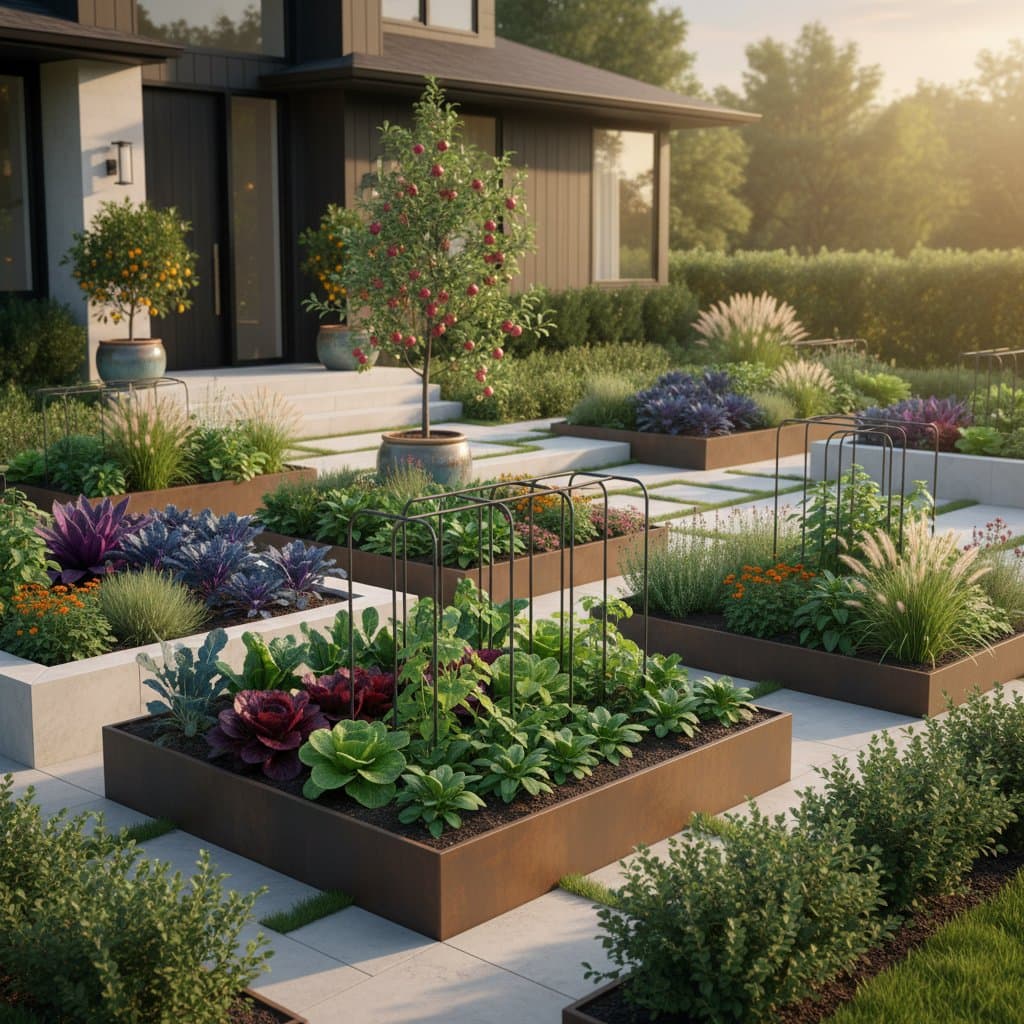
Transform Your Front Yard into a Productive Landscape
A thoughtfully planned front yard serves purposes beyond aesthetics. It provides fresh produce for the household while preserving an inviting exterior. Integrating edible plants into the design allows homeowners to lower grocery expenses and cultivate a space that functions effectively in diverse residential settings.
Key Project Overview
Location: Front yard of residential properties
Size Range: Suitable for compact urban areas or expansive suburban lawns
Climate Considerations: Adapt plant choices to local conditions
Primary Objective: Produce homegrown food alongside a refined, approachable aesthetic
Establish Defined Growing Areas
Begin the project by mapping out distinct areas for cultivation, access, and leisure within the front yard. This approach maintains order and simplifies daily tasks. Install pathways using durable materials such as gravel or decomposed granite to connect various sections seamlessly. Employ subtle borders, like low-growing boxwood hedges or simple edging stones, to outline raised planting beds and avoid a stark, functional appearance.
Landscape professionals emphasize that clear boundaries impart a sense of purpose to the garden. Such organization ensures the yard remains neat, even during peak growing periods. For instance, position a straight gravel walkway from the sidewalk to the entrance, flanked by elevated cedar beds that accommodate vegetables and herbs.
Practical Advantages: Enhances navigation and streamlines care routines.
Layout Recommendations: Incorporate a mix of linear and organic shapes to harmonize with the home's architectural style.
Implementation Idea: Create a focal point with a resting bench at the pathway's end, ideal for pausing during harvest activities.
Integrate Edible Plants with Ornamental Features
Achieve a balanced design by combining food-producing plants with decorative elements. Select greens like kale or Swiss chard for their bold foliage, which complements the soft sway of ornamental grasses or the subtle blooms of lavender. Arrange groupings based on mature height and foliage tones to foster visual harmony across the yard.
Horticultural experts note that viewing edibles as integral design components elevates their presence alongside traditional ornamentals. This combination sustains color and texture through the seasons while yielding harvestable crops. Consider planting red-stemmed sorrel near crimson-hued daylilies to repeat shades and create depth.
Practical Advantages: Diminishes reliance on purchased produce without sacrificing exterior charm.
Layout Recommendations: Echo hues and textures across plant selections for a unified composition.
Implementation Idea: Cluster fennel with lavender borders to add height variation and aromatic interest near entry points.
Incorporate Fruit Trees and Shrubs for Structure
Introduce compact fruit-bearing options to provide foundational elements and elevate the garden's dimension. Opt for dwarf varieties of apple or Asian pear trees along perimeter edges, where they offer subtle screening. Blueberries or serviceberry shrubs serve as natural hedges, delivering berries alongside seasonal foliage changes.
Design specialists highlight that these elements impart permanence and eventual rewards through consistent yields. They contribute shade, pleasant scents, and privacy while substituting for commercial fruits. Select self-fertile cultivars to maximize output in limited spaces, such as training espaliered apples flat against a fence to save footprint.
Practical Advantages: Delivers enduring harvests and boundary definition.
Layout Recommendations: Prioritize varieties that require minimal cross-pollination for smaller plots.
Implementation Idea: Plant a row of blueberry bushes as a low hedge, spaced 4 to 6 feet apart, to frame a walkway and produce summer berries.
Employ Containers for Versatile Planting
Utilize pots and planters to introduce flexibility and accentuate key areas like doorways or seating zones. These vessels suit quick-growing items such as herbs, salad greens, or dwarf tomato varieties. Select durable options in ceramic or galvanized steel that align with the home's color palette, and cluster them in odd-numbered groups for visual stability.
Experienced cultivators appreciate how containers facilitate relocation for optimal sunlight or convenience. They also prevent invasive spread from plants like mint. Position three matching terracotta pots by the front entrance, each holding a different herb such as basil, rosemary, or compact chili peppers, to create an immediate sensory welcome.
Practical Advantages: Optimizes limited ground space and eases upkeep.
Layout Recommendations: Coordinate container styles and scales for cohesive presentation.
Implementation Idea: Elevate pots on sturdy stands to protect roots from ground moisture and improve accessibility for frequent harvesting.
Design for Seasonal Continuity
Schedule crop rotations and perennial inclusions to sustain the yard's allure across months. Evergreen selections like rosemary or thyme maintain presence when annuals fade, while mulch layers or low groundcovers shield soil and retain water. Layer plants with varying bloom times to ensure ongoing vibrancy.
Professionals in landscape design stress that foundational structure prevents off-season barrenness. This foresight balances form, texture, and color for a perpetually engaging space. Pair winter-hardy ornamental kale with spreading thyme as a mulch alternative to cover beds and suppress weeds effectively.
Practical Advantages: Prolongs aesthetic and productive value year-round.
Layout Recommendations: Distribute evergreens evenly with deciduous options for steady interest.
Implementation Idea: Sow cool-season lettuces in fall to overlap with spring perennials, maintaining green coverage through transitions.
Maintain and Evolve Your Productive Front Yard
With establishment complete, the garden integrates into everyday routines, offering morning picks that eliminate frequent store visits. Neighbors often comment on the enhanced vitality it brings to the block, fostering community interactions. Regular attention to pruning, soil amendments, and staggered plantings preserves both output and elegance.
Recycle household waste through composting to enrich the earth naturally, and renew pathway surfaces annually for lasting durability. These habits evolve into effortless practices over time. Ultimately, this design demonstrates how aesthetics and utility coexist, enabling a 30 percent reduction in food spending while transforming the front yard into a vibrant, self-sustaining extension of home life.