
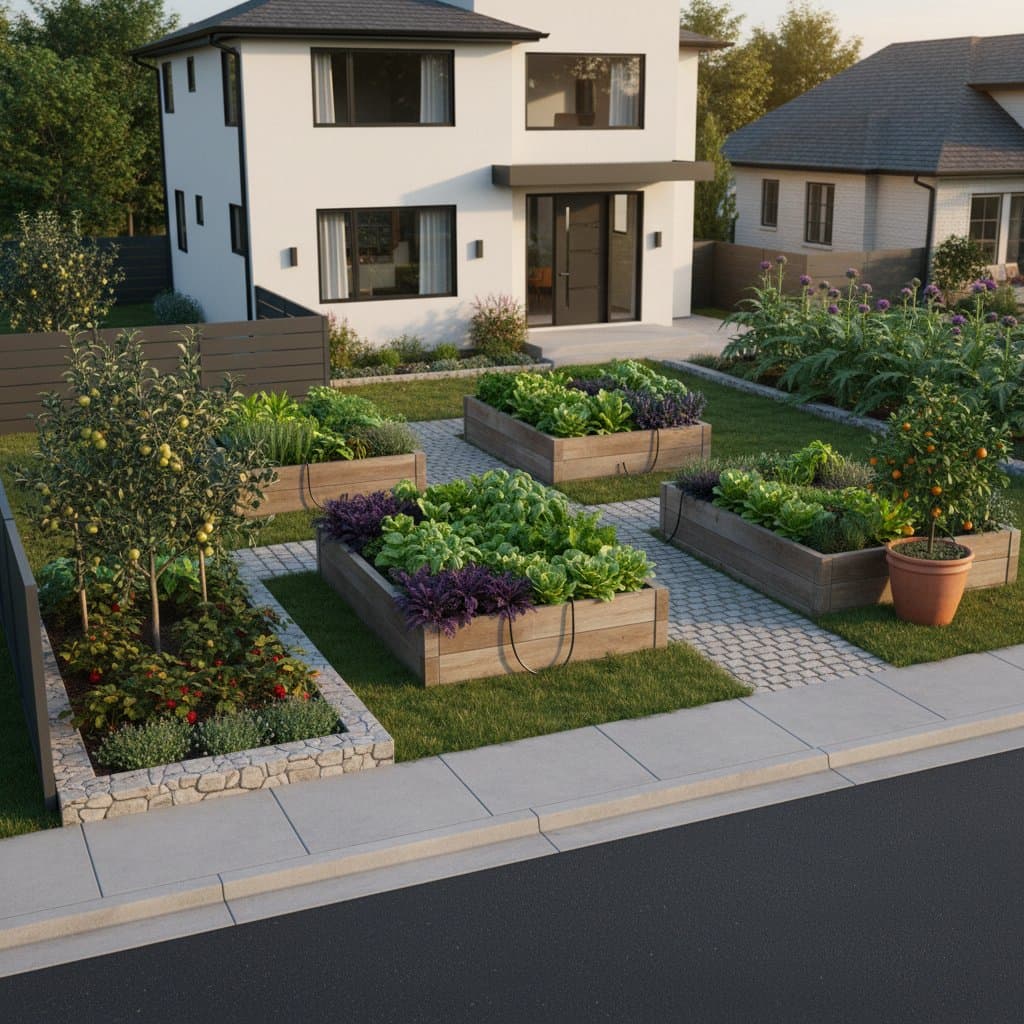
The 2026 Rise of Edible Front Yards
Front yards undergo a profound evolution in 2026. Traditional expanses of grass and decorative bushes yield to structured raised beds, fruit-bearing shrubs, and nutrient-rich plantings. Property owners prioritize functionality alongside aesthetics, reshaping visible outdoor areas into sources of nourishment for families and support for local wildlife. This movement stems from an increasing emphasis on independence, reduced resource use, and deeper ties to the natural environment.
Edible front yards transcend experimental trends to emerge as efficient land utilization strategies. Spaces previously dedicated to frequent trimming and watering now produce harvests while maintaining an orderly appearance. Careful selection of plants ensures ongoing visual appeal through varied foliage, blooms, and structural elements that harmonize with neighborhood standards.
Key Overview
Setting: Residential areas in suburbs and cities
Scale: From small urban plots to expansive suburban lawns
Adaptability: Suitable for diverse climates with appropriate species selection
Primary Objective: Develop a front yard that yields food, remains visually striking, and demands minimal ongoing care using edible vegetation
1. Replace the Lawn with Layered Edible Plantings
Conventional lawns consume significant water and labor with little return beyond superficial beauty. Substituting grass with a multi-tiered arrangement of food-producing plants introduces both visual depth and practical output. This approach forms a dynamic planting scheme that shifts appealingly across seasons, from spring blossoms to autumn harvests.
Begin by establishing foundational elements like compact fruit trees or trained espalier varieties positioned along boundaries for height and form. Layer in mid-level shrubs such as serviceberries or gooseberries to add bushy volume, then incorporate ground-level options including perennial greens or sprawling vines. Such stratification promotes soil health by suppressing weeds naturally and fostering microbial activity.
Horticulturists emphasize that layers replicate forest understories, resulting in reduced upkeep and enhanced ecosystem balance.
Practical Advantages: Decreased need for mowing and irrigation, alongside increased habitat diversity for insects and birds.
Styling Tip: Incorporate foliage variations, such as the glossy leaves of lemon balm juxtaposed against the ruffled edges of Swiss chard, to create rhythmic patterns.
Real-World Application: In a modest urban front yard, a dwarf citrus tree anchors the center, surrounded by low-maintenance alpine strawberries, rosemary borders, and nasturtium trailers that spill colorfully without overwhelming the space.
2. Blend Ornamental and Edible Elements for Continuous Interest
Productive gardens need not sacrifice elegance. Integrating food crops with decorative features ensures the landscape remains engaging throughout the year, with evolving displays of color, form, and scent. Edible plants often possess inherent ornamental qualities that enhance overall design without additional plantings.
Select vibrant options like multicolored kale for stem accents, deep-hued lettuces for textural contrast, and sturdy perennials such as rhubarb for bold focal points. Weave in companion flowers including bee balm or echinacea to draw pollinators and soften edges near walkways, creating a sensory experience.
Garden professionals note that aesthetic appeal and utility coexist seamlessly in superior designs.
Practical Advantages: Draws essential pollinators to boost yields and maintains a lively appearance across seasons.
Styling Tip: Achieve unity by repeating motifs, such as the blue-green tones of fennel echoed in nearby hosta leaves along pathways.
Real-World Application: An edging of sunflowers, dill, and rainbow beets outlines a central bed of heirloom carrots and eggplants, merging harvest potential with a polished, inviting facade.
3. Incorporate Vertical Gardening Techniques
Limited horizontal space presents no barrier to abundance. Vertical structures like trellises, pergolas, and wall-mounted planters accommodate vining edibles, effectively multiplying growing area while adding dimensional appeal. These features also offer screening from streets or neighbors, enhancing privacy without encroaching on usable ground.
Opt for durable, weather-resistant materials that align with the property's style, from rustic wooden frames to sleek metal grids. Position them strategically to capture sunlight and avoid shading lower plantings, ensuring balanced growth. Regular pruning keeps vines tidy and prevents overgrowth that could disrupt harmony.
Design experts observe that upward expansion elevates both output and visual drama without introducing disorder.
Practical Advantages: Optimizes production in constrained areas, ideal for townhomes or narrow lots.
Styling Tip: Guide climbers along angular supports to form crisp, contemporary silhouettes that complement modern architecture.
Real-World Application: A boundary wall adorned with pole beans, peas, and kiwi vines provides seasonal blooms, pods, and fruits, accessible from the path and contributing to a layered, enclosed entryway.
4. Integrate Pathways and Social Areas
An effective edible front yard fosters engagement rather than mere observation. Well-defined routes direct foot traffic efficiently, while designated rest spots promote lingering and conversation. These elements transform the space from a passive display into an interactive extension of home life.
Employ permeable surfaces such as decomposed granite, pavers, or mulched trails to manage drainage and minimize erosion. Design paths with gentle curves or straight lines to suit the lot's layout, ensuring widths accommodate wheelbarrows or multiple walkers. Embed low herbs like mint or chamomile between stones for subtle fragrance underfoot.
Landscape specialists assert that circulation features elevate utilitarian spaces into communal assets.
Practical Advantages: Facilitates plant access for tending and harvesting while building neighborhood bonds.
Styling Tip: Mirror exterior details, like brick accents from the house, in path borders to forge architectural cohesion.
Real-World Application: A winding stone trail culminates at a wooden seat flanked by lavender hedges and berry bushes, offering a serene vantage for enjoying the garden's progression.
5. Ensure Long-Term Sustainability Through Smart Maintenance
Sustaining an edible front yard requires foresight to prevent burnout. Initiate with a modest footprint, focusing on a few compatible species to master their cycles before scaling up. Prioritize drought-tolerant, disease-resistant cultivars that thrive in local conditions, consulting regional growing guides for optimal selections.
Establish routines like mulching to retain moisture, composting for nutrient recycling, and crop rotation to preserve soil vitality. Monitor for pests using natural deterrents such as companion planting or neem applications, avoiding chemical interventions that harm beneficial organisms. Seasonal assessments allow adjustments, such as replacing underperformers with hardier alternatives.
Practical Advantages: Builds resilience against weather fluctuations and simplifies daily oversight.
Sustaining Tip: Track progress in a journal, noting bloom times and yields to refine future plantings.
Real-World Application: A homeowner starts with a single raised bed of greens and herbs, gradually adding fruit espaliers as familiarity grows, resulting in a balanced, thriving yard with minimal intervention.
Sustaining Abundance in Your Edible Front Yard
Embracing an edible front yard in 2026 yields rewards beyond immediate harvests. These landscapes cultivate resilience, community, and joy through hands-on stewardship. As designs mature, they reflect personal tastes while contributing to broader environmental goals, proving that productive beauty flourishes with intention and care.