
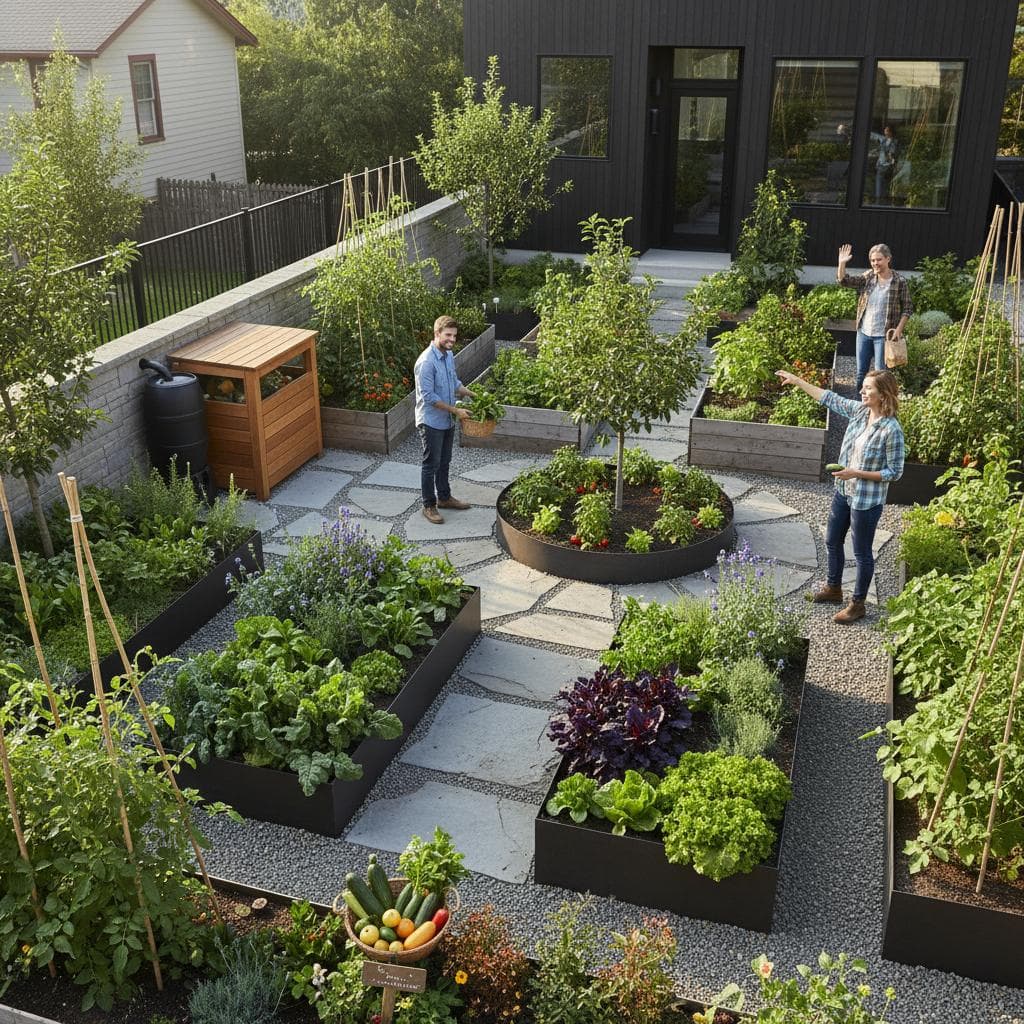
Front Yard Edible Gardens Experience 300 Percent Growth in Urban Areas
Front yards extend beyond simple curb appeal in modern urban settings. Homeowners across cities convert lawns into productive edible landscapes that nourish people and support pollinators. This evolution proves both practical and visually appealing, converting idle spaces into vibrant gardens that foster neighborhood connections and localize food production.
These edible front yard gardens merge thoughtful design with utility. They cultivate a sense of plenty, minimize food transportation distances, and establish a dynamic seasonal cycle directly at the home entrance.
At a Glance
Location: Urban residential areas
Size: Small to medium front yards
Climate Zone: Suitable for diverse regions with adaptations
Project Goal: Integrate aesthetic appeal with productive edible plantings
1. Design with Purpose
Effective edible front yards start with a structured foundation. Incorporate raised beds, gravel pathways, and distinct planting areas to maintain order and accessibility. Such planning avoids a disordered appearance and simplifies ongoing care.
Landscape professionals emphasize that robust geometric elements make an edible garden appear deliberate rather than haphazard. Install straight pathways or curved borders edged with brick or steel to provide visual anchors. Organize plants by stature and harvest schedules to achieve balance.
On the practical side, this organization facilitates clear access routes and targeted irrigation. Position a drip system under mulch layers for a neat presentation. Select cedar or composite materials for raised beds to ensure longevity and harmony with the environment.
Visual Callout: Raised cedar beds outline a combination of herbs, kale, and strawberries, delivering a neat yet abundant look.
2. Blend Ornamentals with Edibles
Pairing edible plants with ornamental varieties allows the garden to integrate smoothly into the surrounding neighborhood. Position tall sunflowers as a vibrant background, and use purple basil or rainbow chard to introduce color akin to conventional border plantings.
Horticulture experts note that diverse visuals prevent the garden from seeming purely functional. Combine varied textures and foliage shapes for added depth, and include flowering herbs such as lavender or borage to draw in bees for essential pollination. Plant low-growing thyme alongside paths to release aroma with every footfall.
This strategy optimizes space utilization while preserving curb appeal. It promotes biodiversity, which mitigates pest problems and fosters a resilient garden ecosystem.
Visual Callout: Basil and marigolds border the walkway, combining scent with utility.
3. Select Crops for Year-Round Harvests
Front yard edible gardens perform optimally when they remain visually engaging through all seasons. Choose plants with staggered maturity periods. Begin with early-season greens like arugula and spinach, transitioning to summer staples such as tomatoes, peppers, and beans. Include perennials like asparagus or rhubarb for enduring structure.
Garden specialists recommend planning harvests similar to curating a color scheme, progressing from spring greens to autumn hues. Crop rotation sustains meal variety and bolsters soil vitality by alternating nutrient requirements.
Practically, sequential planting ensures persistent visual density and a steady supply of produce. Apply mulch with straw or shredded leaves to retain soil moisture and neaten pathways post-harvest.
Visual Callout: A mosaic of greens and maturing tomatoes sustains garden vitality throughout the growing season.
4. Incorporate Practical Elements
Compact front yards accommodate storage, composting, and seating when integrated thoughtfully. A small tool station or vertical trellis serves dual purposes as a privacy barrier. Conceal compost bins amid shrubs, and add a bench to encourage neighbor interactions.
Designers highlight that effective planning reveals elegance in everyday tools. Employ galvanized metal for trellises or aged wood for storage to align with the garden's style. Outfit rain barrels to complement house trim, capturing rooftop water for plant irrigation.
These additions advance sustainability and ease maintenance, converting potential disarray into purposeful, stylish components.
Visual Callout: A trellis supporting climbing beans offers privacy and framework adjacent to the entrance.
5. Foster Community Through Sharing
Edible front yard gardens inherently promote social bonds. Place surplus cucumbers in a porch basket or distribute shared herbs to build neighborly rapport. Some residents align planting schedules for seasonal produce swaps.
Community gardening advocates observe that front yard farms convert food into dialogue starters. Such spaces spark interest and motivate others to reassess their own yards. This communal aspect enriches the experience beyond mere cultivation.
From a functional perspective, visible public gardens discourage vandalism via ongoing observation and collective ownership. Daily passersby develop a sense of guardianship over these shared neighborhood features.
Visual Callout: Neighbors converse near a lettuce edge, exchanging recipes and cultivation advice.
6. Maintain Visual Unity
Productivity matters, yet aesthetics demand attention. Repeat materials, apply uniform edging, and adopt subtle color schemes to unify the space. Align the garden's aesthetic with the home's architectural style for seamless integration.
Professionals assert that unity positions the garden as an extension of the residence, rather than an isolated addition. Modern homes pair well with clean concrete containers, whereas cottage designs benefit from rustic wooden beds and gravel walks.
Practically, unified design elevates curb appeal and may boost property worth. Defined visual boundaries streamline maintenance by clarifying plant placements.
Visual Callout: Uniform edging and gentle gravel paths connect edible beds to the home's approach.
Sustaining and Evolving Your Edible Front Yard
An established edible front yard integrates into everyday routines. Harvest herbs or berries upon exiting the home to attune to seasonal shifts. The garden evolves continually, providing hues, fragrances, and fresh yields in return for consistent attention.
Care remains manageable through strategic preparation. Mulch regularly, prune seasonally, and compost to enrich soil and sustain productivity. Refine crop selections over time to reflect preferences and gained knowledge.
The rise of edible front yard designs signals a broader reimagining of beauty and utility. Former display lawns now fulfill profound roles, yielding nourishment, drawing wildlife, and nurturing community. The outcome yields landscapes that pulse with life, labor effectively, and invite all who pass.