
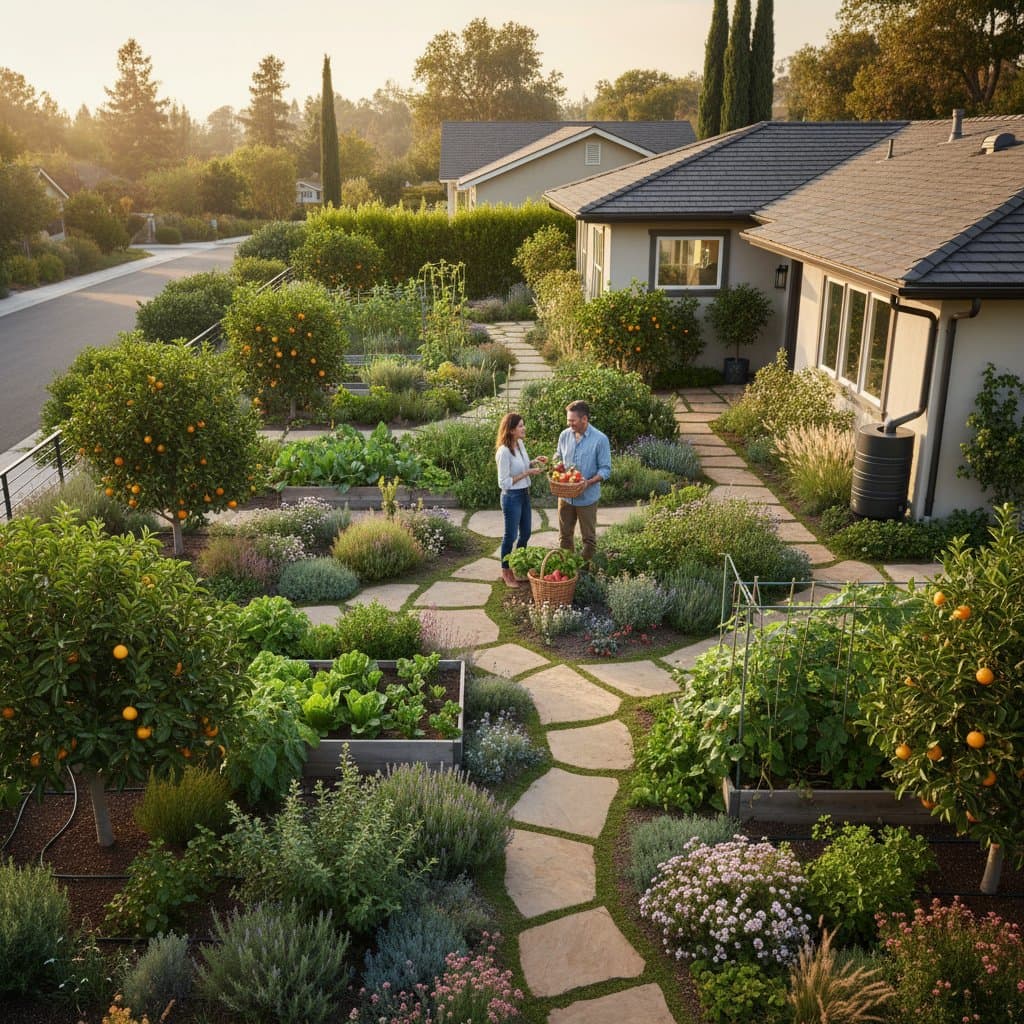
The Rise of Edible Front Yards in California
Homeowners across California face persistent challenges with water scarcity and rising living expenses. Traditional grass lawns demand significant irrigation, often accounting for half of household water use. In response, many residents replace these thirsty expanses with edible gardens that produce fresh vegetables, fruits, and herbs while conserving resources.
This shift reflects a broader movement toward sustainability. Data from local agricultural extensions indicate a 300 percent surge in front-yard farming over the past five years. Such transformations not only beautify properties but also provide tangible economic and ecological advantages.
Communities benefit as well. Visible gardens inspire neighbors to adopt similar practices, creating networks for seed sharing and gardening advice. The result is a more resilient local food system amid climate uncertainties.
Key Benefits of Converting Lawns to Edible Gardens
Water savings stand out as a primary incentive. A typical lawn requires 1.5 inches of water per week during dry months, translating to thousands of gallons annually. Edible plants, selected for drought tolerance, use up to 75 percent less water, directly lowering utility bills.
Financial gains extend beyond utilities. Homegrown produce cuts grocery expenses by an average of 20 percent for participating households. Staples like tomatoes, lettuce, and citrus thrive in California's climate, yielding harvests worth hundreds of dollars each year.
Environmental impacts prove equally compelling. These gardens enhance biodiversity by attracting pollinators and beneficial insects. Soil health improves through organic matter addition, reducing erosion and runoff compared to manicured turf.
Health and well-being receive a boost too. Tending a garden encourages physical activity and reduces stress. Fresh, pesticide-free foods promote better nutrition, aligning with wellness trends in urban living.
Assessing Your Front Yard for Transformation
Evaluate sunlight exposure first, as most edibles need six to eight hours daily. South-facing yards receive ample light, ideal for sun-loving crops like peppers and basil. Shaded areas suit greens such as kale and spinach.
Test soil quality next. California's varied terrains range from clay-heavy to sandy. Amend with compost to improve drainage and fertility, aiming for a pH between 6.0 and 7.0.
Consider space constraints. Even small yards accommodate raised beds or containers. Measure available area to plan layouts that balance productivity with curb appeal.
Check local regulations. Most municipalities permit edible landscaping, but verify setback rules or homeowners association guidelines to avoid issues.
Designing a Productive and Attractive Layout
Start with a focal point, such as a fruit tree or trellis for climbing vines. Dwarf varieties like Meyer lemon or espaliered apples fit neatly without overwhelming the space.
Incorporate pathways for access. Gravel or mulch paths prevent soil compaction and define garden zones. Curved designs add visual interest while guiding visitor flow.
Layer plants by height and function. Tall backdrops of corn or sunflowers shelter shorter herbs and vegetables. Intersperse flowers like marigolds to deter pests naturally.
Integrate hardscape elements sparingly. Benches or decorative stones provide resting spots without dominating the edible focus.
Selecting Plants for Year-Round Harvests
Choose perennials for longevity. Artichokes and strawberries return annually, offering consistent yields with minimal replanting.
Opt for season-specific annuals. Plant cool-weather brassicas like broccoli in fall and warm-season squash in spring. Succession planting ensures continuous production.
Prioritize water-efficient varieties. Native selections such as California poppies or drought-resistant tomatoes minimize irrigation needs.
- Spring: Sow carrots, peas, and radishes for quick wins.
- Summer: Focus on heat-tolerant eggplant, okra, and beans.
- Fall: Introduce root crops like beets and garlic.
- Winter: Grow leafy greens under row covers for protection.
Implementation Steps: From Lawn Removal to First Harvest
Remove sod manually or with solarization. Cover grass with black plastic for six weeks to kill it naturally, preserving soil structure.
Prepare beds by tilling lightly and adding organic amendments. Raised beds, constructed from untreated wood, elevate soil above poor native ground.
Install irrigation efficiently. Drip systems deliver water directly to roots, reducing evaporation by 50 percent compared to sprinklers.
Plant in phases to manage workload. Begin with hardy perennials, then add annuals as seasons progress.
Monitor progress weekly. Adjust watering based on weather, and prune to encourage bushy growth.
Maintenance Strategies for Sustained Success
Mulch generously to retain moisture and suppress weeds. Organic materials like straw decompose into nutrient-rich humus over time.
Fertilize organically. Compost teas or worm castings provide gentle nutrition without chemical residues.
Control pests proactively. Companion planting pairs strong-scented herbs with vulnerable crops to repel insects. Hand-pick larger invaders as needed.
Harvest regularly to stimulate production. Pick ripe items promptly, which prevents seed set and promotes further fruiting.
Winterize by clearing debris and covering tender plants. This preparation ensures readiness for the next growing cycle.
Long-Term Rewards and Community Impact
Over time, these gardens yield compounding benefits. Soil vitality increases, supporting higher outputs with less input. Families gain skills in self-sufficiency, passed down across generations.
Neighborhoods see ripple effects. Shared harvests build social bonds, while collective water savings ease municipal strains during droughts.
Sustainability deepens as participants connect with local ecosystems. Many report a profound sense of accomplishment from nurturing living landscapes that sustain both people and planet.
Embrace this approach to cultivate not just food, but a thriving, water-wise future right at your doorstep.