
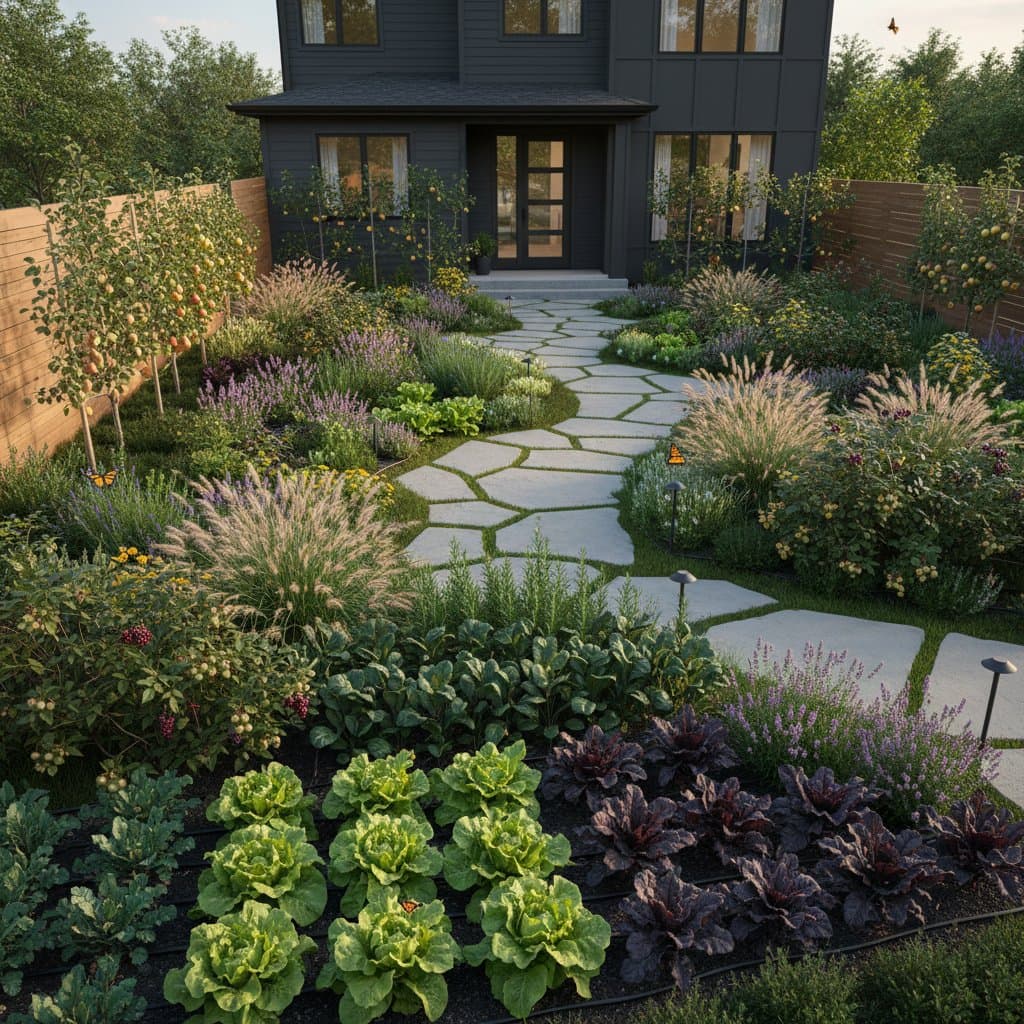
Front Yard Farms: Edible Landscaping Goes Mainstream
Front yards are changing. Once dominated by lawns and ornamental shrubs, they are now being transformed into productive landscapes filled with fruits, vegetables, and herbs. These edible front yards bring beauty and purpose together, offering fresh food while maintaining curb appeal. The result is a landscape that feels alive, useful, and deeply connected to home life.
At a Glance
Location: Residential neighborhoods
Size: Small to medium front yards
Climate Zone: Adaptable to most regions
Project Goal: Combine aesthetics and food production in a visible, inviting way
1. Start with Structure
Every successful edible landscape begins with a clear layout. Structure gives the garden order and makes it look intentional rather than improvised. Raised beds, gravel paths, or low hedges define space while keeping the design neat.
A designer might say: “Structure is what makes a vegetable garden look like a landscape instead of a utility space.”
Straight or gently curving beds help frame the yard and guide the eye. Use edging materials like steel, stone, or brick to give permanence. Where the view from the street matters, keep taller crops like okra or tomatoes toward the center or back and use low-growing plants such as lettuces or strawberries along the edges. This layering keeps sightlines open and visually appealing. For example, position a 3-foot-high raised bed in the rear with indeterminate tomatoes supported by stakes, flanked by 1-foot-tall strawberry borders that spill softly onto the path.
Visual callout: Brick-edged beds lead the eye toward a central path lined with chives and thyme.
2. Mix Ornamentals and Edibles
A front yard farm works best when it blends seamlessly with the neighborhood. Mixing ornamental plants with food crops keeps the composition balanced and colorful. Think of kale beside echinacea or parsley under roses. The contrast in leaf texture and color adds depth.
The functional benefit is twofold. Edibles thrive in the rich soil and full sun often found out front, while ornamentals soften the look and invite pollinators. This mix creates a layered ecosystem that feels welcoming rather than utilitarian.
Choose plants that complement each other visually and ecologically. Blue-green cabbage leaves pair beautifully with purple basil. Bright calendula blooms add cheer near leafy greens. Border herbs like lavender or oregano help define beds and provide fragrance. To implement this, select three ornamental perennials such as salvia or coreopsis for every four edible varieties, ensuring pollinator-friendly blooms appear from spring through fall.
A horticulturist might say: “When food crops look as good as flowers, neighbors stop seeing them as out of place.”
Visual callout: Bright chard leaves echo the tones of nearby zinnias in a sunny border.
3. Plan for Year-Round Interest
A productive garden should also be attractive across all seasons. By staggering plant types and bloom times, the front yard remains engaging from early spring to late winter. Evergreens, trellises, and decorative supports keep the garden structured even when annual crops are gone.
Rotate crops through the seasons to maintain color and texture. Cool-season greens like spinach and bok choy can give way to summer tomatoes and peppers, followed by fall brassicas or garlic. Include shrubs such as blueberry or rosemary for year-round appeal. Start planning by mapping a 12-month calendar: sow spinach in late winter under row covers, transplant tomatoes in May, and plant garlic cloves in October for a continuous display.
A designer might say: “Perennial structure keeps the garden lively when the vegetable beds are bare.”
Consider adding features like gravel paths or a small arbor to anchor the scene during dormant months. These design elements provide visual continuity while supporting the changing plant palette.
Visual callout: A cedar trellis holds climbing beans in summer and adds sculptural interest in winter.
4. Use Water Wisely
Front yard edible gardens thrive on thoughtful irrigation. Drip systems or soaker hoses keep foliage dry, reducing disease, while delivering precise amounts of water to the roots. Mulching with straw or shredded bark helps retain moisture and suppress weeds.
The functional gain is lower maintenance and healthier plants. The design insight lies in concealing irrigation lines beneath mulch or edging so the look stays tidy. In regions with limited rainfall, choose drought-tolerant edibles like Mediterranean herbs, chard, or okra. Group plants with similar water needs together for efficiency. Install a timer-based drip system to deliver 1 inch of water weekly during peak summer, adjusting for rainfall to avoid overwatering.
A landscape contractor might say: “Good irrigation design makes the difference between a lush garden and one that struggles through heat.”
Visual callout: Drip lines disappear under mulch between rows of basil and peppers.
5. Add Layered Lighting
Evening lighting turns an edible yard into a welcoming space after dark. Low-voltage path lights, uplights on fruit trees, and subtle string lights near seating areas make the garden usable and inviting. Warm color temperatures around 2700 K flatter foliage and create a gentle glow.
Lighting extends enjoyment beyond daytime hours and adds curb appeal. It also increases safety for harvesting or watering in low light. Keep fixtures small and unobtrusive to maintain a natural look. Position four to six solar-powered path lights along walkways and one uplight per fruit tree to highlight branches without overwhelming the space.
A designer might say: “Layered lighting extends evenings outdoors without harsh glare.”
Visual callout: Soft uplights highlight a fig tree while path lights trace the edge of raised beds.
6. Balance Beauty and Productivity
The challenge with front yard farms is keeping productivity high while maintaining a cohesive appearance. Repetition of shapes and colors helps tie the design together. Group crops by height or leaf color to create rhythm. For instance, alternating rows of green lettuce and red mustard give pattern and contrast.
Choose varieties with ornamental traits as well as taste. Rainbow chard, purple carrots, and red-veined sorrel bring color to the composition. Fruit trees like espaliered apples or columnar peaches add vertical structure and seasonal interest. To achieve balance, dedicate 60 percent of the space to edibles and 40 percent to ornamentals, selecting compact varieties like 'Baby Cake' carrots that mature in 50 days for quick harvests.
A garden designer might say: “When you treat vegetables as design elements, the garden stops being just practical and becomes beautiful.”
Visual callout: Alternating bands of lettuce and beets create a living pattern across a sunny bed.
7. Welcome Pollinators and Neighbors
Edible landscapes are social spaces. They attract bees, butterflies, and birds, which in turn help with pollination and pest control. They also invite conversation with neighbors curious about what is growing.
Plant nectar-rich flowers like alyssum, borage, and sunflowers at the edges. These not only benefit pollinators but also enhance the garden’s charm. Adding a small bench or stepping stones encourages people to pause and engage. Scatter 10-15 pollinator plants per 100 square feet, such as native bee balm, to boost biodiversity and yield up to 20 percent more fruit from nearby crops.
A horticultural expert might say: “A productive garden that invites people and pollinators feels complete.”
Visual callout: A small seating nook framed by lavender and sage draws attention from the sidewalk.
8. Keep Maintenance Manageable
A well-designed front yard farm should be easy to care for. Raised beds reduce bending and improve soil drainage. Mulch keeps weeds down. Automatic irrigation saves time. Grouping crops by growth rate simplifies harvesting.
Plant perennials where possible to reduce replanting. Herbs like thyme, rosemary, and chives return each season with minimal effort. Choose disease-resistant vegetable varieties suited to local conditions. Build 12-inch-high raised beds with cedar lumber for longevity, and apply 2-3 inches of organic mulch annually to cut weeding time in half.
A landscape manager might say: “The more you plan for maintenance early, the more enjoyable the garden becomes later.”
Visual callout: A compact bed of perennial herbs keeps color and scent near the entry path year-round.
Evolving Your Edible Front Yard
Once established, an edible front yard changes how people experience their home. Daily harvests become part of routine life, and the landscape feels genuinely lived in. The front yard shifts from a passive display to an active environment that feeds both body and mind.
Over time, the design can evolve. Shrubs mature, trees bear more fruit, and planting combinations reveal new possibilities. Some homeowners add rain barrels or compost bins tucked behind screening shrubs. Others expand paths or replace annual beds with perennial fruits. The beauty of edible landscaping lies in its adaptability.
A designer might say: “An edible landscape grows with you. It reflects care, patience, and connection.”
The appeal of front yard farms goes beyond fresh produce. They prove that productivity and beauty can share the same ground. Each bed, trellis, and border tells a story of intention and stewardship. Whether the space is a small urban lot or a suburban corner, turning the front yard into a farm brings daily reward and lasting satisfaction.