
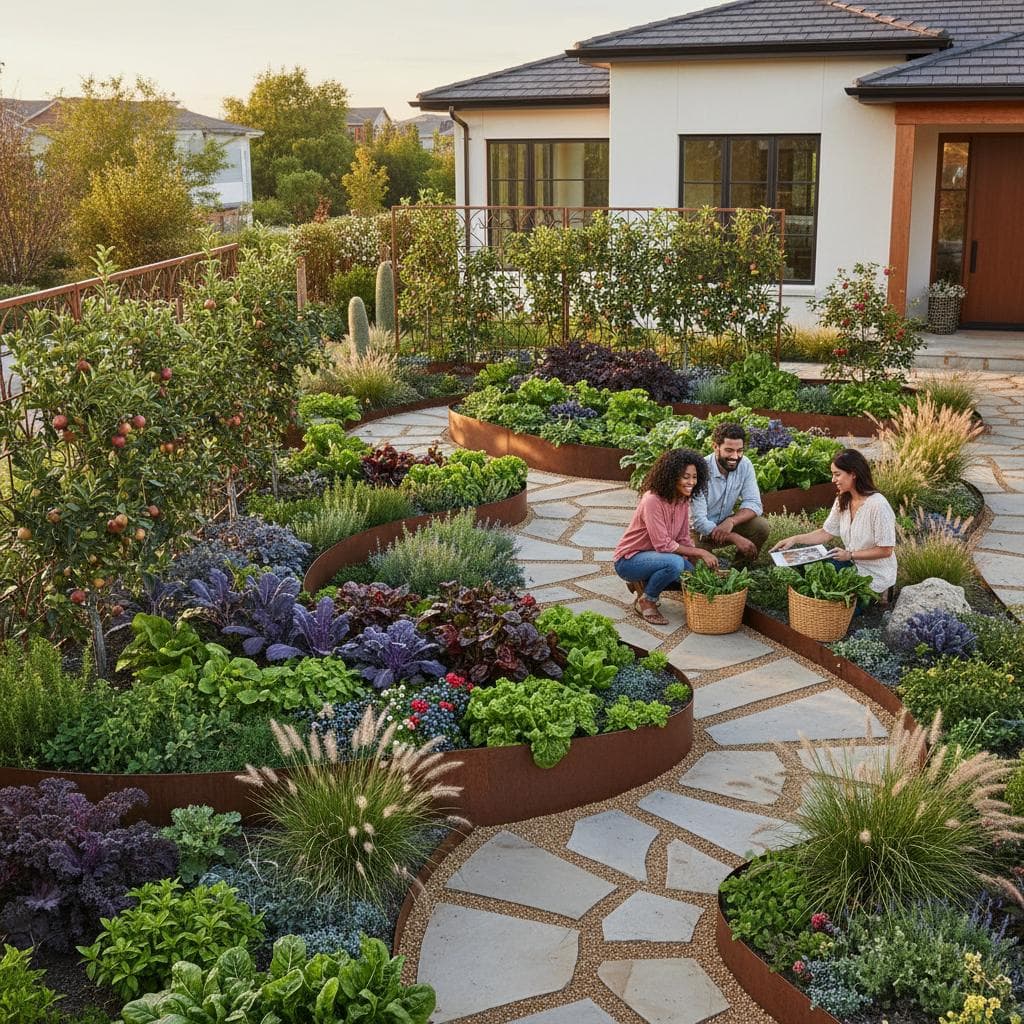
Transforming Ornamentals into Productive Edible Spaces
Maria and Jamal purchased a modest brick bungalow in a suburban neighborhood characterized by tree-lined streets and cohesive curb appeal. They sought a front yard that welcomed visitors while providing convenient access to fresh ingredients for their cooking routines. In partnership with landscape designer Elise Tran, they reimagined the space as an edible landscape, substituting decorative plants with functional ones that align with the area's aesthetic standards.
This approach demonstrates that productivity and visual harmony coexist. The design incorporates layered plantings and durable materials to ensure the yard remains attractive throughout the year. Homeowners can replicate these elements by assessing their site's sunlight, soil type, and neighborhood guidelines before selecting plants.
Project Overview
Homeowners: Maria and Jamal, dedicated home cooks who prioritize fresh, seasonal ingredients.
Location: A suburban setting with established tree canopies and uniform architectural styles.
Yard Dimensions: 600 square feet, offering ample space for integrated features without overwhelming the property.
Design Professional: Elise Tran, an experienced landscape designer specializing in sustainable urban gardens.
Implementation Team: Greenroot Outdoor Design, handling construction and installation.
Core Materials: Reclaimed brick for pathways, cedar for edging and bins, gravel for low-maintenance surfaces, and corten steel for modern planters that weather gracefully.
Selected Plants: Blueberry shrubs for berries and structure, dwarf fruit trees for compact yields, kale and other greens for nutrition, aromatic herbs for versatility, and pollinator-attracting flowers to support biodiversity.
These choices reflect a balance of aesthetics and utility. For instance, evergreen elements provide year-round interest, while fruit-bearing plants add seasonal color and scent.
Designing the Entryway for Welcoming Impact
Rosemary and sage plants establish a fragrant foundation at the front gate, positioned in each corner for symmetry. Their evergreen leaves maintain structure during dry spells or winter dormancy, ensuring the entry remains inviting. Select these herbs for their resilience; they thrive in well-drained soil amended with organic matter and require minimal pruning to retain shape.
Dwarf apple trees, trained in an espalier form, create a subtle living fence that directs the eye toward the porch. This technique involves securing branches to a flat trellis, maximizing vertical space in limited areas. Prune annually in late winter to encourage fruit production and control growth, typically yielding apples by mid-summer.
Seasonal blooms from companion flowers draw pollinators, enhancing garden health. Maria notes the community engagement: "People stop frequently to inquire about the apples. It sparks conversations beyond mere landscaping." Efficient irrigation supports this vibrancy; install drip lines under two inches of organic mulch to deliver water directly to roots, reducing evaporation by up to 50 percent.
Optimizing the Driveway Border for Privacy and Yield
Along the driveway's edge, a former grass strip now hosts a linear planting of blueberry bushes, serving as a natural screen. These shrubs reach four to six feet in height, providing seclusion while producing berries from early summer into fall. Plant them in acidic soil with a pH of 4.5 to 5.5, spacing two feet apart for air circulation that prevents fungal issues.
Creeping thyme acts as a groundcover beneath the blueberries, suppressing weeds and releasing a pleasant aroma when walked upon. This low-maintenance option spreads quickly in full sun, requiring division every three years to refresh vigor. The combination yields a dense, tidy appearance that complements the bungalow's lines.
A discreet cedar compost bin nestles behind the final shrub, constructed with slatted sides for airflow. Add kitchen waste and garden clippings weekly, turning the contents monthly to accelerate decomposition. Harvest finished compost every three to six months to enrich planting beds, fostering a self-sustaining system that minimizes waste.
Implementing Seasonal Rotations for Continuous Productivity
The garden's framework supports fluid transitions between seasons, preserving both form and function. During cooler periods, plant cool-season crops such as spinach, carrots, and radishes in prepared beds; these mature in 30 to 60 days and tolerate light frosts. Transition to warm-season varieties like tomatoes, peppers, and basil as soil temperatures exceed 60 degrees Fahrenheit.
Elise Tran engineered the beds with modular sections, each measuring four by eight feet for straightforward crop succession. Rotate plant families annually to disrupt pest cycles and nutrient depletion; for example, follow leafy greens with fruiting plants to balance soil nitrogen levels. Maintain a rotation schedule by documenting plant performance in a garden journal.
Adapt irrigation as needed using quick-connect valves on the drip system, allowing reconfiguration in under 30 minutes. Mulch refreshed beds immediately to conserve moisture and moderate soil temperature. This methodical approach ensures the landscape evolves without disrupting the overall design integrity.
Integrating Edible Elements into Daily Routines
Sustain the garden's longevity through consistent, low-effort practices. Monitor soil moisture weekly with a simple probe, watering deeply but infrequently to encourage robust root systems. Apply a balanced organic fertilizer in spring and fall, following package rates to avoid overfeeding that could attract pests.
Harvest produce regularly to stimulate further growth; for herbs, snip one-third of the stem at a time to promote bushiness. Incorporate pest management by introducing beneficial insects, such as ladybugs for aphids, rather than relying on chemicals. These steps keep the space healthy and visually appealing with minimal intervention.
Realizing Lasting Rewards from Your Edible Yard
Maria and Jamal report profound shifts in their lifestyle since the redesign. They enjoy morning rituals on the porch amid basil's aroma, with meals enhanced by nearby harvests. Interactions with neighbors have deepened, as the yard inspires questions and shared knowledge.
This model extends beyond aesthetics to foster self-sufficiency and community ties. Homeowners gain confidence in gardening through proven techniques, yielding not only food but also satisfaction. The enduring curb appeal reinforces property value, proving that functional designs elevate everyday living.