
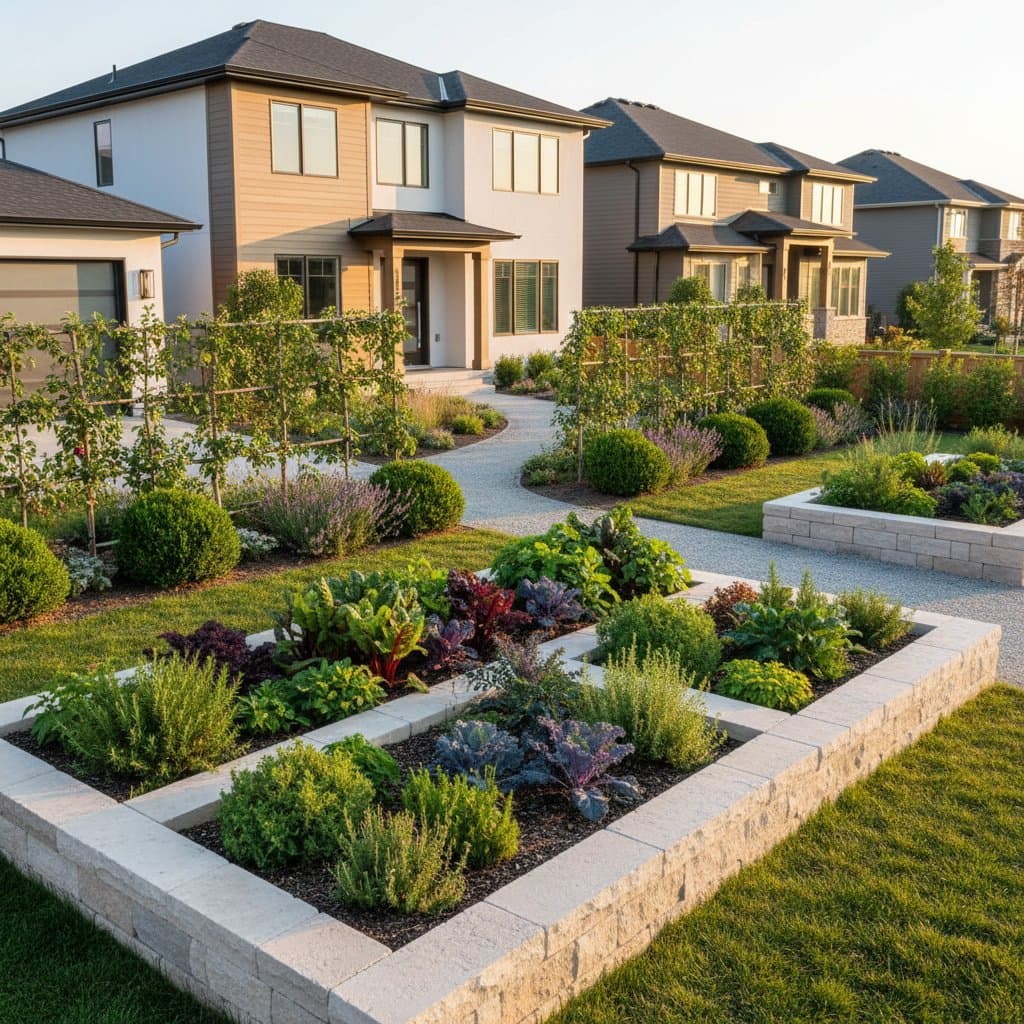
HOA-Approved Edible Yards That Boost Curb Appeal
Front yards represent the initial impression of a neighborhood. They express individual style while adhering to community expectations. Homeowners governed by HOA regulations face challenges when incorporating food production. Edible landscapes offer a solution that combines aesthetics with utility. Thoughtful planning allows vegetables, herbs, and fruit plants to integrate into ornamental designs. Such gardens maintain high curb appeal and comply fully with guidelines.
A structured edible yard promotes sustainability. It reduces grocery expenses and encourages time spent outdoors. The result appears as refined as conventional landscaping. Seasonal yields become accessible just beyond the doorstep.
1. Establish an HOA-Friendly Framework
Review local guidelines before selecting plants. HOAs typically enforce rules on front yard aesthetics to preserve uniformity. Certain associations permit edible elements provided they align with ornamental criteria. Others mandate a minimum lawn area or limit plant heights.
Experts recommend starting with regulations rather than plant choices. This approach fosters compliant creativity.
Functional benefit: Avoids expenses from removals or required replanting due to violations.
Design insight: View the edible garden as a deliberate arrangement, distinct from a simple plot.
Example: Substitute traditional groundcovers with neat borders of thyme or parsley.
Maintain precise structure through defined edges, pathways, and grouped plantings. Orderliness signals maintenance, appealing to HOAs and neighbors alike.
2. Plan Layout for Seamless Integration
Sketch a layout that balances edibles with ornamental features. Position taller elements at the rear to avoid obstructing views. Ensure pathways facilitate access without disrupting flow.
Incorporate evergreen backdrops for year-round structure. This foundation supports seasonal edibles without visual chaos.
Functional benefit: Simplifies harvesting and upkeep while enhancing usability.
Design insight: Layer plants by height and function to mimic natural yet controlled compositions.
Example: Place berry shrubs behind lower herbs, creating depth and interest.
Align the plan with the home's architecture. Consistent scale and lines reinforce harmony across the property.
3. Emphasize Form, Color, and Texture
Visual appeal in front yards equals functional value. Select edibles that deliver both attractiveness and productivity.
Functional benefit: Sustains garden beauty during off-harvest periods.
Design insight: Regard vegetables as contributors to foliage design through texture and hue.
Example: Employ kale for its architectural leaves, artichokes as striking accents, and red-veined sorrel for delicate contrast in borders.
Arrange plants in recurring patterns for unity. Intermix broad leaves with feathery herbs. Uniform spacing and repetition build rhythmic flow throughout the space. Intentional choices make edibles amplify the design.
4. Choose Compact and Ornamental Edibles
Opt for varieties suited to visible settings. Compact, slow-maturing plants meet most HOA standards.
Functional benefit: Minimizes overgrowth risks and preserves a groomed appearance.
Design insight: Prioritize specimens with inherent form or appealing leaves.
Example: Dwarf blueberries, shaped rosemary, or container-grown patio tomatoes.
Experts advise selecting cooperative growers over aggressive spreaders.
Steer clear of vining sprawlers or lofty stalks like corn that impair visibility. Favor bushy cucumber types or supported pea climbers on subtle trellises. Modern catalogs feature space-efficient options for aesthetic integration.
5. Position Fruit Trees as Key Anchors
Fruit trees serve dual roles as decorative and productive features. Blossoms, leaves, and forms introduce vertical interest.
Functional benefit: Provides shade cycles and yields without aesthetic compromise.
Design insight: Choose reduced-size cultivars to fit proportional dimensions.
Example: Espalier apples against fences form artistic barriers; a solitary fig anchors the foreground.
Professionals liken fruit trees to functional art installations.
Shape trees into espaliers or cordons for compactness and order. Strategic placement enhances composition and ensures regulatory adherence.
6. Blend Hardscape Elements for Polish
Incorporate paths, patios, and benches to finalize the landscape. These features ease tasks like picking produce.
Functional benefit: Limits soil damage and clarifies navigation.
Design insight: Harmonize materials with home styling for seamless extension.
Example: Install flagstone routes to benches, bordered by basil and chives; add paver areas for utility.
Specialists describe hardscape as the framework linking garden to residence.
Utilize permeable options like gravel for texture and water management. Align clean geometries with the property's lines. Intentional hardscape renders the area sophisticated and regulation-compliant.
7. Foster Unity Through Repetition and Rhythm
Compliant designs depend on recurring motifs. Diverse edibles unify when shapes, tones, or materials recur.
Functional benefit: Achieves cohesive visuals that align with oversight standards.
Design insight: Echo elements across zones for interconnectedness.
Example: Silver tones from sage mirrored in lamb's ear; uniform pots along walks and entries.
Designers highlight repetition as the cohesive force in plant assemblages.
Limit clutter by focusing on primary motifs like a prominent container or vine support. Restrained consistency conveys purpose and diligence to observers and reviewers.
8. Enhance with Thoughtful Accents
Refine the space with understated elements. A trellis, bench, or planter mailbox adds personality without excess.
Select accents that complement the palette and scale. These details narrate the garden's purpose subtly.
Functional benefit: Boosts enjoyment and practicality in daily use.
Example: A wrought-iron arch frames an entry herb bed, inviting exploration.
Integrate such features sparingly to maintain balance.
Sustaining Your Edible Landscape
Regular care ensures longevity and compliance. Prune promptly to uphold tidy forms. Mulch beds to suppress weeds and retain moisture.
Monitor for pests using organic methods to protect yields. Seasonal rotations refresh visuals and soil health.
This ongoing attention yields bountiful, beautiful results. Homeowners gain a vibrant, productive front yard that endures scrutiny and delights year-round.