
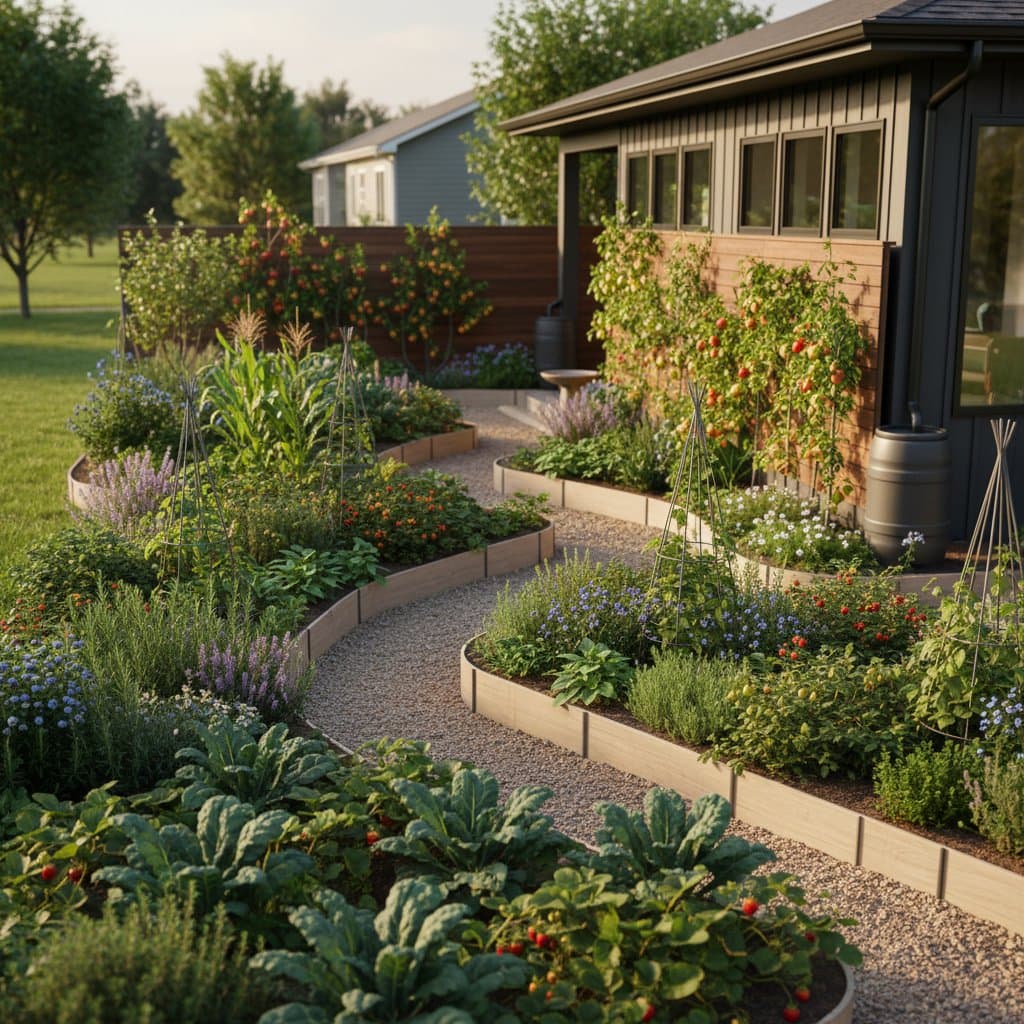
Ditch the Grass: Edible Front Yards That Wow Neighbors
A front yard brimming with herbs, berries, and vegetables offers the same refined appearance as a manicured lawn. Edible landscapes introduce vibrant colors, varied textures, and dynamic movement to areas often limited to uniform turf. These designs spark conversations among passersby, draw in pollinators, and provide convenient access to fresh ingredients.
This strategy enhances curb appeal while serving a functional purpose. It reclaims unused space as a productive garden that evolves attractively across seasons.
1. Establish Structure and Flow
Effective edible front yards rely on defined structure for both navigation and visual coherence. Incorporate winding paths, elevated planting beds, and compact hedges to organize the layout and maintain neatness.
Paths direct foot traffic and streamline upkeep tasks. Select materials that complement the home's style, such as gravel for a rustic feel, decomposed granite for subtle texture, or brick for a classic edge.
Consider a main walkway bordered by chives and thyme, culminating in a cozy seating nook enclosed by blueberry bushes. A designer emphasizes that intentional order elevates an edible yard beyond a simple plot, infusing it with sophistication.
Visual callout: Brick edging secures raised beds overflowing with leafy greens and aromatic herbs.
2. Select Plants Suited to Your Region
Opt for crops that align with local climate conditions to minimize effort and resource demands. Prioritize native varieties or those well-adapted to the area, as they withstand regional weather patterns better than non-local options.
Such choices lead to reduced irrigation needs, lower pest issues, and consistent production. Focus on plants with staggered maturity dates to ensure ongoing harvests throughout the growing period.
In temperate climates, combine strawberries with asparagus and rhubarb for varied yields. Warmer areas benefit from dwarf citrus trees, figs, and rosemary that endure heat and provide year-round interest.
A horticulturist notes that aligning plants with their environment forms the foundation of resilient gardens. Visual callout: Dwarf citrus trees create a sunlit backdrop for robust rosemary and oregano plantings.
3. Integrate Seasonal Color and Pattern
Edible selections deliver ornamental impact through evolving displays of blooms, fruits, and leaves. This variety ensures the yard remains engaging from spring through fall.
Crop rotation enriches the soil and sustains visual appeal over time. Sequence plantings for continuous interest: initial leafy growth in early months, flowering peaks midseason, and berry-laden finishes later.
Vining peas ascend trellises in spring, yielding to robust summer tomatoes and hearty fall kale. Intersperse marigolds along bed edges for vivid accents and natural pest deterrence.
A garden designer observes that monthly transformations captivate observers and sustain garden vitality. Visual callout: Lush pea vines scale ornate trellises adjacent to marigold-lined walkways.
4. Manage Water Resources Efficiently
Productive edible gardens require reliable hydration delivered through targeted methods. Implement drip irrigation, rainwater collection chains, and storage barrels to maintain even soil moisture with minimal waste.
Consistent supply fosters stronger root systems and higher outputs. Conceal tubing under organic mulch layers, and redirect rooftop drainage for on-site recycling.
Position a house-colored rain barrel to supply a concealed drip network across elevated beds. A landscape contractor highlights that efficient water practices ensure long-term viability and environmental harmony.
Visual callout: Submerged drip lines under mulch provide precise hydration to root zones.
5. Simplify Ongoing Maintenance
Well-planned edible yards encourage regular attention without excessive demands. Strategic elements keep routine tasks efficient and the space consistently attractive.
Dense arrangements block sunlight from reaching soil surfaces, curbing weed growth. Mulch-covered pathways facilitate access for tending and gathering.
Arrange raised beds in a grid pattern, grouping plants by growth cycles to ease crop rotation and collection. A garden planner asserts that maintenance-oriented designs promote sustained productivity and polish.
Visual callout: Mulched trails enable straightforward weeding and harvesting within tight configurations.
Nurturing Daily Harvests
An edible front yard evolves into an integral part of household routines once it yields regular produce. Stepping out to gather salad greens or snip fresh herbs fosters a deeper connection to seasonal cycles.
The area pulses with activity through active use, rather than passive viewing. As years pass, perennials establish deeper roots, soil quality enhances, and harvests diversify each cycle.
Neighbors often pause to admire the transition from monotonous lawn to vibrant haven, inquiring about varieties or setup tips. A homeowner shares that the space shifted from a mowing obligation to a communal delight.
Creating an edible front yard redefines outdoor potential without sacrificing refinement. Through structured planning, regionally appropriate selections, and streamlined care, the outcome delivers utility, allure, and enduring vitality.