
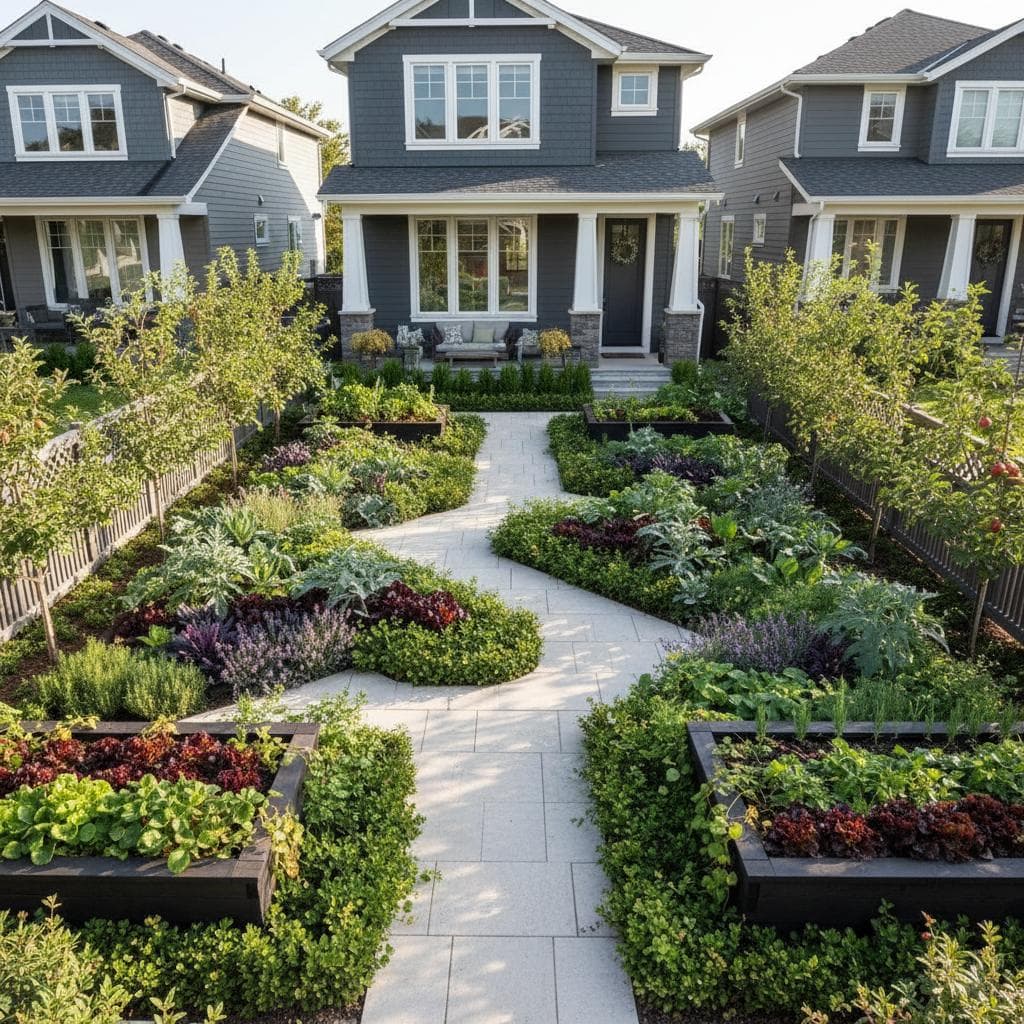
HOAs Embrace Edible Front Yard Landscapes
Neighborhoods across the country are reimagining front yards beyond monotonous grass. Fruit trees, raised vegetable beds, and pollinator-attracting herbs now provide nourishment for families and ecosystems alike. With homeowners associations relaxing rules, edible front yards have shifted from occasional exceptions to valued community assets. These landscapes offer striking visuals paired with practical benefits.
Homeowners discover that well-planned edible gardens maintain a polished look. Strategic integration of herbs, vegetables, and fruits with ornamental plants creates seasonal texture and color variations. This approach delivers ongoing harvests while upholding the neat appearance that communities expect.
At a Glance
Location: HOA-governed residential neighborhoods
Size: Scalable for small or large front yards
Climate Zone: Adaptable through region-specific plant choices
Project Goal: Combine aesthetic appeal with sustainable food production
1. Design With Structure and Order
A structured layout makes an edible front yard feel intentional and refined. Use geometric shapes, clear pathways, and grouped plantings to achieve visual balance. This organization reassures neighbors and HOA boards that the garden prioritizes elegance over chaos.
One designer emphasizes: The key lies in geometry. Straight lines or subtle arcs arrange plantings so they appear deliberate rather than haphazard.
For everyday functionality, the design streamlines maintenance and harvesting. Build raised beds using durable cedar or composite materials to create sharp edges. Add gravel or flagstone paths for easy access and to prevent mud tracking. Place features symmetrically along walkways or near entry points to enhance a sense of calm.
Visual Callout: Cedar-framed beds run parallel to the front walk, bordered by thyme and lavender that offer fragrance and subtle texture.
2. Choose Plants for Dual Purpose
Many edible plants double as ornamental elements. Pair them with traditional landscape staples to keep the yard visually compelling. Rainbow chard brings bold colors, while blueberry bushes deliver glossy leaves and seasonal berries. Rosemary, sage, and oregano provide evergreen structure alongside kitchen-ready herbs.
A landscape contractor advises: Select edibles that serve two roles. Plants that enhance appearance and flavor suit front yards well.
In warmer climates, replace ornamental shrubs with citrus trees or figs for year-round interest. In cooler areas, opt for dwarf apple or pear trees that echo the form of flowering crabapples. Blend vegetables with annual flowers like marigolds or zinnias to attract pollinators and add pops of color.
Visual Callout: A neat row of blueberry shrubs frames the porch, their spring blooms mirroring nearby hydrangeas.
3. Layer the Planting Heights
Varying plant heights adds sophistication and depth to the design. Organize in tiers, with tallest plants at the back and lowest at the front. This creates a natural rhythm and clear focal points. Site tall options like okra or sunflowers along boundaries. Mid-level plants such as kale or peppers fill central areas. Ground covers including herbs and strawberries edge the foreground.
A designer notes: View the yard as a staged scene. Each plant occupies a defined spot, with elevations creating background and foreground layers.
This layering balances productivity with proportion. It improves air flow to reduce disease risks. Mix leaf shapes, from the broad leaves of squash to the fine fronds of carrots, for added visual interest.
Visual Callout: Tall trellises at the back support climbing beans, paired with foreground clusters of deep purple basil.
4. Integrate Ornamentals and Edibles Seamlessly
The best edible landscapes blend productive and decorative features without separation. Use perennials like artichokes, rhubarb, or asparagus along edges for dramatic foliage and reliable yields. Position decorative pots near entrances to hold cherry tomatoes or lettuces for quick picking.
A horticulturist recommends: Integrate rather than isolate. Varied textures, flowering periods, and shades ensure unity.
Pair edibles with complementary ornamentals for harmony. Silver artemisia contrasts the deep greens of kale. Nasturtiums trail over bed edges, providing color and natural pest control. Upright alliums add vertical interest while supporting pollinators. Such combinations keep the garden looking ornamental rather than utilitarian.
Visual Callout: Nasturtiums spill from a raised bed, connecting the vegetable zone to the neighboring flower border.
5. Add Pathways and Defined Boundaries
Well-defined paths and edges make edible gardens welcoming and controlled. They guide foot traffic, contain plant growth, and prevent spillover onto lawns or sidewalks. Brick or stone borders provide a sturdy frame and contain soil effectively.
A designer explains: Strong boundaries define everything. They enclose plantings and signal ongoing care.
These elements simplify weeding, harvesting, and overall upkeep. Curved paths soften formal lines for relaxed homes, while straight ones suit more traditional properties. Mulch paths suppress weeds and retain moisture. Low fences or boxwood hedges protect seedlings from wildlife without blocking views.
Visual Callout: A narrow gravel path divides matching raised beds, leading to a central dwarf citrus tree.
6. Use Color and Texture to Maintain Curb Appeal
Edible plants change with the seasons, but thoughtful color selection ensures consistent appeal. Choose varieties that offer contrasting foliage and fruits. Purple basil beside lime-green lettuce, or gray sage against red peppers, forms dynamic patterns.
A garden designer states: Hue alignment renders an edible yard purposeful. Consider vegetables integral to the color scheme.
Texture plays an equal role in engagement. Pair broad vegetable leaves with fine grasses or feathery dill. Mulches like wood chips or gravel unify the look and manage weeds. Evergreen herbs and structural plants maintain interest during off-seasons.
Visual Callout: Bright red amaranth stands out against a row of silver sage over neutral stone mulch.
7. Plan for Year-Round Interest
Successful edible yards stay engaging beyond harvest peaks. Select plants with staggered bloom and fruit times. Evergreen herbs, berry shrubs, and small trees form a backbone during winter. Perennials like chives and daylilies return reliably each spring.
A horticultural consultant suggests: Extend planning past peak growth. Prioritize enduring forms, followed by cyclic additions.
Incorporate protective structures or decorative covers to extend growing seasons stylishly. Use succession planting in milder climates to keep areas active. This strategy preserves visual continuity even when production slows.
Visual Callout: Sturdy winter kale and rosemary hold their shape as deciduous plants drop leaves.
8. Make Water Management Part of the Design
Efficient irrigation supports both aesthetics and sustainability. Install drip lines or soaker hoses to deliver water directly to roots, saving resources and keeping leaves dry. Integrate rain barrels painted to match the home for discreet collection.
A landscape architect observes: Concealed, effective hydration allows the garden to flourish with minimal effort.
Apply straw or bark mulch to retain soil moisture and enhance neatness. Design subtle slopes to direct runoff toward plant roots. Incorporate drought-tolerant options like thyme or oregano to reduce watering needs in dry regions.
Visual Callout: Concealed drip lines beneath a straw mulch layer hydrate vegetables and surrounding perennials evenly.
9. Communicate With the HOA Early
Even as approvals become more common, early engagement with the HOA is essential. Present detailed proposals that outline the layout, maintenance plan, and fit with community standards. Include sketches or photos of similar successful installations to demonstrate the end result.
A property manager notes: Plans revealing intentional, sustained designs often gain board favor.
List plant selections that mix edibles with ornamentals. Emphasize features like defined borders, regular pruning, and efficient watering. Highlight how the garden supports water conservation and pollinator habitats, aligning with wider environmental goals.
Visual Callout: A detailed site sketch highlights tidy beds, encircling shrubs, and blooming entryway herbs.
Sustaining Your Edible Landscape
After installation, consistent maintenance ensures long-term success. Conduct weekly checks to address pests or nutrient needs promptly. Rotate crops seasonally to sustain soil health and yields. Share produce with neighbors to strengthen community bonds. These practices keep the garden productive, attractive, and a point of pride for years.