
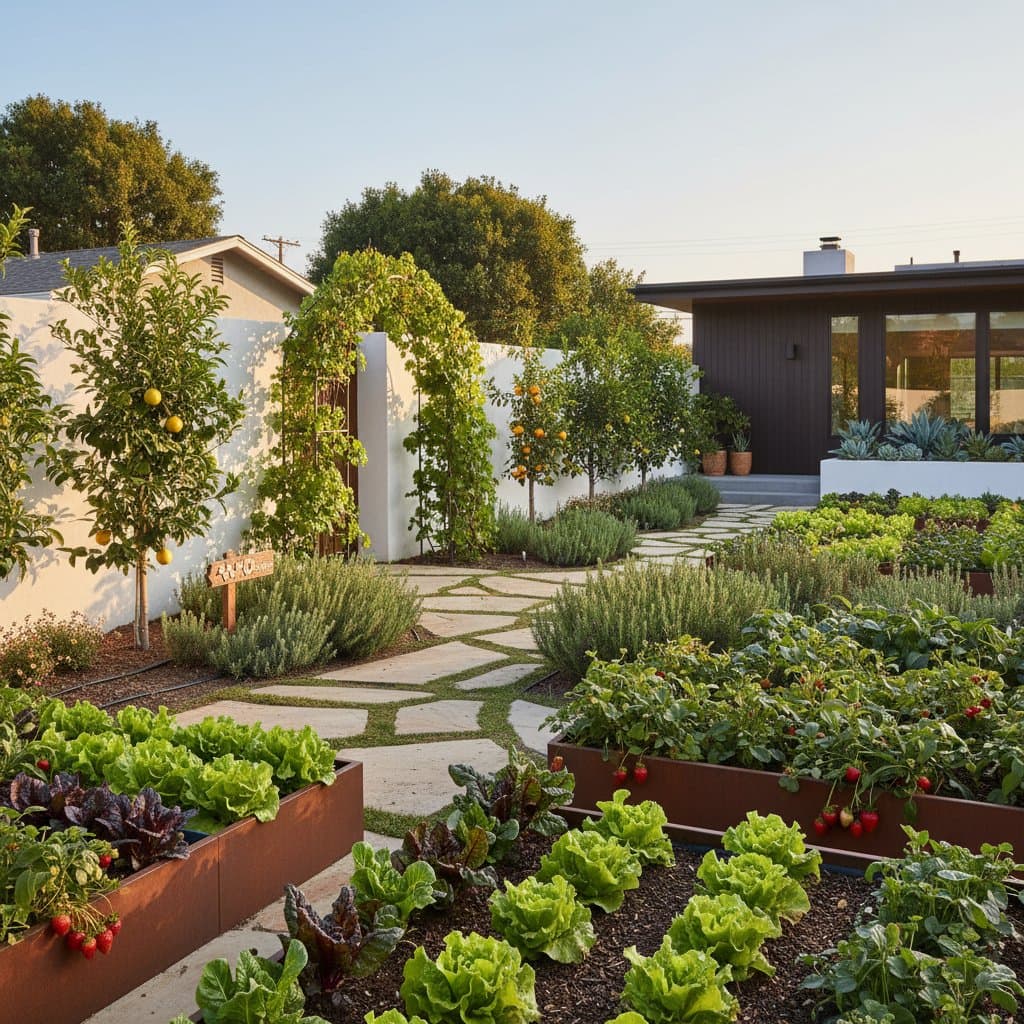
Front Yard Edible Gardens That Reduce Grocery Expenses
A front yard that provides food for the family combines beauty with utility. Homeowners throughout California reconsider the purpose of these prominent spaces adjacent to the street. They replace water-intensive lawns and decorative bushes with lettuces, herbs, citrus trees, and tomatoes. Such landscapes decrease grocery expenditures, aid pollinators, and maintain neighborhood approval. Through deliberate planning, transform the front yard into an edible garden that appears elegant instead of unkempt.
Principles of Design for Aesthetics and Utility
Structure forms the foundation of an appealing edible front yard. View it as an outdoor living area that also supplies meals. Apply core ornamental design elements: proportion, repetition, and contrast. Install raised beds, gravel pathways, and low hedges to organize the space and simplify harvesting.
Arrange rectangular beds outlined by rosemary or dwarf boxwood to enclose a variety of greens and rotating vegetables. Position trellises for vining beans or cucumbers to introduce vertical interest, varied textures, and a feeling of seclusion. For homes with contemporary styles, opt for sleek steel or concrete planters that align with the architecture and provide enduring strength.
Selecting Crops Adapted to Local Conditions
California's varied microclimates support almost continuous food cultivation, yet outcomes hinge on aligning plants with specific locales. Coastal zones suit leafy greens, herbs, and strawberries due to milder temperatures. Inland valleys support tomatoes, peppers, and melons with their warmer conditions. In arid, hot areas, select drought-resistant options like artichokes, figs, and olives to prioritize water efficiency.
Cluster plants according to hydration requirements to optimize watering. Implement drip irrigation to conserve resources and maintain dry leaves, thereby reducing disease risks. Integrate perennials with annuals for year-round yields. Perennial herbs such as thyme and oregano persist through seasons, while annuals like lettuce cycle through plantings.
Layout Strategies for Productivity and Visual Harmony
Prior to planting, draft a layout that accounts for sunlight exposure, accessibility, and compositional balance. Edible plants typically need a minimum of six hours of full sun daily, so situate taller specimens to the north or rear of shorter ones to prevent shading. Design pathways at least three feet wide for easy navigation, and establish clear boundaries between beds and paths to contain soil.
Employ layering techniques for depth. Plant low greens like lettuce at the forefront, position mid-height options such as peppers or basil in central areas, and reserve taller elements like corn or sunflowers for the background. This arrangement fosters fullness and perspective while preserving neatness. Where possible, incorporate a compact bench or a birdbath to enhance the overall composition.
Integrating Ornamental and Edible Elements
Edible front yards avoid the appearance of mere vegetable plots. Combine food-producing and decorative plants to form a unified, verdant scene. Pair blue-hued kale with silver-foliaged sage for striking contrast. Position purple basil alongside marigolds or zinnias to introduce color depth.
Utilize fruit trees as shade providers, and train espaliered forms against fences or walls to maximize space and add structural flair. Substitute edible groundcovers like creeping thyme or strawberries for conventional grass; these draw pollinators, eliminate mowing needs, and emit subtle scents when walked upon. Approach edibles as integral design components rather than isolated producers. Executed properly, observers perceive a refined garden primarily, with its productive role secondary.
Maintenance and Harvest Practices
Sustain an edible front yard through consistent attention, though strategic choices minimize demands. Apply mulch to retain soil moisture and suppress weeds, and use compost to naturally bolster fertility. Harvest crops often to promote ongoing growth and deter pests from overmature produce.
For those with limited schedules, emphasize perennials like asparagus, rhubarb, and herbs that develop robust roots and yield annually with little intervention. Rotate annual plantings to preserve soil nutrients and avert exhaustion. Maintain a journal, either physical or digital, to record successful varieties, planting timelines, and harvest quantities. Gradually, the garden evolves into an efficient, self-regulating ecosystem.
Financial Advantages and Enduring Gains
Cultivating personal produce yields notable economic benefits. A 100-square-foot plot can generate vegetables and herbs valued at several hundred dollars per season. Additional savings arise from decreased landscaping services and reduced water usage, particularly when substituting turf with efficient plantings.
Freshness elevates the experience; homegrown items offer peak taste and nutrients without shipping or wrapping. Involving children in cultivation often increases their willingness to consume vegetables, making the yard an educational extension. Interactions with neighbors over shared tips or seeds foster community ties at the property edge.
Promoting Sustainability Through Soil Care
Robust soil underpins every effective edible garden. Enhance it organically to benefit plants and the environment alike. Incorporate compost, worm castings, and organic mulches to refine texture, hold water, and nurture helpful microorganisms. Steer clear of synthetic fertilizers that imbalance ecosystems and contaminate waterways.
Adopt rainwater collection and porous surfaces to lessen ecological impact. Numerous California gardeners add shallow swales or rain gardens to gather and redirect stormwater toward plantings. These elements save water while contributing aesthetic value, embedding conservation within the design.
Steps to Establish Your Garden
Launch an edible front yard incrementally rather than comprehensively. Start with one or two raised beds, then scale up with acquired knowledge. Consult a landscape professional experienced in food gardens for tailored advice, or partner with a nearby nursery for climate-matched selections.
Prioritize routine tasks: irrigation, trimming, and monitoring to ensure vitality and appeal. Each cycle allows refinements, from tweaking soil blends to selecting superior tomato strains. The outcome is a setting that economizes, enhances cuisine, and embodies sustainable living with elegance.
An edible front yard redefines the home's outward face. Thoughtful planning, precise choices, and diligent oversight convert that visible ground into a reliable, flavorful resource for the household.