
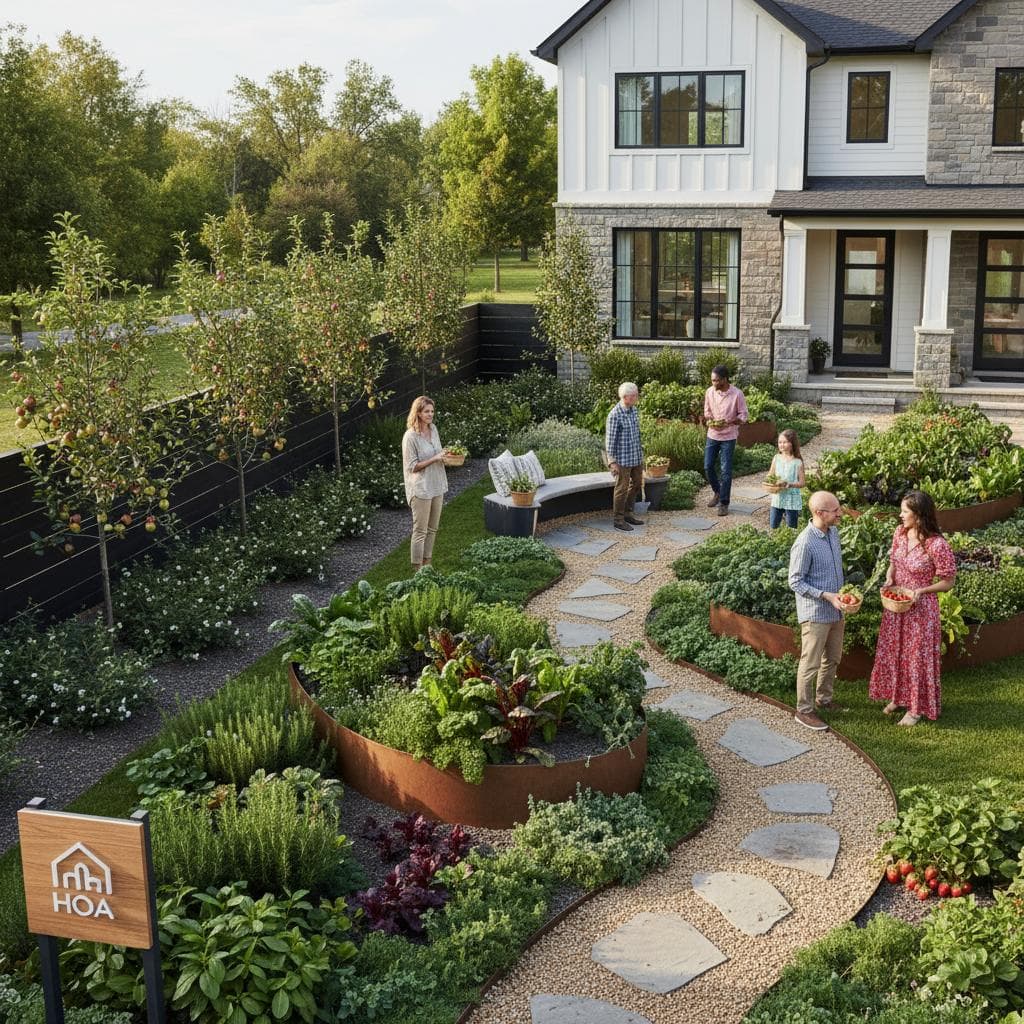
HOAs Now Embrace Edible Landscapes in Front Yards
For decades, homeowners in managed communities faced restrictions against planting vegetables in front yards. Regulations emphasized manicured lawns, neatly clipped shrubs, and purely ornamental flowers. This perspective is evolving. In California and numerous regions nationwide, homeowners associations increasingly permit thoughtful integrations of herbs, fruit trees, and vegetables that enhance both visual appeal and functionality.
A Shift Toward Practical Beauty
The adoption of edible landscaping surpasses fleeting trends. It aligns with broader priorities such as sustainability, efficient water use, and local food production. As grocery prices climb and drought conditions persist, residents seek methods to transform yards into productive assets. Homeowners associations acknowledge that professionally designed edible gardens maintain elegance comparable to traditional ornamental setups.
This evolution required overcoming initial hurdles. Associations previously prohibited front-yard edibles due to concerns over untidy appearances or pest attractions. Landscape professionals have since illustrated the potential for edible elements to serve as sculptural features with vibrant colors and minimal upkeep. Consider a rosemary border, clusters of artichokes, or compact citrus trees, each rivaling the formality of boxwood hedges. Strategic arrangements emphasizing symmetry and varied textures ensure these gardens uphold community standards while introducing distinctive purpose.
Designing with HOA Guidelines in Mind
Each homeowners association maintains unique rules, so thorough review of covenants is essential. Certain groups limit edible plant coverage to a specific portion of the visible yard or require taller varieties to sit behind decorative borders. Additional stipulations may involve approved color schemes or maximum heights. Success lies in crafting designs that adhere to these constraints yet foster overall cohesion.
Integrate edibles as an intentional design element rather than an isolated functional area. Blend vegetables with ornamental plants in harmonious clusters. For instance, juxtapose the delicate leaves of butter lettuce against the gray-green hues of sage, or support tomato plants with jasmine-covered trellises. Employ raised beds clad in stone or wood that complements the residence's style. Such refinements affirm to associations that the garden elevates the surrounding aesthetic harmony.
The Benefits That Win Approval
Association boards often soften opposition upon recognizing key advantages. Edible landscapes minimize water consumption through incorporation of native and drought-resistant species. They further decrease reliance on synthetic fertilizers by utilizing compost and mulch derived from household waste to enrich soil. These gardens attract pollinators and foster micro-ecosystems that bolster local biodiversity, a point many residents highlight.
Community involvement represents another compelling gain. Residents frequently exchange produce or propagate plants, forging connections absent in uniform turf areas. Associations embracing this practice observe heightened resident investment in property upkeep. Individuals who cultivate edibles typically extend that diligence to adjacent landscape features.
Practical Planning for an Edible Front Yard
Effective implementation starts with site evaluation tailored to local climate and association requirements. Analyze sunlight patterns, soil composition, and available watering sources. In arid California zones, install drip irrigation systems supplemented by mulch layers to optimize moisture retention and support vigorous growth.
Choose regionally adapted varieties like kale, bell peppers, strawberries, and herbs such as thyme or oregano. Plan for seasonal transitions: replace cool-weather greens with heat-tolerant tomatoes and peppers to sustain productivity throughout the year. Include enduring options like blueberry shrubs or pomegranate trees for foundational structure and year-after-year yields. Maintain a unified scheme of green and silver foliage to preserve a tidy appearance during off-peak periods.
Working with Professionals
Engage landscape architects or designers experienced in association-governed settings for optimal results. These specialists grasp board preferences and convert them into innovative, rule-compliant layouts. A growing number focus on edible integrations, incorporating fruit-bearing trees, elevated planting beds, and efficient watering setups that merge fluidly with ornamental components. For those desiring active participation, professionals establish the foundational design, allowing owners to handle ongoing cultivation and care.
Watching Your Garden Thrive
After establishment, an edible front yard yields increasing rewards over time. Consistent pruning, composting applications, and crop sequencing preserve its vitality and allure. Distributing surplus produce among neighbors cultivates positive relations that solidify association endorsement. This living showcase illustrates the seamless union of aesthetics and utility.
Edible landscaping signals a profound evolution in communal approaches to exterior environments. It champions ingenuity, environmental stewardship, and interpersonal bonds. Homeowners gain convenient access to homegrown nourishment. Associations discover that meticulously managed front yards nurture collective esteem alongside everyday sustenance. Through deliberate planning and open dialogue, front-yard edibles emerge as celebrated embodiments of eco-conscious lifestyles.