
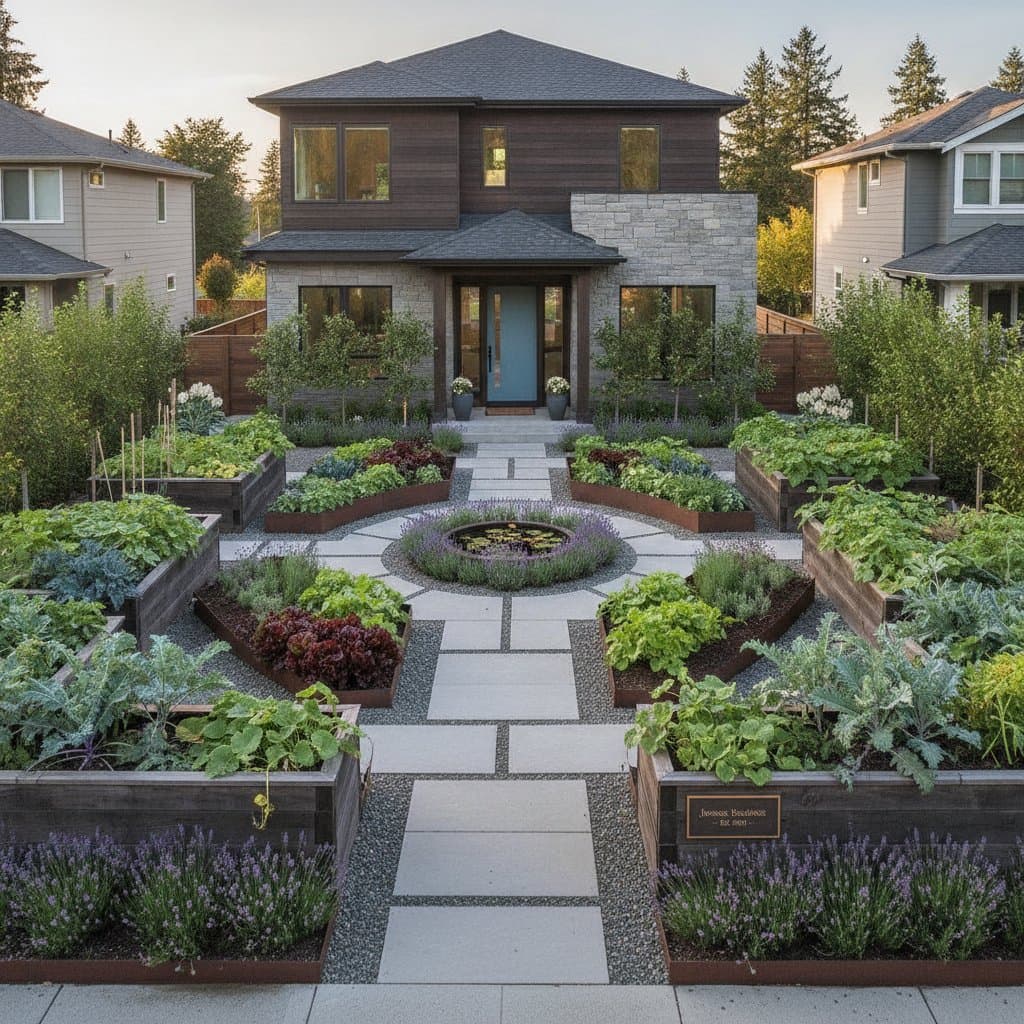
Front-Yard Freedom: How HOAs Are Opening the Door to Edible Landscaping
When Mark and Lila Jensen bought their home in a tidy suburban neighborhood, they dreamed of growing herbs and vegetables right outside their front door. For years their homeowners association required manicured turf and matching shrubs. Updated guidelines that encourage sustainable practices have now transformed their once-restricted lawn into a thriving mix of lettuces, strawberries, and citrus trees.
Their experience reflects a quiet but meaningful shift. Across many communities HOAs are relaxing long-standing restrictions on edible front yards. Homeowners are finding new ways to blend productivity with curb appeal, and designers are helping them achieve both goals.
Rethinking the Front Lawn
When the Jensens approached TerraField Landscape Design, their request was straightforward. They wanted productive plants in the front yard while preserving the neat appearance expected by neighbors. The design team started with a site assessment that examined sun patterns, soil quality, and water flow.
The challenge centered on combining productivity with visual order, noted lead designer Claire Ortiz. The plan had to appear intentional from the street rather than patchy or temporary.
Claire divided the space into three zones: a structured entry garden, a low-maintenance edible border, and a shared growing bed near the walkway. Each zone supplies both visual rhythm and seasonal harvests.
The Edible Border: Neighborhood-Friendly Design
Along the street-facing edge the team replaced turf with a layered border that resembles a traditional foundation planting. Behind a low hedge of evergreen boxwood sit alternating rows of chard, peppers, and dwarf tomatoes.
Taller edibles remain close to the house. Mid-height varieties occupy the center. Compact herbs line the front edge. This arrangement maintains the impression of a tidy ornamental bed throughout the growing season.
The team chose shredded leaf compost instead of bark mulch. The material enriches the soil while keeping the surface dark and uniform. Compost mulch supplies a finished appearance that reads as designed rather than utilitarian.
The HOA landscape committee approved the plan after reviewing detailed renderings and maintenance guidelines. New rules require residents to keep edible beds free of weeds and to replant bare spots promptly. In return homeowners may devote up to 60 percent of the front yard to edible plants.
Choosing Materials That Last
Durability and order help secure HOA acceptance. TerraField selected materials that age gracefully and need little upkeep.
- Edging: Powder-coated steel for clean lines and corrosion resistance
- Planters: Concrete masonry units finished with stucco for a polished surface
- Mulch: Leaf compost for soil improvement and a refined appearance
- Irrigation: Subsurface drip tubing linked to a smart controller
- Lighting: Low-voltage bronze fixtures rated for wet locations
Each choice supports a consistent visual language. Nothing appears temporary, which helps the edible concept feel permanent and appropriate.
Design Principles for Edible Front Yards
Designers working with HOAs commonly apply several principles that allow edible gardens to fit established neighborhoods.
- Establish structure first by defining edges, paths, and heights before selecting plants.
- Use repetition of plant types or colors to create visual continuity.
- Combine evergreen herbs, perennial vegetables, and seasonal crops for year-round interest.
- Introduce low hedges or borders to soften transitions between edible and ornamental areas.
- Provide clear pruning and replanting schedules so maintenance expectations remain explicit.
Practical Steps for Other Communities
The Jensen project prompted their HOA to host a workshop on edible landscaping. TerraField presented adaptable layouts for various lot sizes. The central message was that disciplined design and steady maintenance determine success.
Claire advises homeowners to begin with one border or planter. Demonstrating that the space stays neat often eases acceptance by neighbors. Some residents later added herb spirals or fruiting shrubs. Others paired native grasses with perennial edibles such as rhubarb and asparagus.
Daily Life in an Edible Landscape
Months after installation the Jensen front yard continues to attract interest. Passersby stop to inquire about the kale or to note the symmetry of the beds. The landscape feeds the household while strengthening neighborhood connections.
Mark clips herbs each morning for breakfast. Lila keeps a basket by the door for quick harvests. The yard now serves everyday routines instead of functioning solely as a visual backdrop.
Updated HOA rules converted a former source of friction into a point of community pride. Front yards are becoming productive spaces that emphasize design clarity, resource efficiency, and neighborly exchange.