
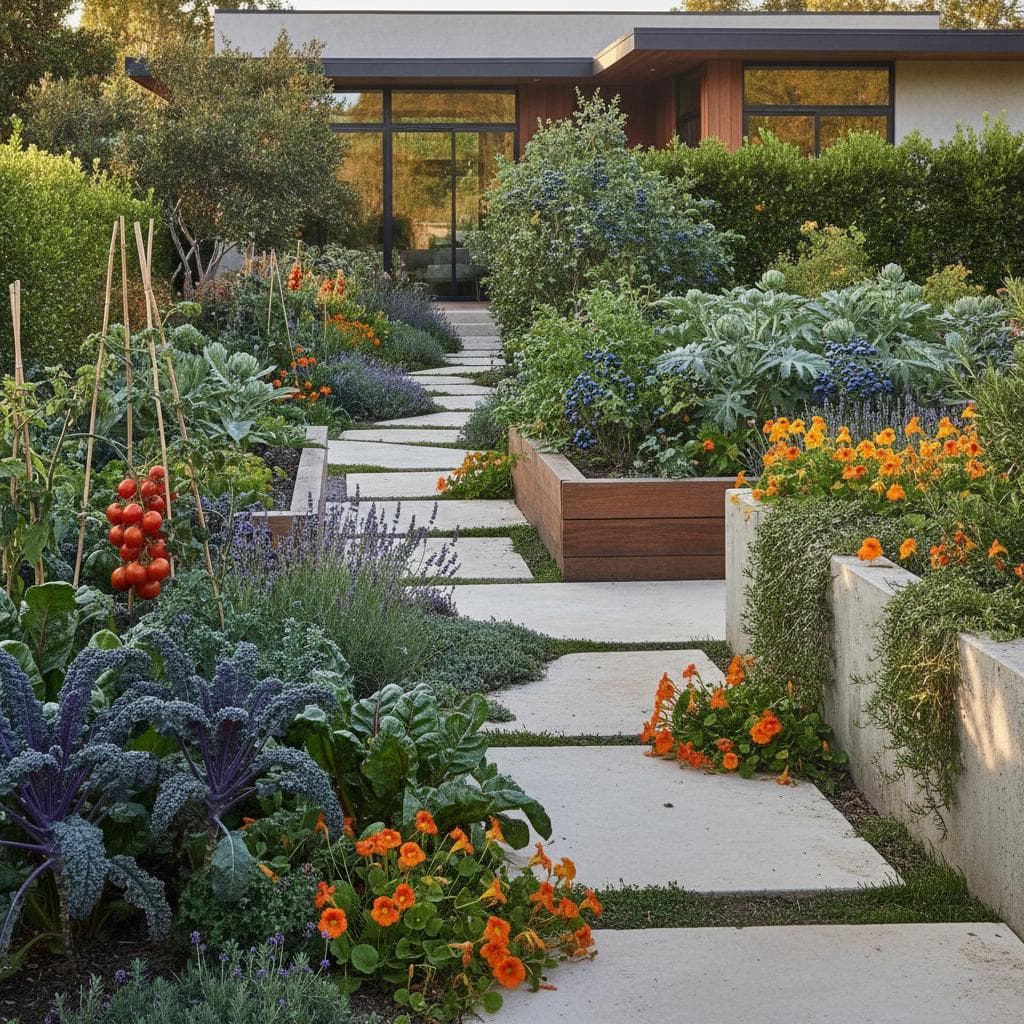
Why Edible Landscaping is Replacing Front Yard Ornamentals
Front yards across California are shifting from traditional lawns and shrubs to productive edible landscapes. This approach, often called foodscaping, combines visual appeal with the ability to grow food at home. Homeowners find that fruit trees, herbs, and vegetables can match the elegance of ornamental plants while offering practical benefits.
The New Face of Curb Appeal
Traditional front yards relied on lawns and foundation plantings that demanded regular water and upkeep. Edible alternatives deliver similar structure through rosemary hedges, citrus trees, and colorful chard. These elements create symmetry and seasonal interest without appearing out of place.
Pathways lined with strawberries or borders of kale maintain a neat appearance. Visitors notice ripening figs or lavender mixed with oregano. The design looks intentional and reflects a household that values both beauty and utility.
Reasons Homeowners Choose Edible Landscapes
Several practical factors drive the change.
- Water savings. Mediterranean herbs such as thyme and rosemary need far less irrigation than turfgrass in dry climates.
- Visual impact. Swiss chard and pomegranate trees provide color and texture that rival many ornamentals.
- Fresh produce. Home harvests supply meals with peak flavor and reduce store visits.
- Environmental gains. Diverse plantings support pollinators, improve soil, and lower chemical use.
- Cost reduction. Lower water bills and reduced mowing offset initial setup expenses over time.
Planning an Effective Design
Successful edible front yards start with a clear layout. Sketch pathways, seating, and focal points first. Layer plants by height, using trees for canopy, shrubs for mid-level interest, and ground covers for the base layer.
Select varieties that remain attractive throughout the year. Artichokes offer bold foliage even outside harvest periods. Maintain tidy edges with raised beds and consistent mulching to keep the space looking cared for.
Popular Style Options
Homeowners select styles that suit their homes and maintenance preferences.
- Mediterranean gardens pair olive trees and lavender with gravel paths for a warm, low-water setting.
- Modern layouts use geometric beds and compact crops such as kale in clean-lined containers.
- Cottage gardens blend vegetables with flowers like nasturtiums for a relaxed, colorful effect.
- Orchard approaches line walkways with dwarf fruit trees underplanted with thyme or strawberries.
Handling Typical Concerns
Appearance issues are avoided by repeating plant forms and keeping taller crops toward the center. Pests are managed through crop diversity and beneficial insect habitats rather than chemicals. Neighborhood guidelines are often met with low raised beds or espaliered trees that satisfy visual standards.
California Specific Advantages
Mild winters support year round greens and citrus. Native plants such as yarrow combine well with edibles to support local wildlife. These gardens also encourage outdoor living and neighbor interaction through shared harvests and visible activity.
Materials That Support Longevity
Permeable paths reduce runoff. Drip irrigation delivers water efficiently. Regular compost additions and mulch layers protect soil and limit weeds. Recycled wood or metal structures provide durable support that ages naturally.
Steps to Begin the Transition
Replace one lawn section with herbs or add a single raised bed to test conditions. Track plant performance in a simple journal. Focus on perennials like kale and rosemary that require little ongoing care once established. The result is a front yard that supplies food while enhancing daily routines and neighborhood character.