
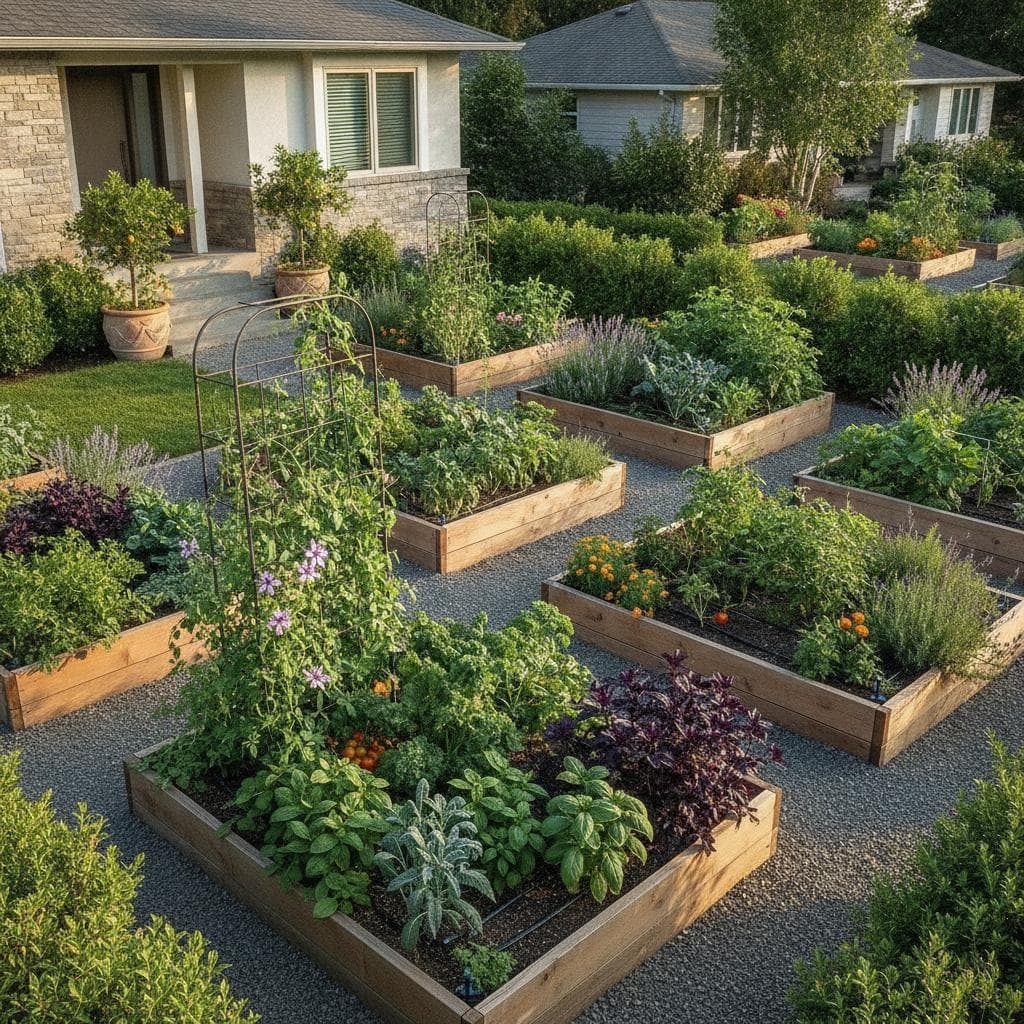
Zoning Changes Allow Edible Front Yards
Front yards are taking on a new purpose. With zoning updates now allowing edible gardens in many neighborhoods, homeowners can replace lawns with productive landscapes that look good and feed the household. This shift brings beauty, sustainability, and practicality right to the curb.
Project Overview
- Location: Residential neighborhoods
- Size: Scalable from small plots to full yard conversions
- Climate: Adaptable with regional plant choices
- Goal: Create a visually appealing, food producing front yard
Begin with Clear Structure
A front yard food garden benefits from strong layout and tidy lines. Raised beds, gravel paths, and grouped plantings keep the space attractive and easy to maintain. Defined edges make edible gardens feel intentional and inviting.
Choose materials that match the home exterior. Cedar or corten steel planters add texture and durability. Curved paths of decomposed granite guide movement while allowing good drainage. This structure prevents the garden from feeling cluttered and supports healthy growth.
Blend Ornamentals with Edibles
Combining vegetables with flowering plants keeps the front yard visually rich. Kale, chard, and basil can be as decorative as any annual. Pair them with perennials like echinacea, lavender, or ornamental grasses such as prairie dropseed. The mix attracts pollinators and softens the look of productive beds.
Blending edibles and ornamentals helps neighbors see the garden as part of the landscape, not a farm. It creates texture, color variation, and seasonal interest while supporting a balanced ecosystem.
Plan for Year Round Appeal
A front yard garden stays appealing when it has structure through every season. Evergreens, berry shrubs, and hardy herbs maintain form and color even when annuals fade. Blueberry bushes, rosemary, and dwarf fruit trees can anchor the space.
Rotating crops through the year keeps harvests steady and beds full. Consider cool season greens early, tomatoes and peppers later, then fall brassicas and root vegetables. This rhythm keeps the space alive and productive for months.
Use Water Efficiently
Edible landscapes thrive on efficient irrigation. Drip systems or soaker hoses conserve water and keep foliage dry, which reduces disease. Mulch helps maintain soil moisture and prevents weeds. Choose natural materials like straw or shredded leaves that break down over time.
Smart irrigation keeps maintenance practical and the garden thriving, even in dry spells. Good water management supports healthy crops and helps the garden stay lush and resilient.
Maintain a Neighbor Friendly Appearance
A tidy, cared for look builds community support for front yard food gardens. Regular pruning, clean edges, and thoughtful plant choices show intent. Add a small bench or low fence to frame the space. These details make the garden both personal and public.
Lighting can help too. Soft path lights or warm uplighting highlight textures and ensure safety at night. The result is a space that welcomes conversation and reflects pride of place.
Connect Purpose with Daily Enjoyment
A front yard food garden connects beauty with purpose. It turns idle ground into a source of nourishment and neighborhood interest. With zoning now open to these plantings, homeowners can rethink the lawn as a living, evolving pantry. The best designs balance order with abundance, creating spaces that invite people to grow, share, and enjoy the harvest right outside their doors.