
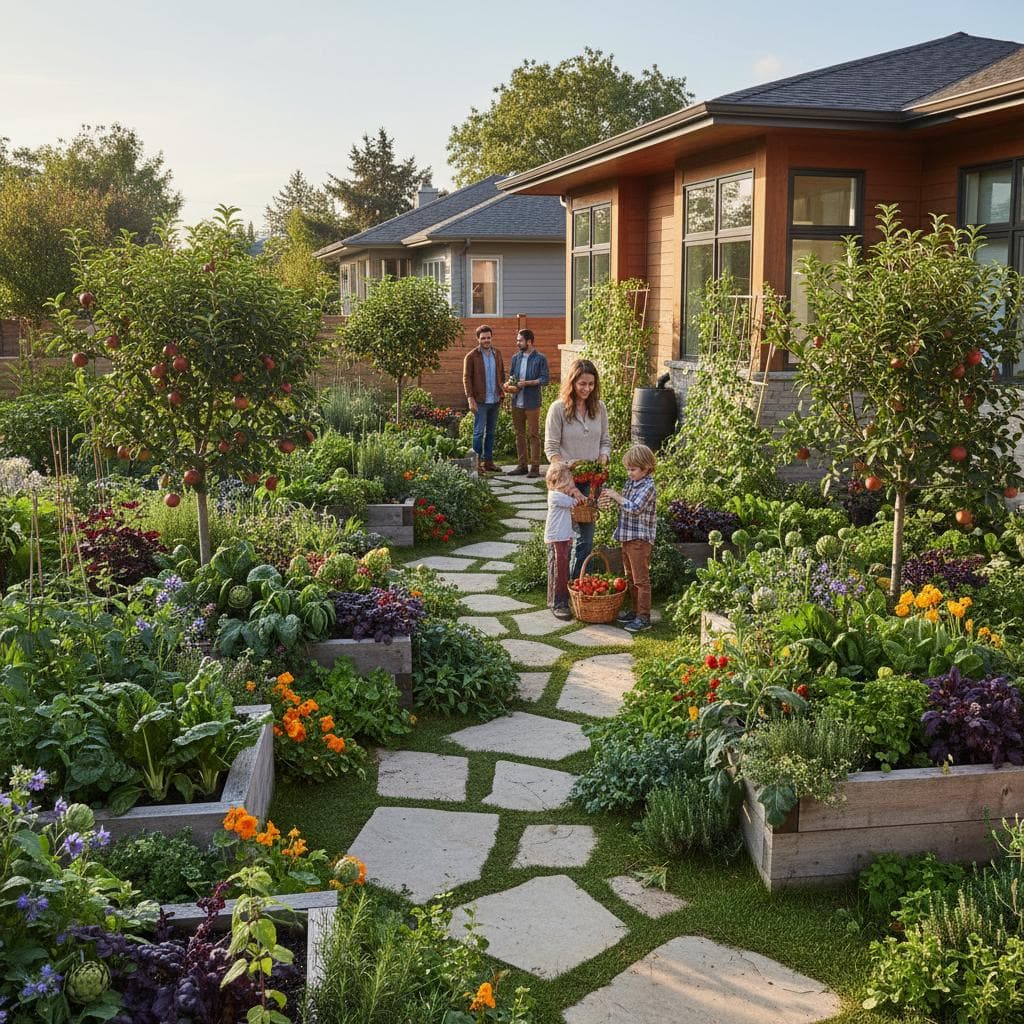
Suburbs Turn Front Yards Into Edible Food Forests
A growing number of suburban homeowners are trading lawns for lush, productive gardens that feed their families and neighbors. The concept of the edible food forest transforms traditional front yards into thriving ecosystems filled with fruit trees, herbs, and perennial vegetables. These landscapes are beautiful, environmentally conscious, and highly practical.
They bring fresh food to the doorstep while reducing water consumption and maintenance demands.
The Appeal of Edible Landscaping
A front yard food forest offers far more than a grocery supplement. It provides a living landscape that engages all the senses. Homeowners walk outside to gather a handful of blueberries, a sprig of rosemary, or a basket of salad greens.
Beyond the fresh produce, these gardens enhance curb appeal with color, texture, and seasonal interest. In water-conscious regions like California, edible landscaping is also a smart ecological move. Traditional lawns require irrigation, fertilizers, and frequent mowing.
Replacing them with drought-tolerant fruit trees, culinary herbs, and native pollinator plants creates a low-maintenance system that conserves resources while producing food. The result is a yard that looks good and works hard.
Planning the Food Forest
Every successful food forest begins with careful planning. Start by observing the yard sunlight, soil type, and drainage patterns. Most edible plants thrive in full sun, so identify areas that receive at least six hours of light each day.
Good soil structure is essential. Healthy soil can be built over time with compost and mulch. A food forest mimics the structure of a natural woodland, using layers to maximize productivity. The basic layers include the following.
- Canopy layer: Fruit or nut trees such as figs, apples, or citrus provide shade and structure.
- Understory layer: Smaller trees or shrubs like pomegranates, blueberries, or guavas fill the mid-level space.
- Herbaceous layer: Culinary herbs, leafy greens, and perennial vegetables thrive closer to the ground.
- Groundcover layer: Strawberries, creeping thyme, or sweet potato vines protect the soil and suppress weeds.
- Root layer: Edible roots like garlic, onions, or carrots occupy the underground space.
- Climber layer: Vining plants such as beans, passionfruit, or grapes can use trellises or trees for support.
Combining these layers creates a self-sustaining ecosystem that supports pollinators, improves soil health, and produces a wide range of harvests throughout the year.
Designing for Beauty and Function
A well-planned edible landscape should look intentional. Neighbors and visitors appreciate the order and structure that come from defined paths, mulch borders, and thoughtful plant groupings. Raised beds or stone edging can frame the space and make harvesting easier.
Planting guilds, or cooperative plant groupings, help balance nutrients and deter pests. For example, pairing fruit trees with nitrogen-fixing herbs like comfrey and clover creates a natural fertilizer source. Designers recommend mixing evergreen plants with deciduous species for year-round interest.
A citrus tree provides winter color, while seasonal berries and herbs fill in during warmer months. If street visibility is a concern, low-growing edibles can line the sidewalk while taller trees remain closer to the home. The goal is to blend productivity with aesthetic harmony.
Practical Considerations and Care
Even though food forests are lower maintenance than lawns, they still need attention. Mulching keeps soil cool and moist, while drip irrigation systems ensure deep watering. Regular pruning keeps trees healthy and encourages fruiting.
Choosing disease-resistant varieties suited to local conditions reduces the need for chemical treatments. Budget-conscious homeowners can start small with one or two trees and expand each season. Composting kitchen scraps adds nutrients back into the soil, closing the loop between home and garden.
As the system matures, maintenance decreases, and the rewards multiply.
Watching Your Garden Thrive
The transformation from lawn to food forest changes more than the landscape. It invites a new rhythm of life centered around growth, harvest, and community. Sharing extra produce with neighbors builds connection, and children learn where their food comes from.
Over time, these suburban gardens become living classrooms and sources of daily nourishment. A well-designed edible front yard shows that beauty and productivity can coexist gracefully. With thoughtful planning, collaboration, and patience, any homeowner can replace an ornamental lawn with a thriving ecosystem that feeds both people and pollinators.
The result is a front yard that sustains life, reflects care, and celebrates the simple joy of growing food at home.