
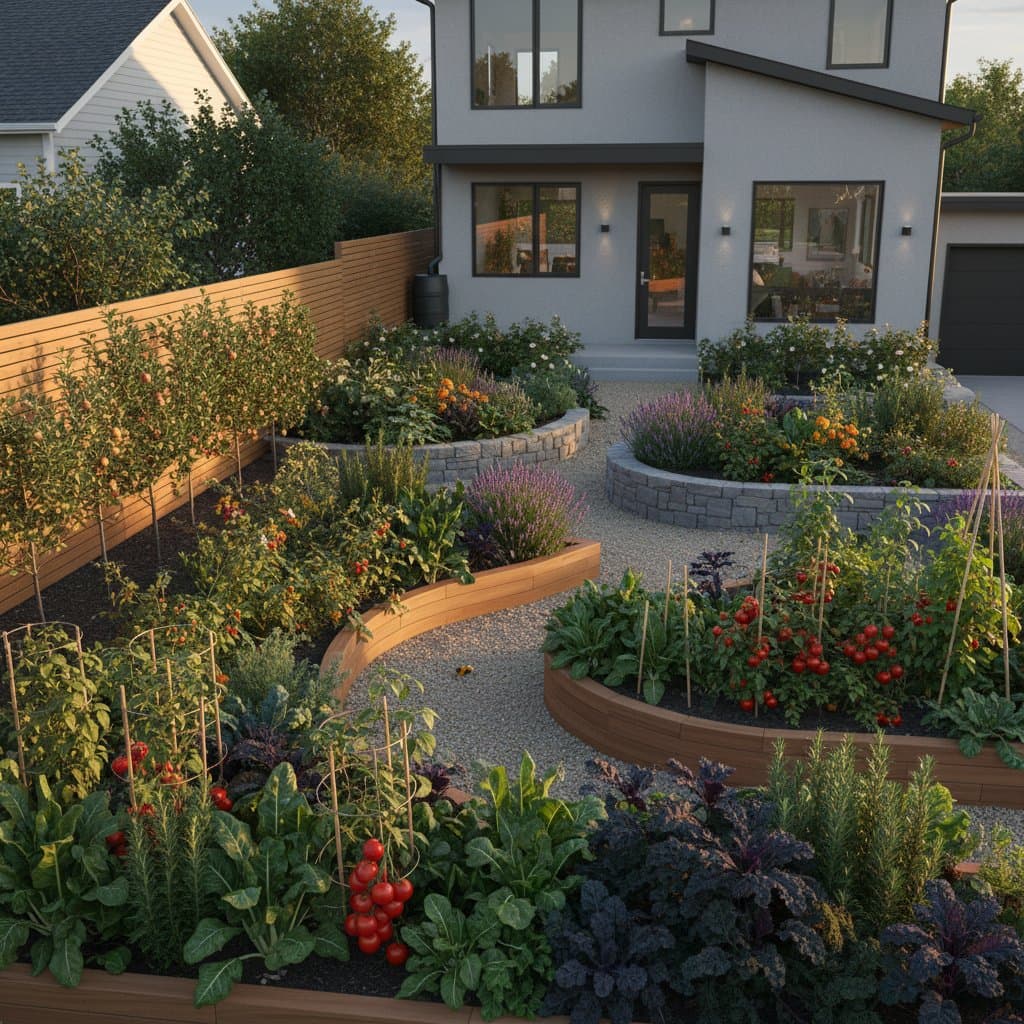
Edible Landscapes: Enhance Curb Appeal with Homegrown Produce
Imagine walking across your front yard to harvest fresh lettuce or basil for your evening meal. An edible landscape may seem novel, but it represents one of the most effective methods to integrate beauty and utility in residential design. With careful planning, such a landscape rivals traditional ornamental gardens while delivering produce directly to your home. Homeowners in California and comparable regions find this approach aligns well with local emphasis on water conservation and outdoor enjoyment.
Reasons to Replace Turf with Edible Plants
Conventional lawns demand substantial water, upkeep, and yield monotonous appearance. They necessitate regular mowing, fertilization, and irrigation, providing minimal benefits beyond visual uniformity. An edible landscape alters this dynamic. Homeowners redirect efforts from grass maintenance to cultivating plants that supply food, support pollinators, and enhance soil vitality.
This design fosters social engagement and education. Neighbors observe trellised tomatoes or vibrant chard along pathways, sparking interest. Children learn about food production in a hands-on environment, transforming the yard into both a social hub and learning area. The aesthetic value persists, yet the primary benefit lies in the purposeful cultivation of nourishing elements.
Design Principles for Structure and Balance
Effective edible landscapes merge the framework of formal gardens with the output of vegetable plots. Success hinges on equilibrium. Diverse textures, elevations, and hues create a deliberate rather than functional aesthetic.
-
Establish Core Elements First
Outline enduring features like pathways, edges, and highlights. Opt for decomposed granite, flagstone, or firm gravel in walkways to facilitate harvesting and irrigation access. Raised beds or subtle retaining walls delineate zones without overwhelming the view. -
Layer Plants Strategically
Leverage height variations for depth. Ground covers such as thyme or oregano replace former turf areas. Intermediate plants like kale, various lettuces, or strawberries add volume and pigmentation. Vertical elements including tomatoes, peppers, or supported beans introduce stature and pattern. -
Integrate Non-Edible Accents
Combine food plants with ornamentals for unity. Fragrant options like lavender, rosemary, and sage provide aroma and attract bees while preserving elegance. Varieties such as rainbow chard, purple basil, or nasturtiums deliver bold colors comparable to floral displays.
Adapting to Climate for Long-Term Success
Viable edible landscapes require plants suited to regional conditions. California’s Mediterranean pattern, featuring gentle winters and arid summers, benefits from strategic selection.
-
Select Resilient Varieties
Mediterranean herbs excel in low-moisture settings. Established rosemary, oregano, thyme, and sage need infrequent watering. Among vegetables, eggplant, bell peppers, and cherry tomatoes tolerate high temperatures effectively. -
Implement Efficient Watering
Substitute overhead sprinklers with drip systems or soaker hoses to target roots precisely. Apply mulch thickly to preserve humidity and deter weeds. Cluster plants by hydration requirements to prevent uneven moisture distribution. -
**Foster Soil Vitality
Robust soil underpins edible designs. Blend compost or vermicompost into beds to boost retention and nutrients. Gradually, organic additions develop a microbial network that promotes strong plants and reduces reliance on synthetic fertilizers.
Harmonizing Utility and Aesthetics
An edible landscape must appeal from street level and entry points alike. The challenge involves uniting function with compositional rules that direct gaze and ensure cohesion.
-
**Coordinate Colors
Blend greens with accents in purple, red, and silver for dimension. Red-tinged lettuces, multicolored chard, and deep purple basil stand out against silvery herbs or rich earth tones. -
**Apply Repetition for Flow
Replicate forms or clusters across the area to guide movement. For instance, intersperse herb sections with leafy greens to provide order amid diversity. -
**Create Clean Boundaries
Neat perimeters lend intention to plantings. Employ stone borders, a hedge of culinary sage, or marigold rows to outline beds sharply. -
**Rotate for Year-Round Interest
Cycle crops to sustain fertility and appearance. Introduce cool-weather greens after summer tomatoes to maintain verdancy across seasons.
Incorporating Edibles into Current Yards
Full turf removal proves unnecessary. Initiate modestly and expand incrementally.
-
**Add Focal Accents
Substitute lawn segments by paths with ground-level herbs like creeping thyme or chamomile. These release scents underfoot and demand less water than grass. -
**Utilize Containers
In constrained or poor-soil areas, position sizable pots or ornate planters at entrances. Tomatoes, peppers, and compact citrus flourish in vessels, contributing form and interest. -
**Develop Edible Edges
Line routes or driveways with lettuces, strawberries, or compact kale to enhance views while optimizing output. -
**Incorporate Vertical Supports
Install trellises or obelisks for climbers like cucumbers or pole beans. Such structures elevate focus and simplify collection.
Streamlined Maintenance Practices
Established edible landscapes often require less effort than turf, though they follow a distinct schedule.
-
**Harvest Consistently
Routine picking stimulates regrowth and tidiness. Clear ripe foliage or fruits to delay seeding. -
**Prune and Refresh
Shape herbs through clipping to control form. Renew spent seasonal vegetables to sustain activity and allure. -
**Mulch and Control Weeds
Layer organic mulch deeply to minimize pulling and hold water. Select straw, bark chips, or cocoa shells for organic texture. -
**Manage Pests Naturally
Plant companions like calendula and alyssum to invite helpful insects. Steer clear of strong chemicals that harm soil biology. Manual removal or diluted soap solutions suffice for minor issues.
Broader Impacts on Community and Environment
Edible landscapes promote sustainable community norms. They lower water consumption, eliminate chemical use, and enhance biodiversity. Such yards encourage dialogue, as front-yard plots prompt neighborly conversations and motivate similar transformations.
Environmentally, shifting from turf to edibles curbs erosion and strengthens soil. Deeper roots in vegetables and perennials aid water holding and stability. For local fauna, the array of blooms and crops supplies sustenance and shelter absent in uniform grass.
Planning and Budgeting Your Project
Develop an edible landscape progressively to adjust designs and manage expenses.
-
**Prioritize Soil and Irrigation
Focus initially on amending ground and optimizing water delivery. These basics yield enduring returns. -
**Install Structural Features
Pathways, elevated beds, or low walls set the framework and ease subsequent planting. -
**Phase Plantings
Commence with durable perennials such as rosemary, sage, or artichokes, then insert annuals and seasonal items. -
**Seek Expert Input
Engage designers versed in food gardens for irrigation layouts or selections. Partnership guarantees durability and aesthetic integration.
Embracing Daily Rewards of Your Edible Yard
With maturity, your edible landscape integrates into routines. Daily gatherings, irrigation sessions, and bee activity establish a bond with nature. The area shifts seasonally, delivering novel tastes and palettes year-round.
Mature gardens often garner more praise than pristine lawns. This stems from both visual charm and the fulfillment of a multifunctional space. From modest herb lines to complete overhauls, an edible landscape invests in sustenance, connections, and lasting neighborhood enhancement.