
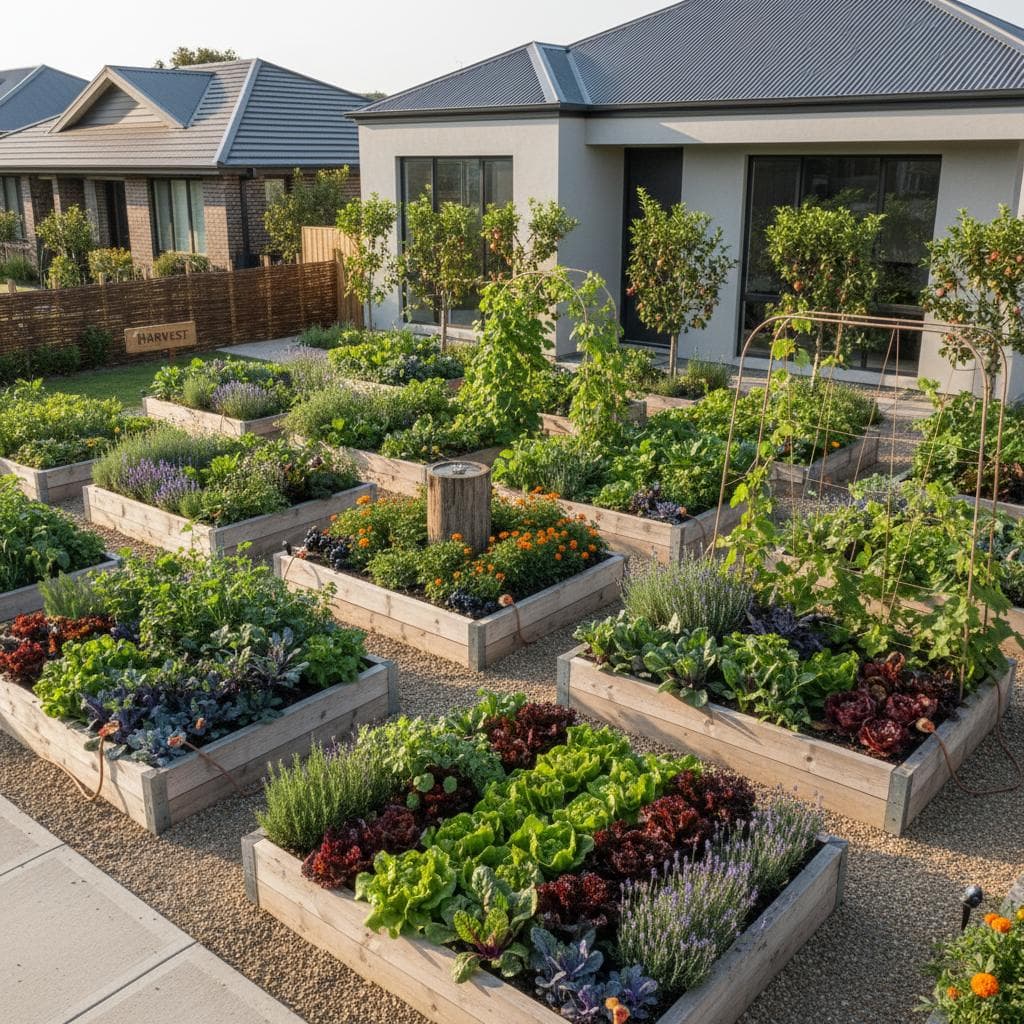
Transform Front Yards into Edible Food Gardens
A front yard offers more than mere decoration for a home. Reimagined as an edible garden, it becomes a vibrant source of fresh produce that enriches daily life through color, texture, and functionality. This approach merges visual appeal with practical benefits, yielding a landscape that satisfies both the eye and the table.
Key Project Overview
Suitable locations: Urban or suburban residential front yards
Adaptable scale: From small urban lots to larger suburban lawns
Climate adaptability: Choose plants according to local hardiness zones for consistent performance
Primary objectives: Boost curb appeal and create a dependable food production area
1. Plan the Layout with Structured Beds
Start by sketching the space to define organized planting zones. Structured beds establish clear edges and ease upkeep in a prominent front yard.
Practical advantages: These beds enhance soil handling, curb erosion, and provide straightforward access for picking crops. They also promote a neat look that fits neighborhood norms.
Design principles: Create a plan that complements the house's architecture, using curves for soft styles or straight lines for modern ones. Reserve space for pathways at least two feet wide to permit easy navigation without damaging plants.
A landscape designer notes, "Structured beds turn a chaotic plot into a purposeful garden that welcomes passersby."
Implementation example: Set up raised beds from untreated cedar or recycled composites, aligned parallel to the walkway for smooth visual lines. Pack them with a blend of compost and topsoil to encourage strong roots.
Highlighted feature: Precisely edged beds outline entry routes, integrating fluidly with the home's exterior.
2. Mix Ornamentals and Edibles
Edible plants feature ornamental traits that match conventional flowers and shrubs. Blending them produces a balanced garden with year-round visual draw.
Practical advantages: Such mixing attracts helpful pollinators and breaks pest patterns via variety. It keeps the yard appealing through crop off-seasons.
Design principles: Weave edibles into the overall color and texture plan. Combine rainbow chard's bright stems with salvia's fine flowers, or place deep green kale near silvery artemisia for striking contrast.
A designer observes, "Vegetables integrated with flowers elevate the garden to a sophisticated landscape rather than a utilitarian patch."
Implementation example: Edge a path with edible blooms like violas and borage around tomato plants, injecting color while deterring pests.
Highlighted feature: Bright nasturtium vines spill over borders, pairing with upright rosemary bushes.
3. Select and Plant for Seasonal Variety
Pick a range of edibles matched to your climate for steady output and shifting visuals. Target types that succeed in the partial shade or full sun common to front yards.
Practical advantages: Varied seasons deliver nonstop harvests, cut downtime, and optimize area use. They foster soil vitality via crop rotation.
Design principles: Cluster plants by final size and hydration requirements. Add cool-weather picks like spinach and radishes for spring and fall, shifting to summer stalwarts such as eggplant and beans.
A horticulturist advises, "Diverse plant choices create a garden that evolves with the seasons, keeping it lively and productive."
Implementation example: Position berry shrubs like blueberries against the foundation for lasting form, interspersed with self-seeding annual herbs such as cilantro.
Highlighted feature: Strawberry clusters create a low edge, their white blossoms yielding red berries in summer.
4. Layer Plants for Continuous Harvest
Apply layering to exploit all vertical and horizontal space, echoing natural systems for ongoing yields.
Practical advantages: Layering maximizes output by aligning growth forms, with ground covers suppressing weeds and tall plants providing shade.
Design principles: Position low plants like strawberries at ground level, mid-height brassicas such as broccoli in the center, and climbers like pole beans on rear trellises.
A designer comments, "Layered arrangements ensure the garden appears full and inviting from the street, with no empty spots between cycles."
Implementation example: Use the Three Sisters technique, with corn stalks supporting beans and squash spreading below to cool soil and hold moisture.
Highlighted feature: Tall sunflowers survey underplantings of herbs, forming a harmonious multi-level setup.
5. Build and Maintain Healthy Soil
Robust soil underpins a successful edible garden. Dedicate effort to initial setup and regular tending for healthy plant development.
Practical advantages: Fertile soil elevates crop yield and flavor, while aiding water holding and beneficial microbes.
Design principles: Check soil pH and enrich with organics like aged manure or leaf mold. Plant cover crops such as clover in downtime to guard nutrients.
A soil expert states, "Vibrant gardens start below ground; enriched soil yields abundant, flavorful produce."
Implementation example: Double-dig beds to aerate dense soil, then apply two inches of compost each year to maintain richness.
Highlighted feature: Rich, friable soil supports emerging seedlings for solid starts.
6. Integrate Smart Irrigation
Adopt effective watering methods to nurture plants with minimal work or waste, vital for exposed front yards.
Practical advantages: Precise systems save water, stabilize hydration, and lower disease chances from surface moisture.
Design principles: Select root-level delivery like subsurface lines. Add sensors that respond to weather for hands-off operation.
A contractor explains, "Concealed irrigation keeps the focus on plants, not pipes, while promoting sustainable practices."
Implementation example: Lay a zoned drip setup linked to rainwater barrels, covering diverse beds uniformly.
Highlighted feature: Mulch hides lines discreetly, letting foliage thrive without exposed gear.
7. Incorporate Structural and Aesthetic Elements
Incorporate supportive items that improve utility and style, readying the garden for elements and routine activity.
Practical advantages: Items like trellises and paths offer support and reach, with decorative accents refining the look.
Design principles: Choose natural options such as bamboo or stone for unity. Add attractors like a birdbath to draw wildlife amid edibles.
A designer suggests, "Thoughtful structures unify the space, turning a simple garden into an architectural feature."
Implementation example: Raise arched trellises above entry gates, covered in vining peas, to form an inviting archway.
Highlighted feature: Stone paths thread through plantings, directing foot traffic while safeguarding earth.
8. Keep It Neighbor-Friendly
Shape the design to consider the community, promoting good relations and a refined public view.
Practical advantages: Tidy features signal care, gaining approval over objections in communal areas.
Design principles: Use sharp lines and bounded growth. Trim often to prevent spillover into shared zones.
A community gardener shares, "A respectful design sparks neighborly chats and even shared harvests."
Implementation example: Frame beds with sturdy metal borders and add discreet signs noting the edible focus to encourage inquiries.
Highlighted feature: Clipped hedges bound the area, easing the shift to the sidewalk.
Sustaining and Enjoying the Edible Yard
As an edible front yard develops, it integrates fully into home routines. Make seasonal tweaks, like renewing mulch and splitting perennials, to uphold energy and aesthetics. Share extra yields to strengthen local ties, making the garden a collective asset.
This configuration redirects habits toward plenty, swapping plain grass for a vibrant realm of expansion and connection. Steady care delivers plentiful sustenance alongside an enchanting approach that showcases individual creativity.