
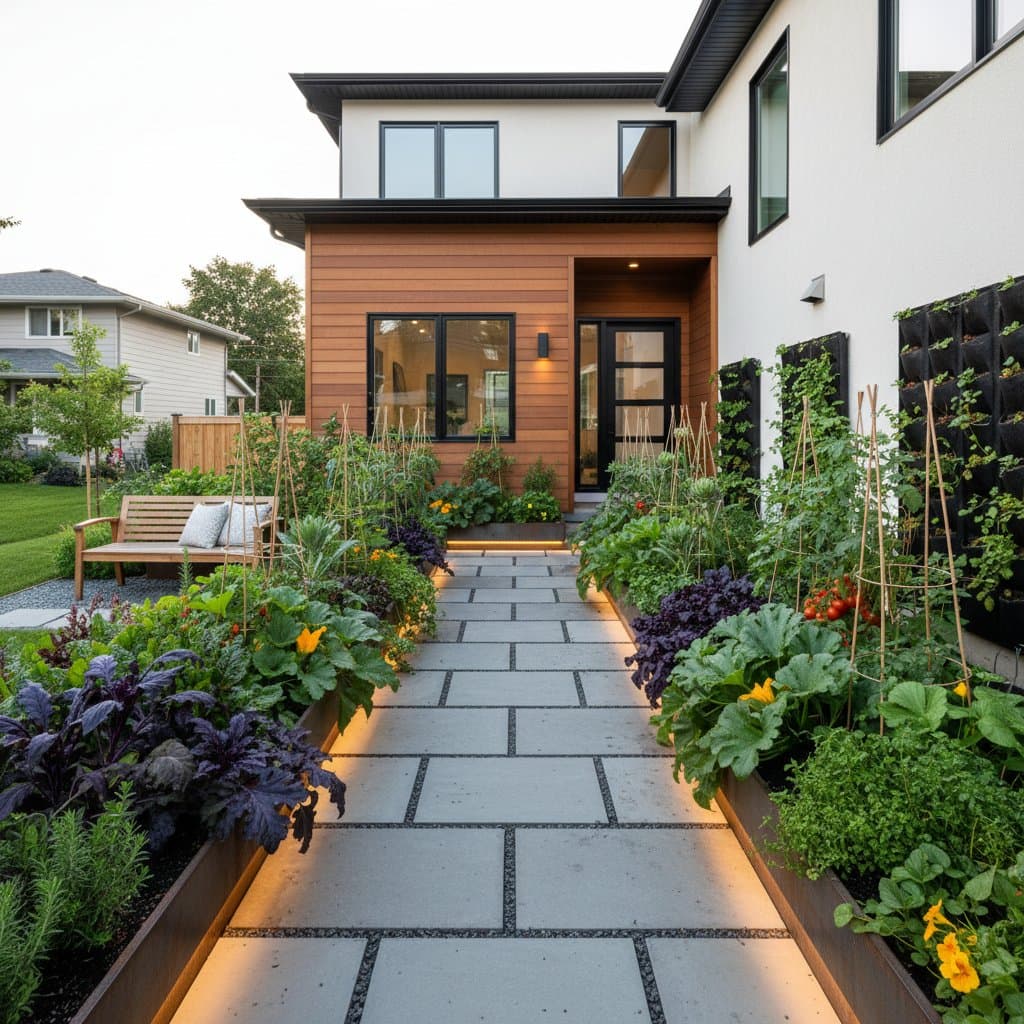
Edible Front Yards That Grow Food and Boost Home Value
A front yard that produces food offers both beauty and utility. It transforms from a static lawn into a living landscape that evolves with the seasons. Color, texture, and fragrance create visual interest while fresh produce delivers daily benefits.
An edible front yard suits nearly any architectural style. Thoughtful planning ensures the space remains welcoming, conserves water, and enhances property value. Structure combined with productive plants prevents a haphazard appearance.
At a Glance
- Location: Residential front yards
- Size: Suitable for compact plots or expansive setbacks
- Climate Zone: Flexible through selection of regional plants
- Project Goal: Achieve curb appeal alongside fresh food production
Define the Framework
A clear layout prevents an edible front yard from appearing disorganized. Paths, raised beds, and defined borders provide order and simplify harvesting. Gravel or decomposed granite paths outline planting zones and support better drainage.
Landscape designers note that a grid or gently curved path imposes visual order. Even a diverse mix of vegetables and herbs then reads as a composed garden. Low edging in steel, cedar, or stone marks bed boundaries precisely. This approach signals intention rather than improvisation.
Mix Ornamentals with Edibles
Pairing edible plants with ornamentals produces a lush, layered effect. Kale, chard, and purple basil contribute bold color. Marigolds or lavender interplanted among crops draw pollinators and reduce pest pressure naturally.
This combination fosters biodiversity and creates rhythmic visual interest. Designers observe that edibles placed among perennials convey abundance without seeming purely functional. Rosemary beside dwarf citrus or colorful lettuces next to coral bells maintains year-round appeal while highlighting seasonal shifts.
Use Vertical Structures
Trellises, obelisks, and arbors direct vines upward to conserve ground space and introduce sculptural height. Peas, pole beans, and cucumbers climb readily and cast light shade on greens below. Vertical elements also screen views along sidewalks or driveways.
Frames in painted wood or powder-coated metal match house trim for visual unity. Builders describe these supports as living architecture that elevates vegetable displays.
Choose Attractive and Productive Plants
Select crops that remain tidy and age gracefully in prominent locations. Blueberry shrubs, dwarf fruit trees, and compact peppers perform reliably in visible beds. Herbs such as sage, oregano, and chives add texture and aroma in smaller gaps.
Contrast silver-leaved artichokes with darker foliage or allow strawberries to cascade over low walls. Horticulturists emphasize that plants with dual ornamental and edible value spark curiosity and conversation.
Plan for Easy Maintenance
Success depends on keeping the garden neat and efficient. Drip irrigation supplies water directly to roots. Mulch conserves moisture and limits weeds. Grouping plants by similar water and sun requirements streamlines care routines.
Raised beds reduce physical strain and create crisp edges. Regular pruning maintains compact shrubs and sustains productivity. Designers stress that the most successful edible gardens appear tended throughout the year.
Highlight with Thoughtful Lighting
Soft lighting extends use into evening hours and strengthens curb appeal. Low-voltage path lights paired with warm LED uplights accent foliage and structure without harsh glare. Fixtures positioned to emphasize bed geometry or fruit trees create a deliberate, secure atmosphere.
Lighting specialists note that evening illumination positions the garden as an inviting foreground to the home.
Daily Life in the Garden
An edible front yard alters how residents engage with their property. Neighbors pause to notice ripening produce or fragrant herbs. Families spend additional time outdoors, tending plants and sampling harvests. The landscape fosters pride and provides ongoing nourishment.
Over successive seasons the design supports both daily routines and long-term property value. It communicates care, creativity, and environmental awareness while demonstrating that beauty and productivity occupy the same space.