
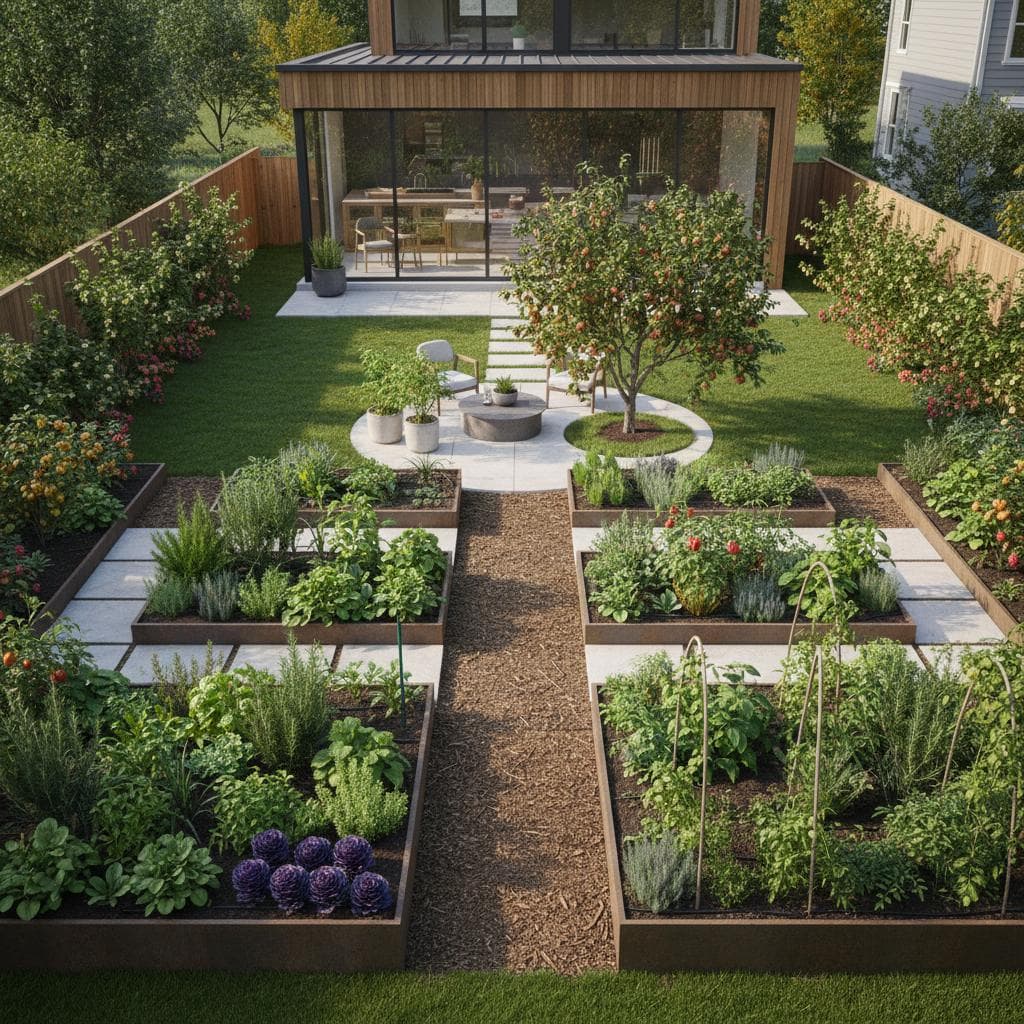
Transforming a Suburban Yard into an Edible Powerhouse
A standard quarter-acre suburban lot often serves as a blank canvas for lawns and ornamental plants. Yet, Sarah and David, homeowners in a quiet neighborhood, envisioned something more substantial. They collaborated with landscape designer Erin to create an edible landscape that yields approximately $3,000 worth of fresh produce annually. This project demonstrates that beauty and bounty can coexist without sacrificing curb appeal.
The transformation began with a thorough assessment of the site. Sun exposure, soil type, and water access guided the placement of productive elements. Fruit trees anchor the design, providing shade and structure, while underplantings of herbs and vegetables fill gaps with color and texture. The result is a garden that feeds the family, fosters community, and enhances property value.
Core Design Principles for Productivity and Aesthetics
Effective edible landscaping balances form and function. Sarah and David prioritized perennials for long-term yields and annuals for variety. Dwarf fruit trees, such as apples and pears, line the perimeter, espaliered against fences to save space. Berry bushes, including blueberries and raspberries, form natural hedges that define pathways.
Vegetable beds integrate seamlessly into the layout. Raised beds, constructed from cedar, host tomatoes, peppers, and leafy greens. Companion planting reduces pests; for instance, marigolds border basil to deter insects naturally. Herbs like rosemary and thyme edge walkways, releasing aromas that enhance the sensory experience.
Hardscape elements provide structure. Fencing consists of powder-coated steel panels that double as trellises for espaliered trees. These durable barriers protect crops from wildlife while supporting vertical growth. Pathways of gravel and stepping stones guide foot traffic, preventing soil compaction in planting areas.
The color palette of hardscape materials remains neutral, allowing the changing foliage and fruit to stand out. Gray tones in the fencing and pavers complement green leaves in spring and vibrant reds and oranges in harvest season. Consistent textures across elements make the garden appear organized, even as crops mature at different stages.
Irrigation plays a crucial role in efficiency. Drip lines deliver water directly to roots, minimizing waste and ensuring even moisture. Mulch layers conserve soil dampness and suppress weeds, reducing maintenance needs.
Calculating the Annual Yield
Quantifying success in an edible landscape involves tracking harvests and estimating values. Sarah and David maintain a simple log of picked produce, using local market prices for valuation. In their first full year, apples from three dwarf trees contributed $800, with berries adding $600.
Vegetables from raised beds yielded $1,000, including zucchini, beans, and salad greens harvested weekly. Herbs provided the remaining $600, with surplus dried or shared. This total of $3,000 reflects conservative estimates; actual savings on grocery bills likely exceed that figure.
Crop rotation and succession planting maximize output. Cool-season crops like lettuce follow warm-season tomatoes, keeping beds productive year-round. Perennials such as asparagus and strawberries offer reliable returns with minimal annual effort.
Living with a Productive Landscape
The biggest shift Sarah and David describe involves how the garden reshaped their daily habits. They plan meals around seasonal ripeness, incorporating fresh picks into salads, stir-fries, and desserts. Surplus fruit goes to neighbors, sparking exchanges of recipes and gardening advice.
The landscape draws visitors and fosters community. Passersby pause to admire blooming fruit trees or ask about the harvest. These interactions spark conversations about food sources and sustainability, strengthening neighborhood bonds.
"The kids eat more vegetables because they help grow them," Sarah said. "It connects them to where food comes from."
From a design perspective, Erin views this project as evidence that functional gardens achieve refinement. The layout balances productivity with visual flow, proving edible landscaping serves as a long-term investment rather than a fleeting trend. Homeowners gain not only nourishment but also a deeper appreciation for nature's cycles.
Essential Maintenance Strategies
Sustaining an edible landscape demands regular care, yet the effort remains manageable with smart systems. Treat the space as an integrated ecosystem where plants support one another. Weekly tasks include weeding, pruning, and inspecting for pests.
Soil health forms the bedrock of vitality. Annual testing reveals nutrient needs; compost additions enrich the ground naturally. Cover crops in off-seasons prevent erosion and build organic matter.
Water management optimizes growth. Rain barrels capture runoff for irrigation, promoting conservation. Adjust schedules based on weather; deep, infrequent watering encourages strong roots.
Crop diversity mitigates risks. A mix of species resists disease outbreaks and extends harvest periods. Prune fruit trees in late winter to promote airflow and fruiting spurs.
Pest control emphasizes prevention. Beneficial insects, like ladybugs, patrol for aphids. Hand-picking larger pests and using row covers protect young plants without chemicals.
Seasonal cleanups prepare for renewal. Remove spent plants in fall and mulch heavily for winter protection. Spring replanting revives the cycle, ensuring consistent yields.
Realizing the Rewards of Edible Gardening
An edible landscape delivers multifaceted benefits beyond financial savings. Families enjoy healthier diets with nutrient-dense foods at peak freshness. The garden becomes an educational hub, teaching children responsibility and ecology.
Environmentally, it supports biodiversity and reduces food miles. Pollinators thrive amid flowers and herbs, while the design sequesters carbon in healthy soil. Property aesthetics improve, potentially boosting resale value.
To start your own, begin small: select a sunny spot and choose easy crops like strawberries or lettuce. Consult local experts for climate-suited varieties. With patience, your yard can evolve into a source of abundance and joy.