
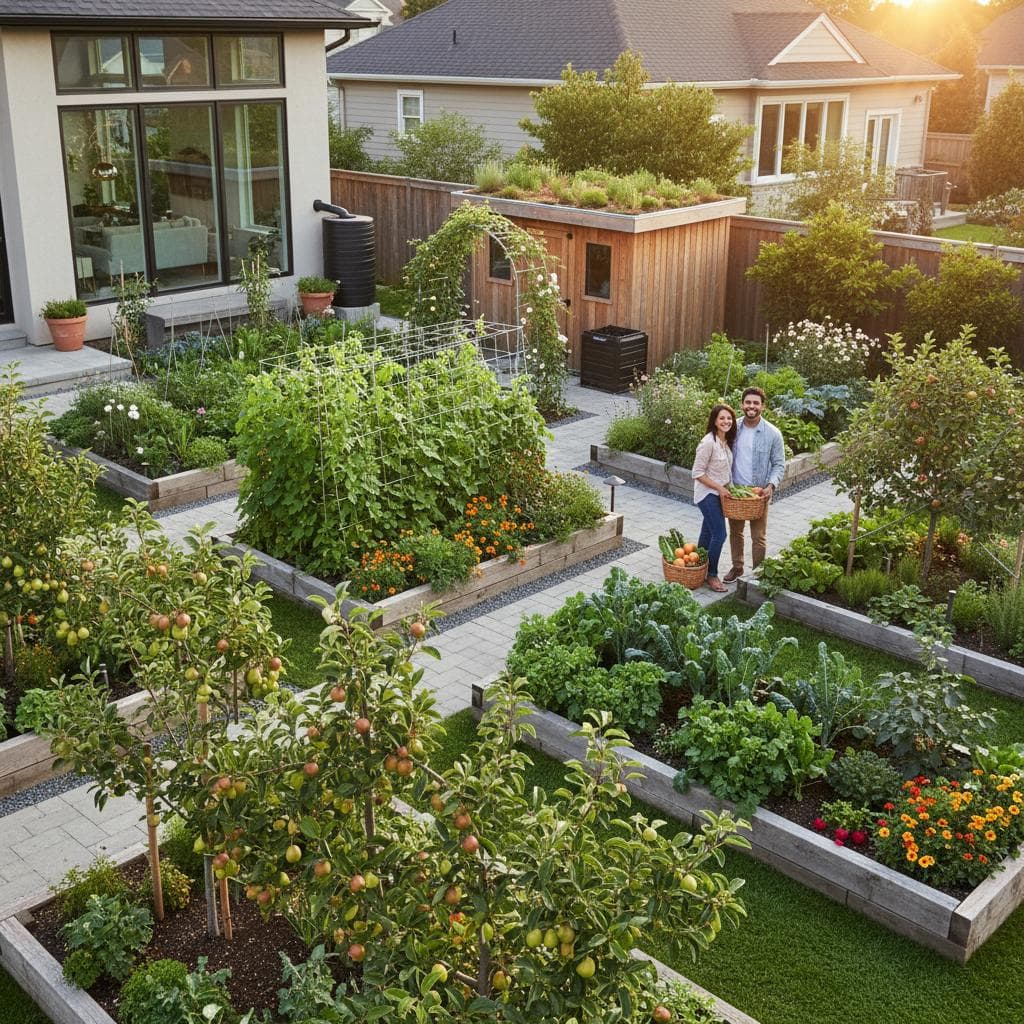
How Edible Landscaping Saves $2,000 in Your First Year
A thoughtfully planned edible landscape serves both aesthetic and practical purposes. Homeowners replace purely decorative plants with fruit-bearing trees, vegetable patches, and herb gardens to lower food expenses while enhancing curb appeal. Many such designs generate about $2,000 in homegrown produce value right from the first season, offering immediate financial and sensory rewards.
Edible landscaping integrates food cultivation with elegant garden principles. The result appears polished and purposeful, resembling a traditional garden that incidentally supplies fresh ingredients for meals.
1. Establish Productive Zones
Start by mapping your yard into distinct zones for optimal function and flow. Allocate space for vegetable beds, herb strips, and fruit orchards, interspersed with walking paths and relaxation areas to maintain visual balance. Position annual crops such as tomatoes, beans, and leafy greens near the house entrance for convenient daily picks.
Perennials like asparagus, strawberries, and fruit bushes suit perimeter locations, where they establish deep roots without frequent disturbance. This zoning strategy streamlines access and reduces physical effort during peak harvest times.
Landscape professionals emphasize that clear zones eliminate disorder in edible gardens and simplify routine tasks. Incorporate raised beds from durable materials like redwood or corten steel to delineate spaces cleanly. Mulched or paved pathways prevent mud tracking indoors after rain or irrigation.
2. Select Plants for Maximum Yield and Beauty
Choose a diverse array of edibles that align with your climate and soil conditions to maximize output. Focus on high-value crops: dwarf fruit trees such as apples or figs deliver substantial harvests from compact spaces, while vining plants like squash climb trellises to save ground area.
Incorporate edible flowers, including nasturtiums and violas, for color pops that attract beneficial insects. Layer plantings vertically—tall sunflowers shelter shade-loving greens below—to optimize sunlight and space usage.
Experts recommend starting with easy growers: cherry tomatoes yield prolifically with minimal staking, and bush beans fix nitrogen in the soil for future plantings. Track your garden's sun patterns over a week to assign sun-hungry peppers to full-exposure spots and root vegetables to partial shade.
3. Incorporate Native and Regionally Adapted Varieties
Opt for native plants that require less water, fertilizer, and pest control, thereby cutting long-term costs. Species like pawpaw trees or wild strawberries offer fruit alongside ecological benefits, such as supporting local wildlife and improving soil health.
Pair these with adapted edibles: in arid regions, select heat-resistant options like chili peppers and oregano; in cooler climates, prioritize cold-hardy kale and raspberries. This site-specific approach ensures vigorous growth and consistent production.
Designers note that well-matched plants maintain vitality independently, sustaining garden productivity across seasons. Test soil pH with a simple kit before planting—most edibles prefer 6.0 to 7.0—and amend with lime or sulfur as needed for optimal nutrient uptake.
4. Integrate Structural Elements for Efficiency
Build supportive features that enhance accessibility and longevity. Install trellises or arbors for climbing crops like peas and grapes, which verticalize the space and create shaded nooks. Fencing with integrated planters deters pests while defining boundaries.
Use companion planting to boost yields naturally: marigolds near tomatoes repel nematodes, and basil enhances tomato flavor through proximity. These elements create a self-regulating ecosystem that minimizes interventions.
Consultants advise evaluating space constraints early—measure bed widths to at least 4 feet for easy reach from both sides. Secure structures with galvanized hardware to withstand weather, ensuring the garden remains functional year-round.
5. Enhance Evening Accessibility with Lighting and Seating
Illuminate key areas to extend the garden's usability beyond daylight hours. Install LED path lights along walkways and spotlights on focal plants, facilitating safe navigation for late-afternoon or evening foraging.
Create inviting rest spots with built-in benches or hammocks adjacent to harvest zones, promoting relaxation amid the greenery. These additions transform solitary tending into communal experiences, such as sunset salads prepared on-site.
Professionals suggest 2700K warm-toned bulbs for a welcoming glow that accentuates foliage textures without harsh glare. Supplement with motion-sensor solar stakes for energy efficiency, and position seating to capture prevailing breezes for comfortable outdoor dining.
6. Plan Seasonal Succession for Continuous Harvests
Schedule plantings to ensure steady output throughout the year, avoiding gaps in production. Sow cool-season crops like spinach in early spring, transitioning to heat-tolerant zucchini in summer, and fall brassicas such as broccoli for autumn yields.
Rotate crops annually to prevent soil depletion—follow heavy feeders like corn with legumes that replenish nitrogen. This practice sustains soil fertility and reduces disease risks over multiple seasons.
Garden advisors highlight that succession planting keeps the table supplied without overwhelming storage needs. Maintain a planting calendar noting varieties, sowing dates, and expected maturities; adjust based on local frost dates for precise timing.
7. Streamline Maintenance for Sustainability
Design systems that simplify care to prevent burnout and ensure longevity. Drip irrigation lines deliver water directly to roots, conserving resources and eliminating overhead wetting that invites fungi.
Apply 2-3 inches of organic mulch, such as shredded leaves or straw, to conserve soil moisture and block weed growth. Cluster plants with similar hydration requirements—drought-lovers together, moisture-seekers apart—for targeted watering.
Consultants stress that proactive design integrates maintenance seamlessly. Position compost tumblers in discreet corners to process waste efficiently, recycling nutrients back into beds within weeks. Schedule monthly soil tests to monitor health and adjust amendments accordingly.
Harvesting Rewards from Your Edible Landscape
An edible landscape redefines daily home life by blending productivity with pleasure. It shifts grocery shopping to garden walks, fostering mindfulness in meal preparation and reducing reliance on commercial sources.
As plants establish, the space evolves into a multifaceted asset: a source of nutrition, a habitat for biodiversity, and a venue for family bonds. The $2,000 first-year savings underscore the practicality, yet the true value lies in the vitality and joy of cultivating one's own abundance.