
- Assess overall structure for logical flow from concepts to steps
- Replace generic statements with specific, actionable recommendations
- Ensure paragraphs stay within 2 to 4 sentences with varied rhythm
- Remove contractions, emojis, and nonstandard punctuation
- Refine headings and lists for clarity and engagement
- Condense sections to preserve core information under word limits
Edible Landscaping Turns Front Yards into Productive Spaces
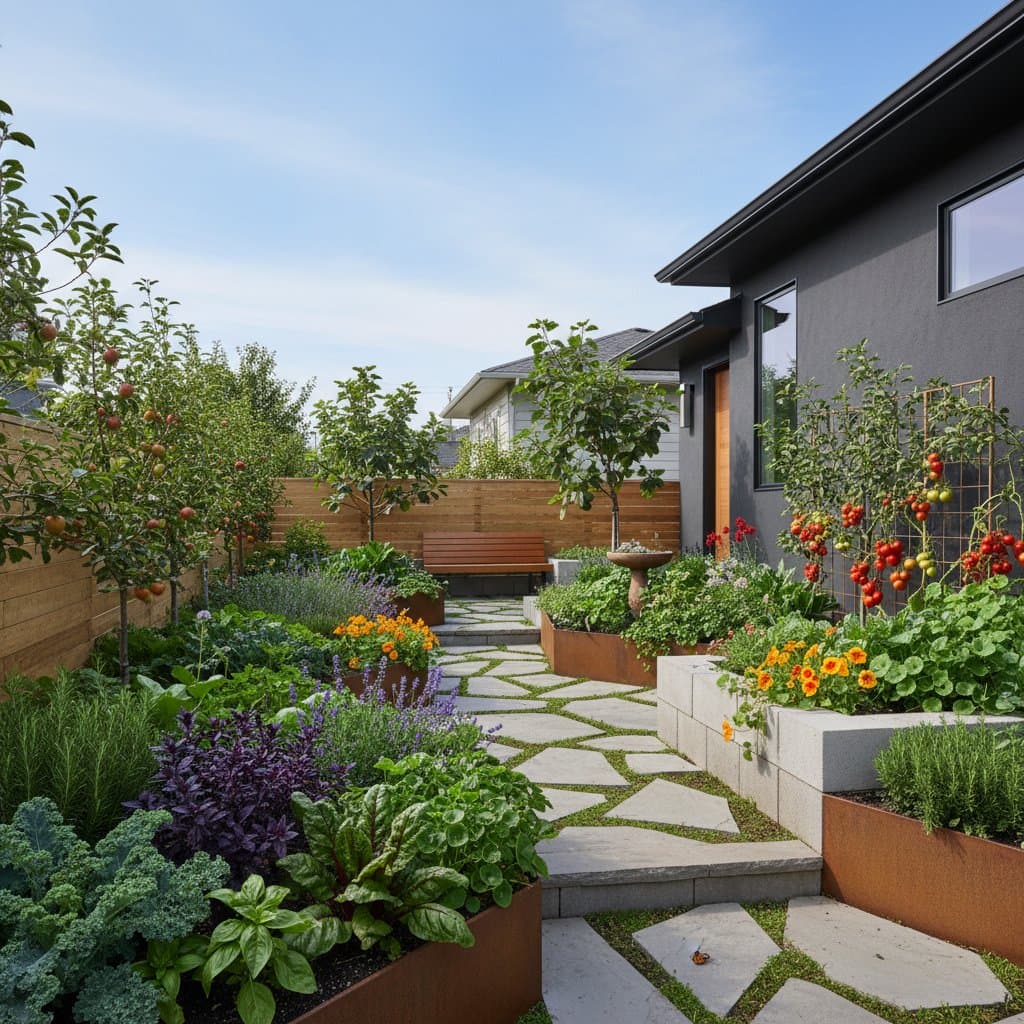
Stepping outside to gather sun warmed cherry tomatoes or fresh rosemary creates immediate satisfaction. Edible landscaping merges food production with thoughtful design. This method turns ordinary lawns into spaces that yield harvests while supporting local ecosystems.
Homeowners across many regions now combine fruit trees with flowering perennials and vegetables with ground covers. The result delivers fresh produce, attracts pollinators, and lowers water use. Neighborhoods gain a shared sense of abundance from these visible gardens.
Reasons Front Yards Suit Edible Planting
Front yards serve as the primary visual statement of a property. They also offer practical advantages for growing food.
Sun Exposure and Daily Access
These areas typically receive steady sunlight throughout the day. Tomatoes, peppers, and many herbs require full sun to thrive. Harvesting becomes convenient because produce sits steps from the kitchen door.
Interaction with Neighbors
Visible plantings spark conversations and curiosity. Children see the origin of real food. Small exchanges of extra vegetables strengthen local ties.
Resource Savings
Lawns demand frequent irrigation and chemical applications. Edible gardens cut those inputs while reducing grocery costs and packaging waste. Soil preparation and drip systems represent the main upfront expenses.
Essential Infrastructure Elements
Materials and layout determine both function and appearance.
Pathways
Gravel or permeable pavers create stable routes for maintenance. Curved designs soften the look of raised beds.
Planting Structures
Redwood or composite raised beds improve drainage in poor soil. Containers offer flexibility near driveways or entries.
Irrigation
Drip systems deliver water directly to roots. Mulch layers further reduce evaporation and weed growth. Rain barrels capture roof runoff for later use.
Professional Support Options
Designers experienced with edibles integrate plants into existing styles. They address soil health, plant pairings, and water efficiency. Larger projects benefit from teams that include contractors for grading and horticulturists for variety selection.
Solutions to Typical Obstacles
Appearance Standards
Neat edging and consistent pruning address concerns about messiness. Focal points such as trellised vines signal intentional design.
Pest Control
Companion planting and beneficial insects replace chemical sprays. Marigolds deter certain nematodes while ladybugs manage aphids.
Crop Balance
Mix high yielding plants like zucchini with lower producers such as greens. Seasonal rotation maintains soil fertility.
Ongoing Care
Daily observation and scheduled harvesting keep the space manageable. A few minutes each morning suffice during peak season.
Year Round Maintenance Practices
Spring calls for soil amendment and cool season crops. Summer focuses on harvesting and monitoring. Autumn suits pruning and perennial planting. Winter allows planning and rest.
Mulch and compost applications build resilience. Perennials eventually stabilize conditions and reduce inputs.
Daily Rewards of the Approach
The garden becomes part of routine life through observation of growth and flavor at peak ripeness. It demonstrates how design evolves with care and time. Mature trees and improved soil turn the space into a lasting asset.