
HOA-Approved Edible Gardens for Stunning Front Yards
When Maya and Luis Ramirez bought their home in a tidy suburban neighborhood, they wanted to replace their thirsty lawn with something more productive. They imagined herbs for cooking, berries for breakfast, and seasonal vegetables tucked into an inviting front yard. Their challenge was doing it all while staying within their homeowners association rules for uniform landscaping and curb appeal.
Their solution became a model for blending form and function. It showed that food-producing plants can look refined, restrained, and fully compliant with HOA standards.
A Garden That Blends In and Stands Out
The Ramirezes property sits among a row of homes with manicured lawns and symmetrical beds of boxwood and annual flowers. Instead of breaking the visual rhythm, the new design fits neatly within it. Stone-edged planters define the garden geometry, while evergreen structure keeps the composition tidy through every season.
The designer, Laura Chen of Integra Gardens, approached the project with practicality. We wanted to create something that looked intentional and layered, she said. The HOA main concern was maintenance and appearance, not the plant species themselves. By focusing on order, repetition, and color harmony, she secured quick approval from the board.
The Center Bed: Structure and Seasonal Interest
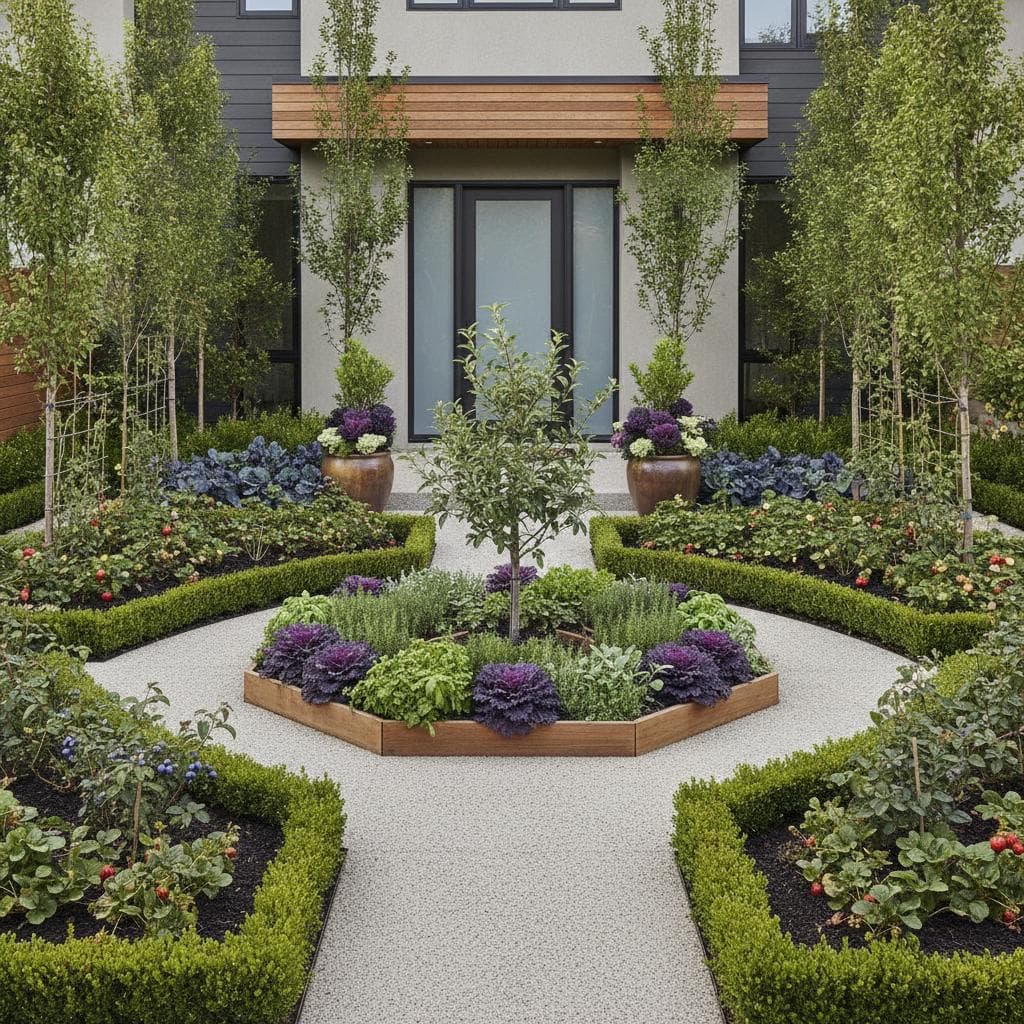
At the heart of the yard sits a circular raised planter built from stacked limestone. Inside, a dwarf fig tree provides height and structure. Around its base, alternating rings of purple basil, curly kale, and marigolds create a layered look that changes subtly through the seasons.
The fig was chosen for its tidy growth habit and sculptural leaves. It remains compact under light pruning, and its fruit ripens midseason when the couple hosts outdoor dinners. The marigolds deter pests naturally, while their color ties in with the golden undertones of the stonework.
This bed acts as the garden anchor. It shows that productive plants can have ornamental value. The symmetry appeals to the HOA emphasis on order, while the color palette keeps the space cohesive.
Plant Details
- Tree: Dwarf Petite Negra fig in loamy soil enriched with compost
- Underplanting: Purple basil Amethyst, curly kale Winterbor, French marigold Lemon Drop
- Mulch: Crushed granite, chosen for weed control and clean texture
The Corners: Compact Fruit Trees
Each corner of the yard holds a small fruiting tree grafted on dwarf rootstock. The Ramirezes chose a pair of espaliered apple trees near the driveway and two columnar pears near the porch. Their tight growth patterns make them ideal for limited space and easy pruning.
The espalier frames the garden like living sculpture. Its horizontal arms echo the lines of the low stone walls and the porch railing behind it. The pears, pruned into narrow columns, add vertical rhythm without casting deep shade.
Laura explained, Fruit trees can look formal when they are disciplined. The trick is training them early and keeping the lines clean. The couple follows a simple pruning schedule to preserve the design symmetry.
Tree Varieties and Care
- Apples: Honeycrisp on M27 rootstock, espaliered on cedar trellis
- Pears: Seckel columnar, staked with hidden supports
- Fertilizer: Organic blend with slow-release nitrogen applied twice per season
Living with Your Design
Months after completion, the Ramirezes front yard remains as orderly as the day it was planted. Neighbors often stop to ask about the fig tree or the subtle scent of lavender drifting down the walkway. The couple says the garden changed how they use their outdoor space. Morning coffee now happens on the porch, surrounded by herbs and bees, while weekend dinners feature ingredients picked just a few steps away.
The maintenance routine is simple. Pruning occurs every few weeks, and the drip system handles most watering automatically. The garden produces enough herbs and greens for daily use without overwhelming the homeowners with harvest chores.
Their HOA, once cautious, now highlights the project as an example of sustainable landscaping that fits community standards. The design proves that front yard edibles can be as refined as any ornamental planting when thoughtfully planned.
For homeowners bound by strict neighborhood guidelines, this project offers a practical model. With careful plant selection, consistent structure, and attention to detail, it is possible to enjoy a productive and elegant landscape that nourishes both table and street view.
Practical Steps for HOA Compliance
Start by reviewing your association guidelines for plant height, edging materials, and maintenance expectations. Choose compact varieties and install clear borders such as stone or brick to signal intentional design. Schedule regular pruning sessions and use drip irrigation to keep the space neat year round. These choices help turn edible plants into assets that satisfy both your household and the board.