
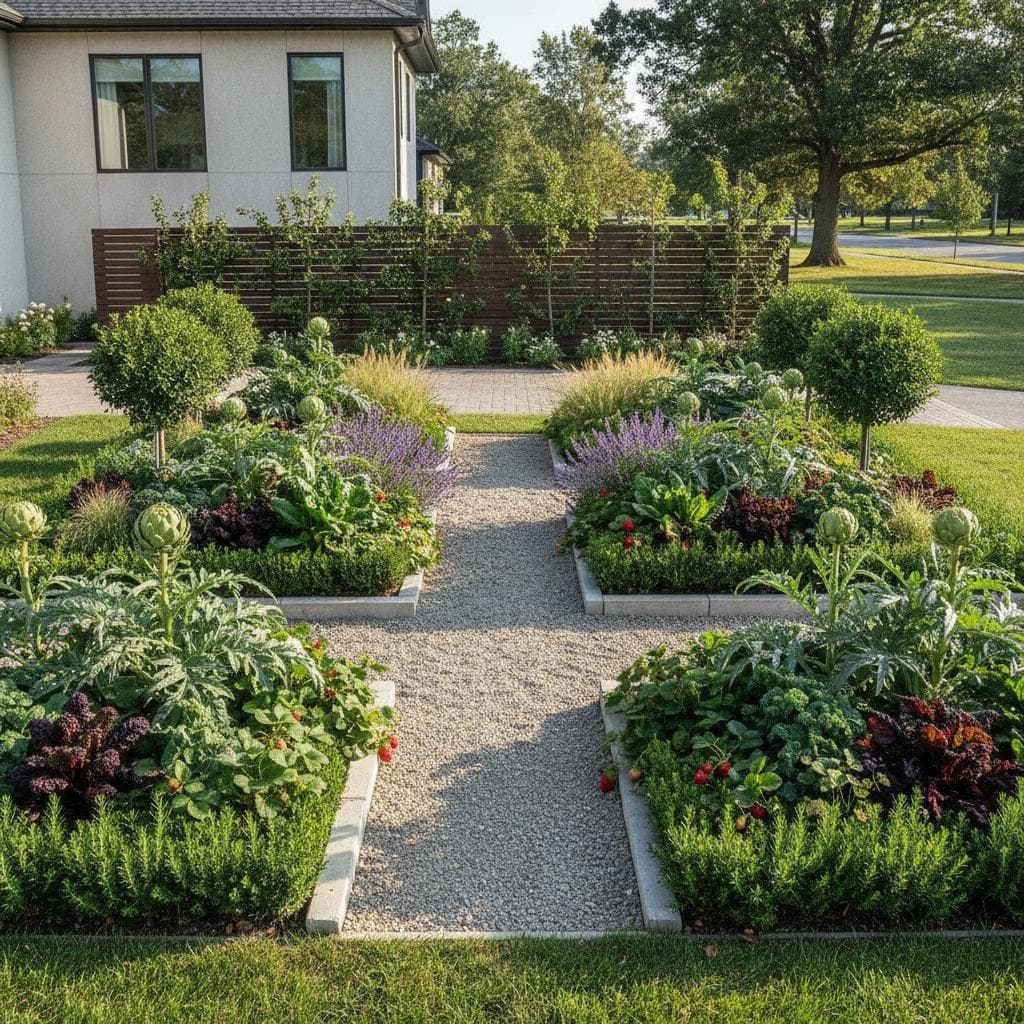
HOA-Approved Foodscaping Ideas for Edible Front Yards
An edible front yard can be both beautiful and productive. With thoughtful design, homeowners can grow herbs, fruits, and vegetables while maintaining a neat, cohesive look that satisfies neighborhood standards. The key is blending ornamental appeal with edible function so the yard feels intentional, not agricultural.
Foodscaping within HOA guidelines calls for subtlety, structure, and a strong sense of order. The best designs use symmetry, texture, and proportion to create curb appeal while quietly producing food.
1. Start with Structure
An edible front yard needs a strong framework. Structure helps the space look intentional and tidy, which is crucial for HOA approval. Use low hedges of boxwood or dwarf yaupon holly to outline planting areas. Raised beds built from stone or brick match residential style better than raw wood.
Curved or geometric layouts can echo existing paths or driveways, tying the edible garden into the home architecture. Defined borders keep the yard neat and easy to maintain. A symmetrical layout signals formality and control, both appealing to HOAs.
A pair of parallel beds edged in limestone with neat gravel paths between them frames the entry walk while housing compact greens or strawberries.
2. Choose Compact and Decorative Varieties
Scale matters in front-yard foodscaping. Compact, tidy plants maintain proportion and prevent a cluttered look. Look for bush or patio cultivars of tomatoes, peppers, and beans. Dwarf blueberries make excellent foundation shrubs with seasonal color.
Espaliered apples or pears trained against a fence or wall provide structure and fruit without visual bulk. Smaller plants reduce maintenance and prevent overgrowth. Repetition of compact forms creates rhythm and unity.
A row of dwarf blueberries under a front window offers spring flowers, summer berries, and red fall foliage without crowding the facade.
3. Integrate Vertical Elements
Vertical design adds visual interest and expands growing space. It also helps keep edibles neat and contained. Install trellises, obelisks, or espalier frames near walls or fences. Train cucumbers or pole beans upward instead of letting them sprawl.
Use decorative metal or cedar frames that echo architectural lines from the house. Vertical growth increases yield in small yards. Repeating the same trellis shape across beds creates visual rhythm.
A pair of cedar obelisks supporting cherry tomatoes flanks a front walk, functioning like living sculptures.
4. Plan for Seasonal Transitions
A year-round planting plan keeps the yard attractive even when harvests are over. HOAs appreciate consistency, and a thoughtful succession plan ensures steady visual appeal. Combine cool-season edibles such as lettuce and spinach with warm-season crops like peppers or eggplant.
Leave evergreen herbs or shrubs to anchor the composition in winter. Rotate crops discreetly, replacing annuals with fresh seedlings before they decline. Continuous planting maximizes yield and maintains curb appeal. Use evergreen elements to preserve visual weight when edibles are dormant.
Raised beds framed by rosemary and dwarf boxwood maintain shape while seasonal greens rotate inside.
5. Add Discreet Irrigation and Lighting
Efficient irrigation and subtle lighting keep the garden healthy and visually inviting while staying HOA-friendly. Use drip irrigation beneath mulch to avoid visible hoses. Low-voltage path lights or 2700 K spotlights accent foliage after dark.
Avoid harsh or colored lighting that draws attention. Consistent watering improves yield and reduces stress on plants. Soft lighting highlights texture and structure, not individual crops.
A row of concealed drip lines under gravel mulch keeps herbs thriving without visible clutter.
6. Choose Perennials for Low Upkeep
Perennial edibles fit perfectly within HOA expectations because they stay in place and look consistent year after year. Consider asparagus, rhubarb, strawberries, and artichokes. Mix them with ornamental grasses like little bluestem or prairie dropseed for texture.
Place taller perennials toward the back of beds to maintain proportion. Perennials reduce replanting and keep the yard stable. Combining edible and ornamental perennials creates long-term harmony.
A border of asparagus behind a low hedge of thyme reads as a decorative backdrop while producing spring harvests.
7. Maintain Regular Grooming
Neatness is the easiest way to satisfy HOA standards. Regular pruning, deadheading, and harvesting keep the garden looking deliberate. Trim herbs before they flower heavily, remove fading leaves, and keep paths swept. Stake tall plants early to prevent leaning.
Replace any spent annuals promptly. Frequent care prevents disease and maintains symmetry. Consistent attention communicates pride of ownership.
A homeowner harvests lettuce weekly and trims rosemary to shape, keeping the yard fresh and orderly.
Ongoing Care for Lasting Appeal
Routine attention to these elements ensures the garden remains both productive and compliant. Homeowners who apply these strategies enjoy fresh harvests alongside strong curb appeal throughout the year.