
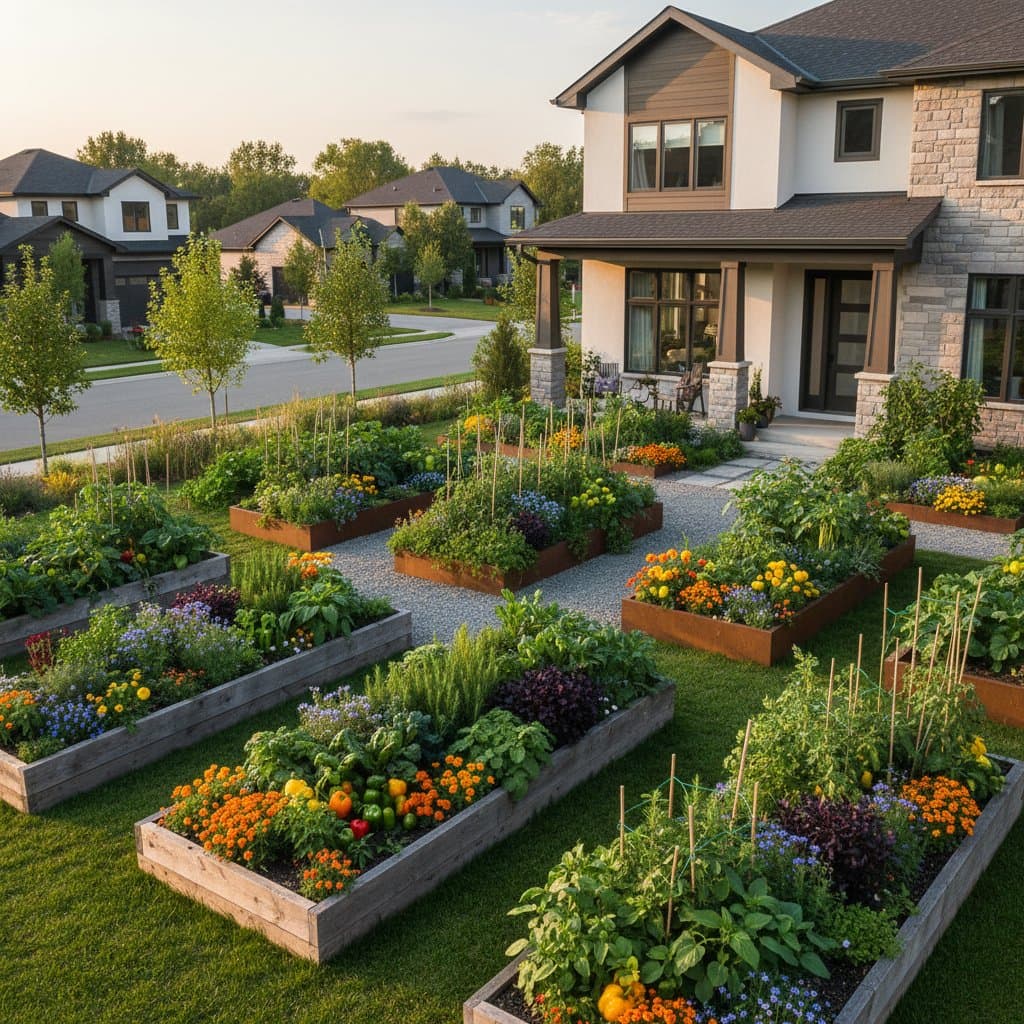
Front Yard Food Gardens Gain HOA Approval by 2026
Front yards are changing. What was once a stretch of turf and shrubs is becoming a space for fresh herbs, edible flowers, and raised vegetable beds. Homeowners associations now recognize that a well-designed food garden can match the appearance of any ornamental landscape.
The shift invites homeowners to rethink curb appeal when function meets design.
At a Glance
- Location: Suburban and urban neighborhoods
- Size: Small to mid-sized lots
- Climate zone: Varies, adaptable to regional planting guides
- Project goal: Blend edible gardening with neighborhood-friendly aesthetics
Design With Structure and Order
A front yard food garden succeeds when it looks intentional. Clean geometry, defined edges, and repeated materials make a productive space feel polished. Raised beds framed in cedar or steel supply that structure.
Gravel or flagstone paths keep feet dry and create rhythm. Low boxwood hedges or native grasses frame the beds and give the space a tidy outline. The result is a garden that feels organized even when tomato vines spill over their cages.
Mix Ornamentals and Edibles
Blending food plants with ornamentals softens the look and helps the garden fit neighborhood expectations. Purple basil, rainbow chard, and red-veined sorrel bring color that rivals any annual flower.
Combine perennial flowers such as coneflower or lavender with vegetables that echo their tones. Silver-green sage pairs well with dusty miller, while marigolds add contrast to leafy greens. This mix attracts pollinators and keeps the garden lively from spring through fall.
Prioritize Scale and Proportion
Front yards often face tighter visual and spatial limits than backyards. Tall corn or trellised beans can overwhelm a small lot. Compact crops such as lettuce or strawberries stay low and neat.
Use vertical elements sparingly. A single obelisk for climbing peas or a narrow espaliered apple tree along a fence maintains balance. Matching plant height to window lines or porch railings helps the layout feel cohesive.
Layer Seasonal Interest
A food garden can look good year-round when planned in layers. Cool-season crops like kale, arugula, and spinach start early. Warm-season favorites such as peppers and eggplants carry the summer. In fall, ornamental cabbages and late herbs keep texture alive.
Mulch paths and tidy borders ensure the garden never feels bare between seasons. Interplant edible flowers like nasturtiums or calendula to fill gaps and add color.
Design for Easy Maintenance
A front yard food garden thrives when it is easy to care for. Automatic drip irrigation, mulched surfaces, and raised beds reduce weeding and watering chores. Choose plant varieties suited to local conditions.
In dry regions grow herbs like rosemary or thyme that tolerate less water. In wetter climates select crops with good air circulation such as trellised cucumbers. Keeping the design manageable ensures steady upkeep and healthy plants.
Add Thoughtful Edges and Transitions
Transitions between public and private spaces matter in front yard design. A low fence, stone wall, or hedge helps define boundaries without feeling closed off. These edges anchor the garden visually and create a gentle buffer from the street.
Use materials that match the home style. A modern house might pair with corten steel edging and gravel. A cottage style home suits brick borders or wood trim.
Incorporate Seating or Gathering Spots
A bench or small cafe table invites people to linger and enjoy the garden productivity. It also signals that the space is meant to be lived in, not just looked at. A simple stone seat tucked beside raised beds makes harvesting herbs feel like part of daily life.
Embrace Community-Friendly Aesthetics
HOAs often focus on visual consistency. Meeting those expectations while introducing edibles requires design diplomacy. Keep pathways swept, prune regularly, and avoid clutter such as unused stakes or empty pots. Group tools and compost bins out of sight.
Soft color palettes, repeated plantings, and clear sightlines make the garden feel orderly. A well-tended garden communicates care and earns approval.
Transforming Neighborhood Landscapes
As HOAs open their rules, homeowners can turn front lawns into productive, beautiful landscapes. Structure, proportion, and maintenance give credibility to a garden that feeds both people and community. These spaces become models for how edible landscapes can enhance curb appeal while delivering fresh harvests.