
Front-Yard Freedom: New Zoning Rules Open the Door to Edible Gardens
When Mia and Carlos bought their small corner lot, they dreamed of a garden that could feed their family and welcome neighbors at the same time. Their plan was simple: replace the thirsty patch of lawn with raised beds of greens, herbs, and fruiting shrubs. Until recently, local zoning rules made that kind of front-yard food garden nearly impossible. Now, new changes have cleared the way, and homeowners like them are rethinking what a front yard can be.
A Walk Through the Garden
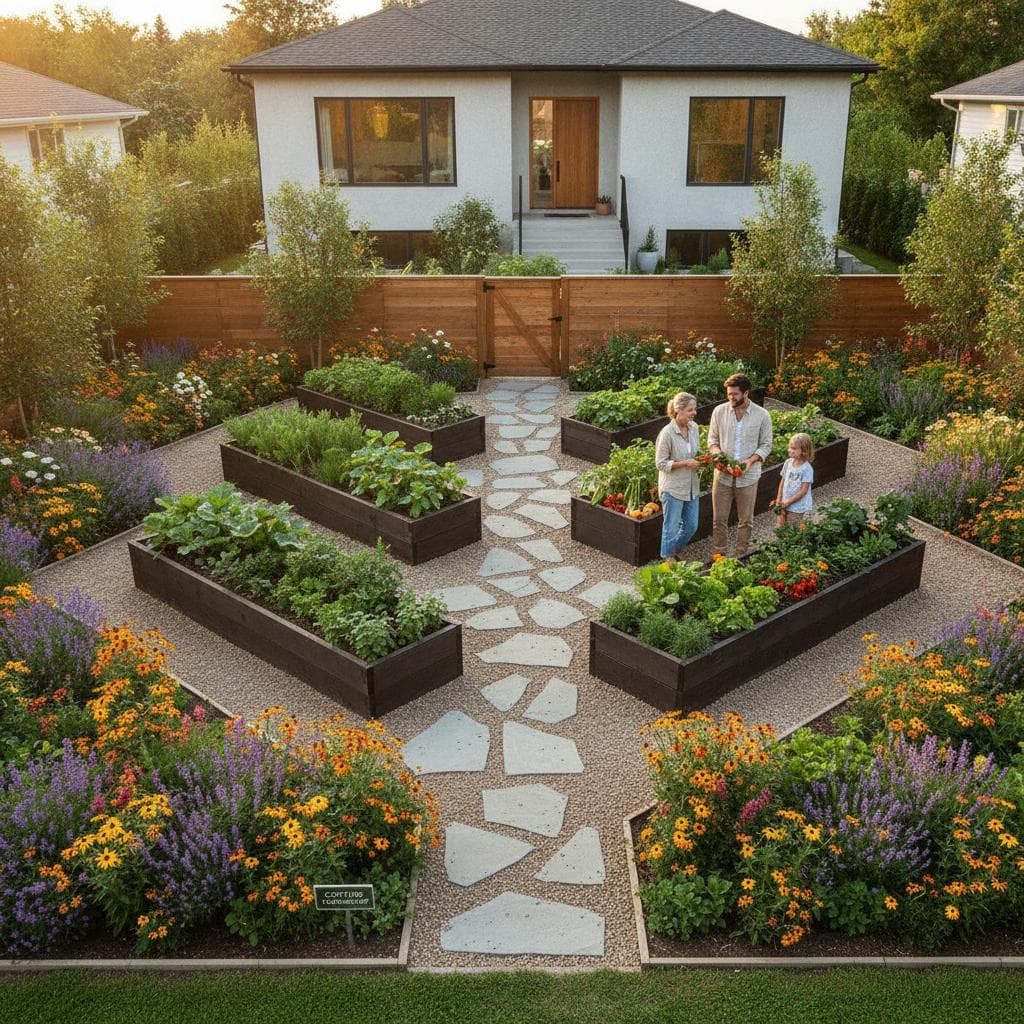
The reimagined front yard greets visitors with a textured mix of raised cedar planters, gravel paths, and flowering herbs that spill gently over the edges. The space feels open and intentional. It functions as a thoughtfully designed landscape that happens to grow food.
Low fencing defines each planting zone without blocking views from the street. The fence height meets new zoning standards that limit built structures in front yards but now allow edible plantings as part of ornamental design. This change gives homeowners a legal path to grow vegetables in what was once considered purely decorative space.
The main path leads from the sidewalk to the front porch, bordered by rosemary, thyme, and lavender. These herbs serve as both culinary staples and pollinator-friendly ornamentals. Along the south-facing side, a row of trellises supports climbing beans and cucumbers, which double as privacy screens. Near the porch, dwarf fruit trees in espalier form line the walkway, showing how food production can fit into formal design.
Design Choices that Balance Beauty and Function
Soil and Structure
The design team used 2-by-12 cedar boards for the raised beds, chosen for durability and natural resistance to decay. Beneath each bed lies a layer of crushed gravel for drainage and steel mesh to deter burrowing pests. The soil mix combines compost, local loam, and coconut coir for moisture retention without compaction.
The goal was to build a system that lasts more than a season, said landscape designer Jenna Chu. We wanted something that looked finished but could handle constant planting and harvesting.
Planting Palette
The planting layout follows a clear rhythm. Taller crops like kale and tomatoes occupy central beds, while lower herbs and lettuces fill the edges. Interplanting with marigolds and nasturtiums adds color and helps deter pests naturally.
A drip irrigation system lies beneath mulch to minimize evaporation. This keeps the surface tidy and supports the zoning requirement for water-efficient front yards. It is a productive garden, but it still reads as landscape architecture, Jenna said.
Hardscape and Flow
Concrete pavers form the main path, with decomposed granite in between to soften the look. A small boulder seating area near the front gate encourages casual conversation with neighbors. The design respects the setback line but uses every inch efficiently.
Lighting is subtle and functional. Low-voltage fixtures mark the paths, while small spotlights highlight key plantings. The system ties into a solar-powered timer, keeping the garden visible but not bright.
Why the Rules Changed
New zoning language now classifies food gardens as acceptable front-yard plantings when maintained to a neat and orderly standard. Homeowners must avoid tall fencing or dense screening that blocks visibility, yet they can grow edible plants as long as they appear intentional and well cared for.
This policy shift responds to growing interest in local food production and sustainable design. Many homeowners wanted to use their most sunlit areas for food gardening, which often meant the front yard. The change acknowledges that edible gardens can be both practical and attractive.
Municipal planners worked with landscape professionals to create guidelines that balance aesthetics and public safety. They focused on clear sightlines, stormwater management, and neighborhood cohesion. The result is a new category of residential landscape that invites creativity while maintaining curb appeal.
Tips for Homeowners Considering a Front-Yard Food Garden
- Study your local ordinance. Even with new zoning language, each city may interpret edible landscaping differently. Check regulations about height limits, fencing, and setbacks before you plan.
- Design for structure. Use defined beds, edging, or paths to make the garden look intentional. Clean geometry helps food crops blend with traditional landscape expectations.
- Mix edible and ornamental plants. Combine vegetables with perennials or flowering herbs. Chives, sage, and calendula all provide color and culinary use.
- Keep maintenance visible. Regular pruning, mulching, and harvesting show that the space is cared for. A tidy garden maintains neighborhood goodwill and meets code requirements.
- Think about drainage and access. Front yards often slope toward the street, so plan for water flow and easy reach from sidewalks. Raised beds can help control both.
Daily Life in the New Landscape
For Mia and Carlos, the best part of the project is how it changed their daily rhythm. They harvest lettuce for lunch, greet neighbors who stop to ask about the tomatoes, and feel more connected to their property. The front yard, once a patch of grass, is now a social and productive hub.
People walk by and actually stop to talk, Mia said. It is not just about the food. It is about feeling part of the street again.
The zoning change did more than legalize vegetable gardens. It encouraged a new vision of what a front yard can contribute to community life. This shift signals a broader move toward landscapes that serve multiple purposes. They cool the street with shade, feed families with seasonal produce, and turn ordinary lawns into living examples of sustainability.