
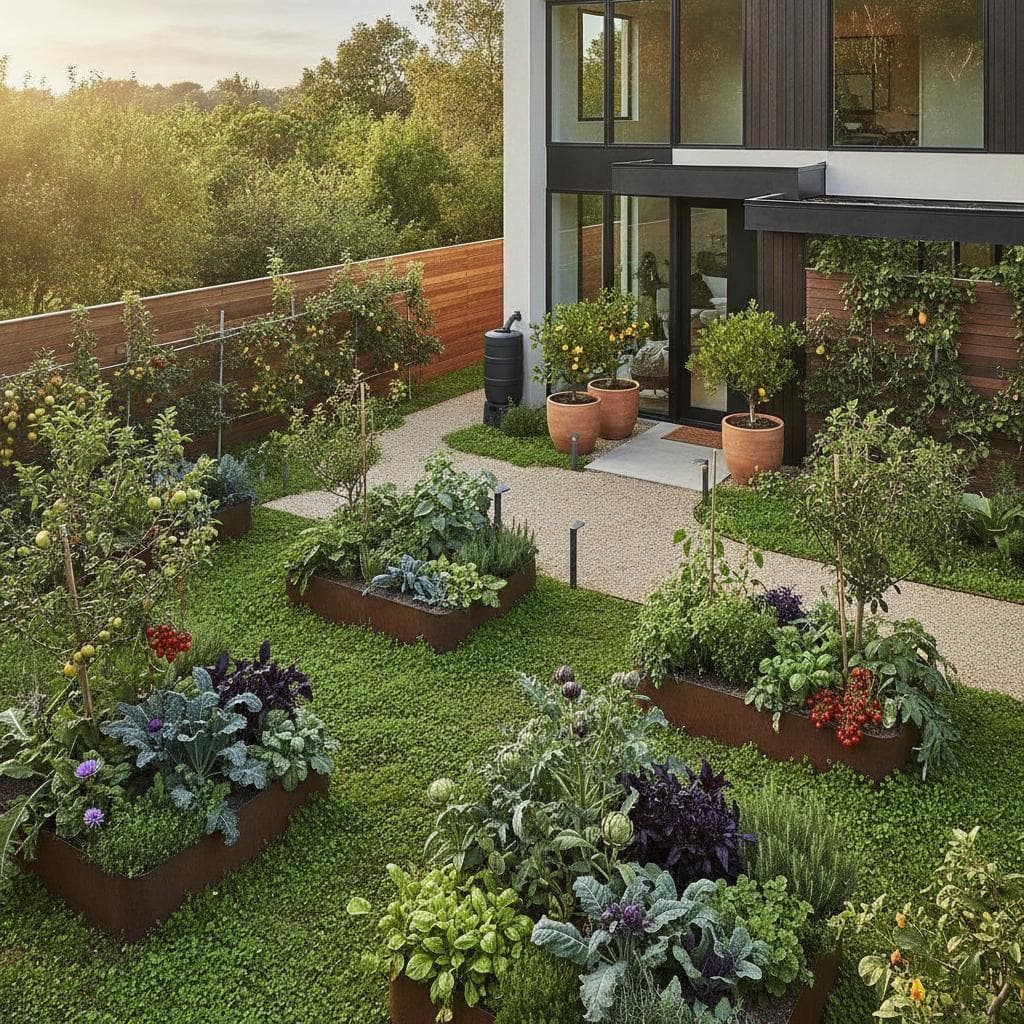
Why Edible Landscaping is Replacing Front Yard Ornamentals
A front yard that feeds you is no longer a novelty. Across California and beyond, homeowners are trading thirsty lawns and decorative shrubs for fruit trees, berry hedges, and herbs that are as beautiful as they are productive. The shift toward edible landscaping is as much about aesthetics as it is about values.
People want their outdoor spaces to work harder, conserve resources, and create abundance. The result is a new kind of curb appeal. It blends elegance with everyday usefulness.
The Changing Face of the Front Yard
Traditional front yards once followed a predictable pattern. A manicured lawn, a few foundation plants, and perhaps a seasonal flower bed framed the walkway. These designs were tidy but rarely purposeful.
They consumed water, required frequent maintenance, and offered little in return beyond visual order. Edible landscaping transforms that model. It turns the front yard into a living pantry where fruit, vegetables, and herbs share space with ornamentals.
Instead of viewing food production as something that belongs only in a backyard or rural setting, homeowners are integrating it into their most visible garden spaces. This change reflects a broader interest in sustainability, food security, and design that supports both people and the planet.
Beauty That Feeds the Eye and the Table
One of the biggest misconceptions about edible landscaping is that it must look utilitarian. The reality is quite the opposite. A well-planned edible garden can be strikingly beautiful.
Think of a hedge of blueberry bushes that turns deep crimson in fall. Or consider a row of artichokes whose silver leaves catch the light. Many edible plants have ornamental qualities that rival traditional garden favorites.
- Fruit trees such as figs, pomegranates, and citrus provide structure, seasonal color, and shade.
- Herbs like rosemary, lavender, and thyme create fragrant borders that attract pollinators.
- Leafy greens such as kale or Swiss chard bring texture and color to garden beds.
- Perennial vegetables like asparagus or rhubarb anchor planting areas with lush foliage.
By mixing these plants with native flowers and low-water ornamentals, homeowners can create layered, vibrant landscapes that change with the seasons. The key is thoughtful design. Every plant should serve multiple purposes, whether aesthetic, ecological, or culinary.
Why the Shift is Happening Now
The move toward edible landscaping has grown out of several converging motivations. Water conservation, rising food prices, and a desire for greater self-sufficiency are part of the story. There is also an emotional element.
People want to reconnect with nature and see tangible results from their efforts. California climate lends itself especially well to this approach. With mild winters and long growing seasons, the range of possible crops is vast.
Drought-tolerant fruit trees, Mediterranean herbs, and heat-loving vegetables thrive here with far less input than a traditional lawn would require. Even small urban lots can produce surprising quantities of food when designed efficiently.
Practical Advantages of Edible Landscaping
Edible landscaping offers a long list of practical benefits that go beyond the harvest itself.
- Water Efficiency: Many edible plants, when selected wisely, require less water than a lawn. Deep-rooted species like figs or olives handle dry conditions gracefully once established. Drip irrigation systems deliver moisture directly to the roots, minimizing waste.
- Reduced Maintenance: While edible gardens require seasonal care, they eliminate the weekly mowing, edging, and fertilizing routine that lawns demand. Pruning, mulching, and occasional replanting replace repetitive maintenance with purposeful tasks.
- Soil Health and Biodiversity: Diverse plantings improve soil over time. Composting kitchen scraps, rotating crops, and incorporating cover crops create a living system that supports beneficial insects and microorganisms.
- Economic and Nutritional Value: Fresh produce from your own yard can replace a surprising portion of grocery spending. The nutritional quality of homegrown food is unmatched.
- Community Connection: A front yard full of edible plants invites curiosity and conversation. Neighbors stop to ask questions, children learn where food comes from, and sharing harvests fosters goodwill.
Designing for Function and Flow
A successful edible landscape begins with planning. Before planting a single seed, it helps to think like a designer and a gardener at once.
Assess Sun, Soil, and Space
Observe how the light moves across your property. Most fruiting plants need at least six hours of direct sun. Check your soil texture and drainage, then amend with compost to build fertility. Even compacted urban soil can be revived with patience and organic matter.
Start with Structure
Trees and shrubs form the backbone of the design. Citrus, figs, or dwarf apples can frame a pathway or define a boundary. Smaller shrubs like blueberries or currants can replace boxwood hedges. These plants create rhythm and year-round interest while producing edible yields.
Layer for Abundance
Think in vertical layers. Groundcovers like strawberries protect soil and suppress weeds. Mid-level plants such as herbs and greens fill gaps. Taller vegetables or vines climb trellises and fences. This layered approach mimics natural ecosystems and maximizes productivity in limited space.
Blend Aesthetics and Utility
Color, texture, and form still matter. Choose plants that complement your home architecture and existing hardscape. Deep green kale contrasts beautifully with the silver of artichoke leaves. Burgundy basil or purple cabbage can punctuate a garden bed like living sculpture.
Plan for Access and Maintenance
Paths, irrigation lines, and harvest access must be built into the design from the start. Raised beds or defined zones keep the space organized and easy to manage. A garden that looks intentional and cared for will maintain its curb appeal throughout the year.
Sustainability and the California Ethos
Edible landscaping fits naturally with California culture of resourcefulness. Water conservation is part of daily life. Homeowners are increasingly aware of how personal choices affect the environment.
Replacing ornamental lawns with edible gardens saves water, reduces chemical use, and supports local ecosystems. Native and Mediterranean plants integrate beautifully with edibles. Pairing lavender with citrus trees not only looks elegant but also draws pollinators that improve fruit set.
Mulching with local materials, installing permeable pathways, and capturing rainwater for irrigation further enhance sustainability. The result is a landscape that thrives with minimal input and supports biodiversity.
Common Concerns and How to Solve Them
Even enthusiastic gardeners sometimes hesitate to commit to an edible front yard. Common concerns include appearance, pests, and neighborhood approval. Each can be addressed with good design and management.
- Appearance: Keep a clear structure and tidy edges. Raised beds, defined borders, and consistent mulching give a polished look that satisfies even traditional homeowners associations.
- Pests: Diversity is the best defense. A mix of plant types attracts beneficial insects that keep pests in check. Avoid monocultures, and use organic practices to maintain balance.
- Neighborhood Acceptance: Start gradually. Replace a strip of lawn with herbs or berries, or plant a fruit tree near the sidewalk. Over time, as neighbors see the results, acceptance grows naturally.
Integrating Edibles with Outdoor Living Spaces
An edible front yard can be more than a garden. It can extend your living space outward. Consider how seating areas, pathways, and small patios can fit within the planting scheme.
A bench beneath a fruit tree or a gravel path lined with thyme invites daily enjoyment. With thoughtful design, the space becomes both productive and welcoming. For homes with limited backyard space, the front garden may also serve as a social area.
Raised beds double as seating walls. Container plantings near entryways create an inviting transition between house and landscape. Lighting, fencing, and simple water features can be added to enhance atmosphere and comfort without overshadowing the plants.
The Long-Term Perspective
The best edible landscapes mature over time. Fruit trees grow stronger, soil improves, and the gardener understanding deepens with each season. Early planning pays off later when the system becomes largely self-sustaining.
Investing in durable materials, such as stone borders and high-quality irrigation components, prevents headaches and replacements down the line. Maintenance shifts from constant effort to seasonal rhythm. Pruning in winter, mulching in spring, harvesting in summer, and preparing soil in fall create a satisfying cycle.
Steps to Begin Your Edible Landscape
- Replace just one section of lawn or a flower bed with herbs and greens.
- Add fruiting shrubs along a walkway or property line.
- Incorporate pollinator-friendly flowers among vegetables to encourage balance.
- Install a simple drip system to reduce water use and simplify care.
- Keep notes on what thrives and what struggles, adjusting your plant mix each season.
Homeowners who bring in professional designers often find the investment pays for itself in efficiency and results. A designer can help match plant choices to microclimates, create balanced compositions, and ensure that irrigation, lighting, and access all work seamlessly together.
The rewards of edible landscaping extend far beyond the harvest basket. It transforms the relationship between home and environment. The front yard becomes a living expression of sustainability, beauty, and nourishment.