
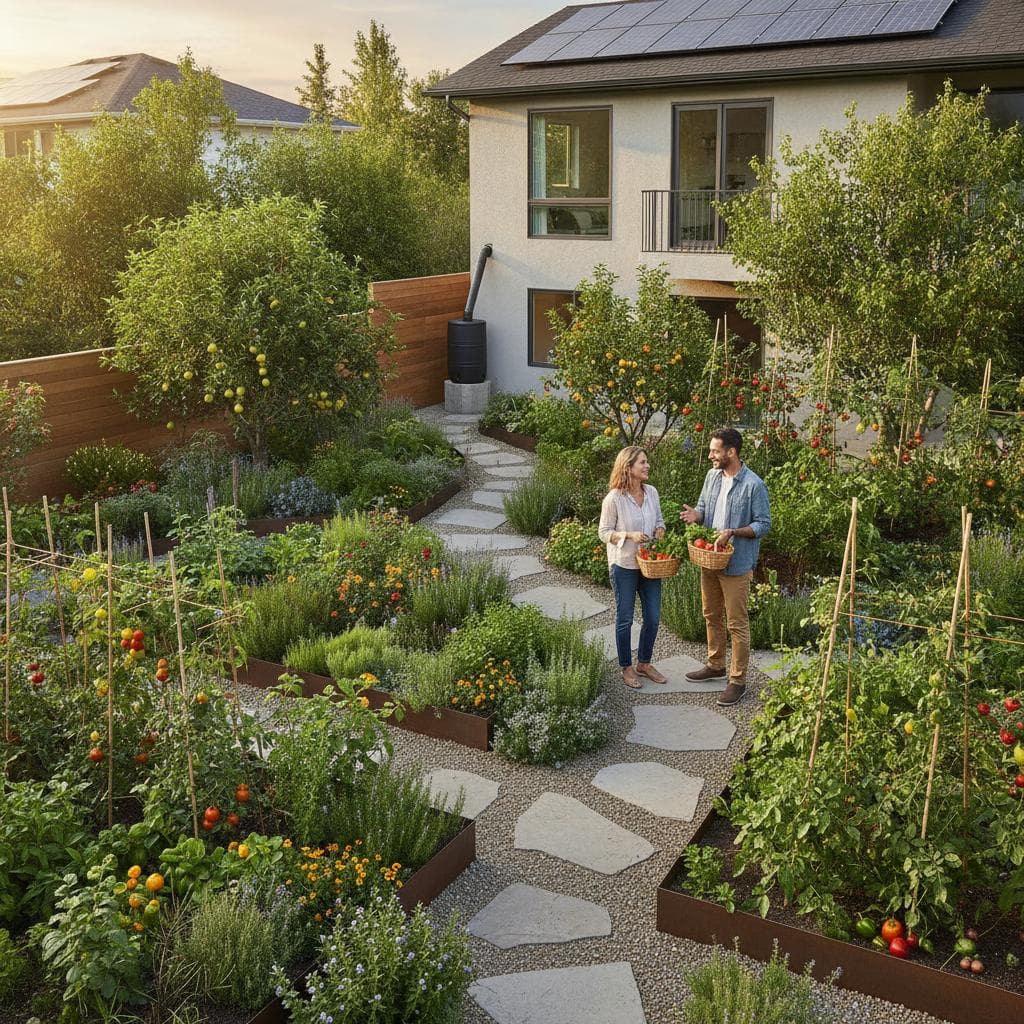
Why Front Yards Are Becoming Edible Gardens in 2026
A front yard that feeds both the eyes and the table is no longer a novelty. Across many neighborhoods edible landscaping transforms the idea of curb appeal. Homeowners replace water intensive lawns with fruit trees, herbs, and vegetables that still look refined.
This movement grows for clear reasons. It blends the pleasures of gardening with fresh produce, environmental awareness, and design sophistication. Homeowners gain a landscape that reflects modern values without sacrificing aesthetics.
The Practical Appeal of Edible Design
Edible landscaping pairs function with form. It is not a vegetable patch hidden behind the garage. Instead it forms a cohesive plan where every element contributes to both beauty and utility.
Water Efficiency and Climate Adaptation
Dry climates push gardeners to rethink water use. Traditional lawns need constant irrigation while many edible species thrive with far less. Mediterranean herbs such as thyme, oregano, and sage handle dry conditions well. Fruit trees like pomegranates, figs, and olives suit long hot summers. Replacing turf with these plants cuts water bills and maintenance time while delivering harvests that last for months.
Food Security and Freshness
Fresh produce steps from the front door changes daily routines. A kitchen garden at the curb reduces store trips and plastic packaging. It also offers a buffer during supply disruptions. Even a modest edible yard yields steady herbs, citrus, and seasonal vegetables with careful planning.
Aesthetic Versatility
Modern designs show that edible landscapes need not appear messy. Low boxwood or rosemary hedges create crisp edges. Trellised vines add graceful vertical interest. Raised planters built from natural stone or corten steel provide structure. Thoughtful composition ensures balance and proportion so the yard rivals any ornamental garden.
The Social and Cultural Shift
The rise of edible landscaping reflects a cultural move toward community, sustainability, and self reliance. Front yards once private and ornamental now foster connection. Neighbors trade lemons for tomatoes and share pruning tips. These exchanges strengthen neighborhoods.
In urban areas edible landscaping bridges city living and agricultural roots. It reconnects people to food origins without large land plots. Some communities create shared edible corridors that supply continuous produce and pollinator habitat.
Long Term Value and Sustainability
A well established edible landscape reduces grocery costs and supports ecological health. Real estate agents note that buyers respond positively to visible sustainability features, especially where water conservation matters. Perennial herbs, shrubs, and trees mature into stable communities that need less intervention over time. Soil fertility improves through composting and organic residues.
The initial investment in soil preparation, irrigation, and plant selection pays off within a few seasons. Unlike decorative plantings, edibles deliver tangible harvests. Small yields add up when herbs, specialty greens, and citrus count as luxury market items.
Community Inspiration and Shared Learning
Garden tours, local workshops, and online communities spread practical knowledge. Designers share plant combinations suited to specific microclimates. Homeowners post before and after photos that encourage others to begin with a single raised bed or herb border.
Demonstration gardens maintained by water districts illustrate how edibles integrate into drought tolerant designs. These examples prove that productive landscapes can look polished. Families also benefit when children harvest lettuce or watch tomatoes ripen, fostering patience and respect for food cycles.
Daily Rhythms in an Established Yard
Once established the landscape becomes part of everyday life. Morning coffee includes a quick check on strawberries. Dinner preparation often starts with a harvest of herbs or greens. Guests notice basil scent near the walkway or fruit on low branches. The yard invites conversation and participation.