
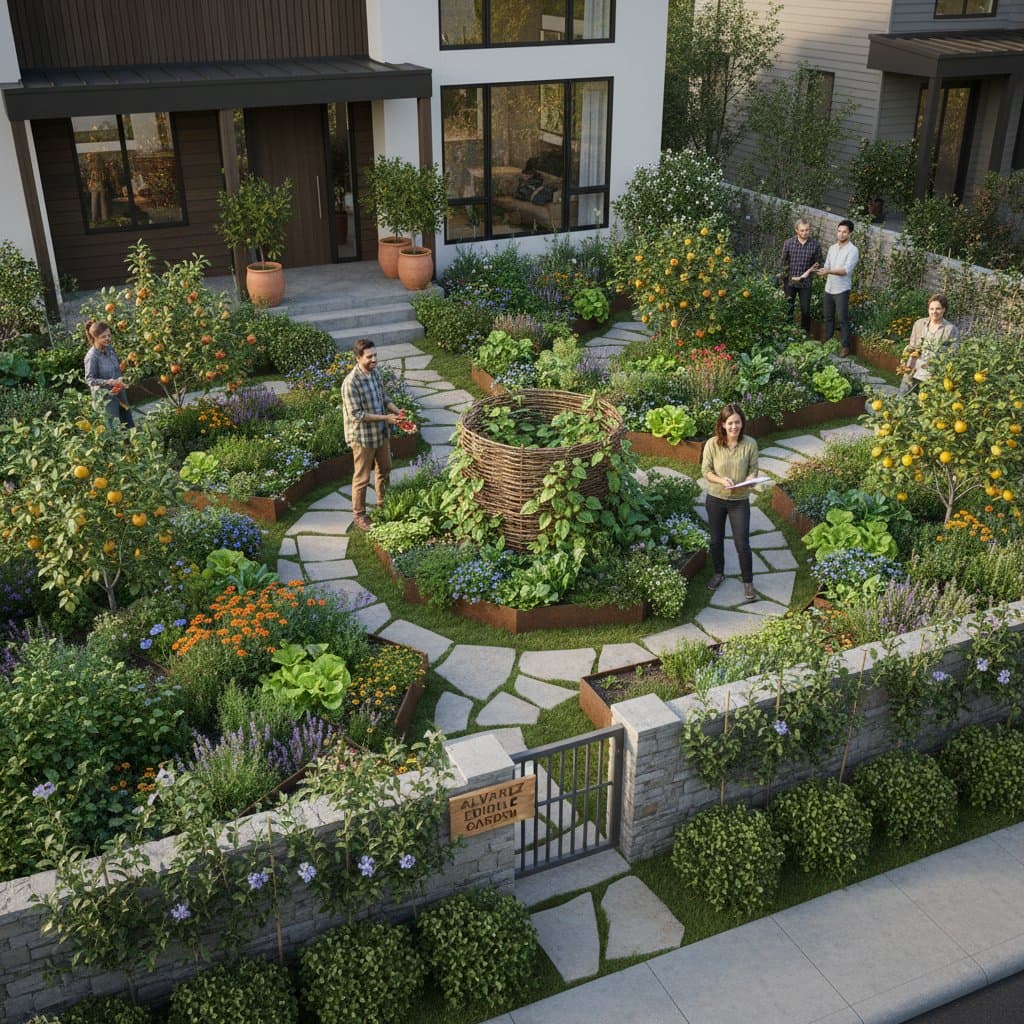
A Suburban Revolution in Edible Landscaping
Laura and Miguel Alvarez once viewed their front yard as a blank canvas of grass, much like countless suburban lots. Today, it bursts with life: fruit trees arch gracefully over beds of herbs and vegetables, creating a tapestry that draws admiration from passersby. This transformation began with a simple desire for sustainability and self-sufficiency, guided by landscape designer Priya Natarajan.
The Alvarezes' project highlights a growing movement toward food forests in urban settings. These designs mimic natural ecosystems, layering plants to maximize productivity while minimizing maintenance. Their yard now yields apples, berries, kale, and basil through much of the year, proving that beauty and utility coexist seamlessly.
Understanding the Food Forest Concept
A food forest represents a permaculture-inspired approach to gardening, where edible plants form a self-sustaining system. Unlike traditional rows of crops, this method stacks species in vertical layers: tall canopy trees at the top, shrubs below, herbaceous plants in the middle, ground covers at the base, and root crops beneath the soil. Vines climb structures to fill gaps, creating a dense, resilient network.
This structure draws from forest ecology, where diverse plants support one another through shade, soil enrichment, and pest control. In a front yard context, the design adapts to smaller scales, often spanning just 500 square feet. The result offers not only food but also habitat for birds and insects, fostering a balanced ecosystem right at your doorstep.
The Alvarezes' Journey: From Lawn to Abundance
The Alvarezes started with a typical 0.25-acre lot in a quiet neighborhood, where manicured lawns dominated. Frustrated by high water bills and chemical fertilizers, they sought a change. Priya Natarajan assessed the site, noting sun exposure, soil type, and drainage patterns to tailor the plan.
Installation took three weekends with volunteer help from friends. They sheet-mulched the grass—layering cardboard, compost, and wood chips—to suppress weeds without tilling. Native soil amendments followed, incorporating mycorrhizal fungi to boost root health. Within months, the space evolved from barren to bountiful.
Now, their yard features dwarf apple and pear trees as the canopy, providing dappled shade. Blueberry bushes and currant shrubs form the understory, while perennials like rhubarb and asparagus anchor the herbaceous layer. Ground covers such as strawberries and creeping thyme prevent erosion, and root vegetables like carrots thrive below.
Key Design Principles for Your Front Yard
Success in creating a front yard food forest relies on thoughtful planning. Begin by mapping your space: measure dimensions, identify sunny and shady zones, and test soil pH. Aim for a mix of evergreen and deciduous plants to ensure year-round interest and production.
Selecting the Right Plants
Choose species suited to your climate zone. For temperate areas, consider fruit trees like semi-dwarf varieties of plums or cherries that mature quickly. Pair them with nitrogen-fixing companions such as comfrey or clover to enrich the soil naturally.
Herbaceous selections might include perennial greens like sorrel or chard, which return annually with minimal effort. For pollinator support, integrate flowers such as borage and nasturtiums, which double as edibles. Always prioritize disease-resistant, low-water varieties to align with sustainable goals.
Layering for Efficiency and Aesthetics
Arrange plants by height and function to optimize space. Position taller elements at the back or center, allowing shorter ones to fill foregrounds. This creates depth and visual appeal, making the garden look intentional rather than wild.
Incorporate paths of gravel or stepping stones for access, winding through beds to encourage exploration. Add benches or arbors to invite lingering, blending the space with your home's architecture for curb appeal.
Practical Steps to Build Your Own
Start small to build confidence. Clear a 10-by-10-foot area and observe its microclimate for a season. Research local regulations, as some communities restrict front yard plantings; frame your proposal around environmental benefits to gain approval.
- Prepare the soil: Amend with organic matter like aged manure or leaf mold to improve fertility and structure.
- Install layers progressively: Plant trees first, then shrubs, followed by perennials and annuals.
- Mulch generously: Apply 4-6 inches of organic material to retain moisture and suppress weeds.
- Water deeply but infrequently: Establish roots with soaker hoses, transitioning to rain-fed systems.
- Maintain lightly: Prune annually, harvest regularly to encourage growth, and monitor for pests using natural methods like companion planting.
Budget wisely: Trees cost $20-50 each, while perennials run $5-15. Community swaps or seed libraries reduce expenses.
Benefits Beyond the Harvest
The Alvarezes report savings of 40% on their grocery bill from homegrown produce. Their design conserves water through drought-tolerant plants and rainwater harvesting via swales—shallow ditches that direct flow to roots. Pollinators flock to the blooms, enhancing local biodiversity.
Neighbors often stop to chat, sharing recipes or seeds, which strengthens community ties. The yard's lush appearance elevates property values, as studies show green spaces boost appeal. Health gains emerge too: fresh air, physical activity, and nutrient-dense foods contribute to well-being.
Bringing It Home: Your Next Steps
Inspired by the Alvarezes, assess your front yard today. Sketch a rough layout, list desired plants, and connect with a local designer if needed. Each harvest will remind you of the rewards: a space that nourishes body, mind, and planet. Begin planting, and watch your landscape flourish.