
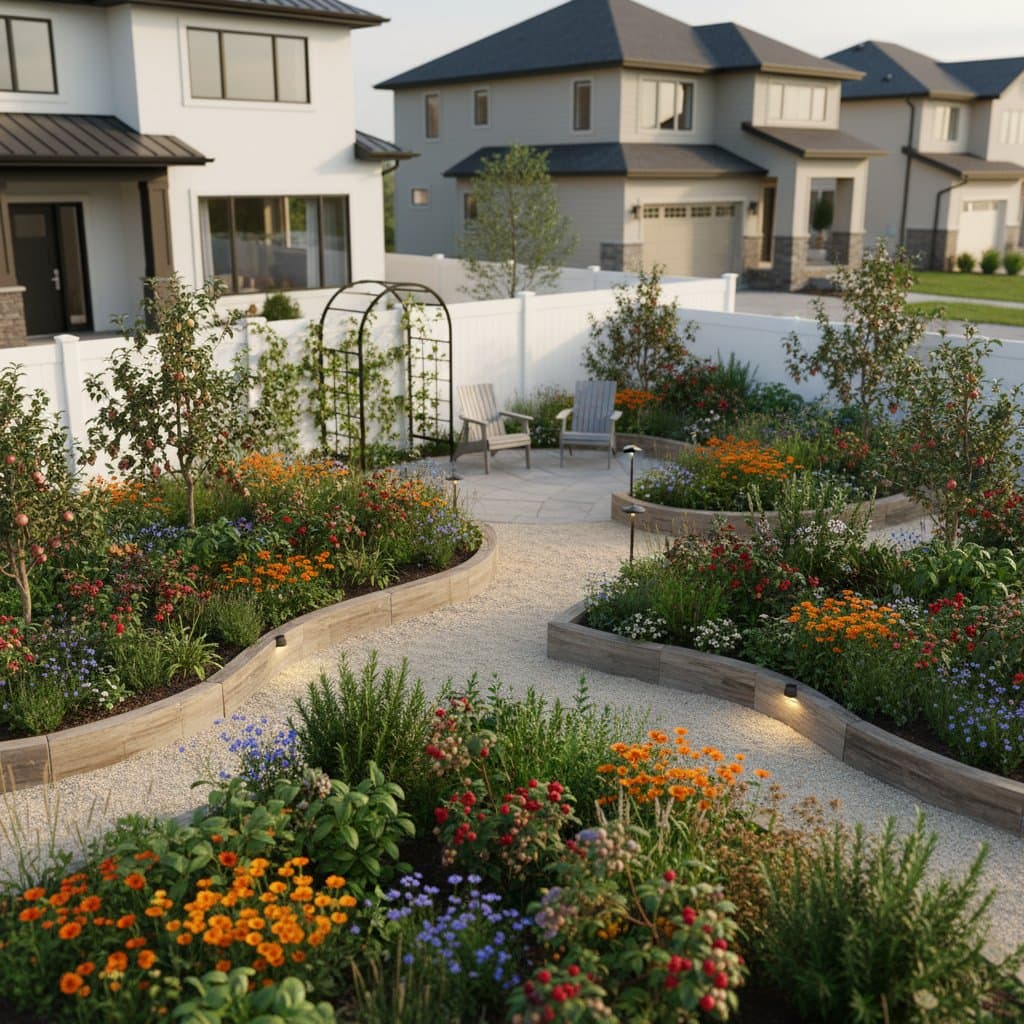
The Rise of Edible Yards in HOA Communities
Front yards in homeowners association neighborhoods are evolving beyond traditional lawns and shrubs. Homeowners now incorporate herbs, berries, and fruit-bearing plants to create spaces that produce food while maintaining visual order. This shift addresses the demand for sustainability without compromising the polished look that associations expect.
These landscapes offer multiple benefits. They provide fresh ingredients for meals, attract beneficial insects, and lower water usage compared to grass. Careful planning ensures compliance with rules focused on uniformity and upkeep, proving that productivity and attractiveness can coexist.
Key Project Overview
Typical Setting: Suburban HOA neighborhoods with standard lot sizes.
Scale: Suited for small to medium front yards, from 200 to 1,000 square feet.
Adaptability: Works across various climates through selection of resilient, local plants.
Primary Objective: Develop compliant gardens that balance functionality, beauty, and ease of maintenance.
1. Review HOA Guidelines and Assess Your Space
Before planting, examine your homeowners association covenants. Most rules emphasize neatness, height limits, and material restrictions, so identify allowable features like mulch types or edging. Consult board members early to align your vision with community expectations.
Measure your yard's sunlight, soil type, and water access. Front areas often receive partial shade from houses or trees, influencing plant choices. Sketch a basic layout that respects setbacks and pathways, ensuring the design integrates seamlessly with neighboring properties.
This preparation builds a strong case for approval. Document your plan with drawings and plant lists to demonstrate thoughtfulness. Associations appreciate proactive homeowners who prioritize shared aesthetics.
Quick Tip: Schedule a pre-approval meeting with the board, presenting samples of similar compliant designs.
2. Integrate Ornamentals with Edible Plants
Balance comes from pairing food-producing plants with decorative ones. Herbs like lavender and chives offer fragrant foliage that mimics ornamental perennials, while their subtle colors add depth without overwhelming the space. Leafy greens such as kale provide textured contrast, enhancing visual interest through varied shapes.
Incorporate structural elements for cohesion. Evergreen shrubs like boxwood frame beds, creating defined borders. Intersperse them with edibles: strawberries as low-growing covers, blueberries for seasonal blooms and berries, or dwarf citrus for year-round greenery.
Repetition fosters harmony. Plant edibles in groups of three or five to establish rhythm, a principle that appeals to HOA reviewers seeking orderly designs. This method transforms the yard into a cohesive garden rather than a patchwork.
Visual Highlight: Glossy blueberry shrubs line a walkway, their leaves mirroring adjacent hollies for a unified border.
3. Select Low-Maintenance Plant Varieties
Prioritize plants that require little intervention to secure HOA endorsement. Opt for compact cultivars: dwarf apple trees that stay under eight feet, self-fruitful blueberries needing no cross-pollination, and perennial herbs like rosemary that endure without frequent division.
Choose natives or adapted species for resilience. Serviceberry trees yield edible berries and adapt to local soils, while rhubarb returns annually with minimal care. These options conserve water and resist pests, reducing overall effort.
Support tidiness with infrastructure. Install drip irrigation for efficient watering and apply organic mulch to suppress weeds. Clear borders using stone or metal edging keep the garden contained and professional-looking.
Visual Highlight: Beds of rosemary and thyme, mulched neatly, maintain form across seasons with sparse pruning.
4. Control Visibility and Enhance Privacy
Strategic placement prevents a cluttered appearance from the street. Position low edibles like lettuce or herbs in front rows to keep sightlines open, while elevating taller items like tomatoes in raised beds toward the back.
Use vertical techniques for efficiency. Espalier fruit trees flat against walls to save space and add artistic lines. Trellises support vining crops such as peas or grapes, forming subtle screens that permit airflow.
Build layered hedges for dual purpose. Combine mid-height blueberries with aromatic rosemary and compact pomegranates to create privacy without density. This layering softens edges and provides harvestable elements throughout the year.
Visual Highlight: Espaliered apples create an orderly living fence along a pathway, offering seclusion and structure.
5. Incorporate Pollinator-Friendly Elements
Boost garden success by welcoming pollinators. Flowering edibles like basil and borage draw bees essential for fruit set, increasing yields naturally. Allow portions of crops, such as squash, to bloom undisturbed for insect attraction.
Add complementary natives for diversity. Clusters of coneflower or milkweed provide nectar and habitat, blending with edibles through shared colors and heights. These plants stabilize soil and enhance ecological value.
This integration reassures communities of environmental benefits. A diverse yard demonstrates stewardship, often easing approval processes. Track pollinator activity to refine plantings over time.
Visual Highlight: Blooming oregano and calendula along a border attract bees, adding vibrant color to the edible layout.
Sustaining and Enjoying Your Edible Yard
Once established, an HOA-approved edible yard fosters community connections. Neighbors may share recipes inspired by your harvests, and family members engage through daily tending. The space evolves from ornamental to interactive, enriching daily life.
Maintain approval with consistent care. Prune in early spring, refresh mulch biannually, and rotate annuals to prevent bare spots. Monitor for overgrowth, adjusting as plants mature.
This approach yields lasting rewards. Homeowners gain nutritious produce, reduced grocery costs, and a personalized landscape. Edible yards exemplify how innovation can harmonize rules with real-world needs, promoting sustainable living in shared spaces.